This post may contain affiliate links. Please see my full disclosure for details.
Hi Bold Bakers!
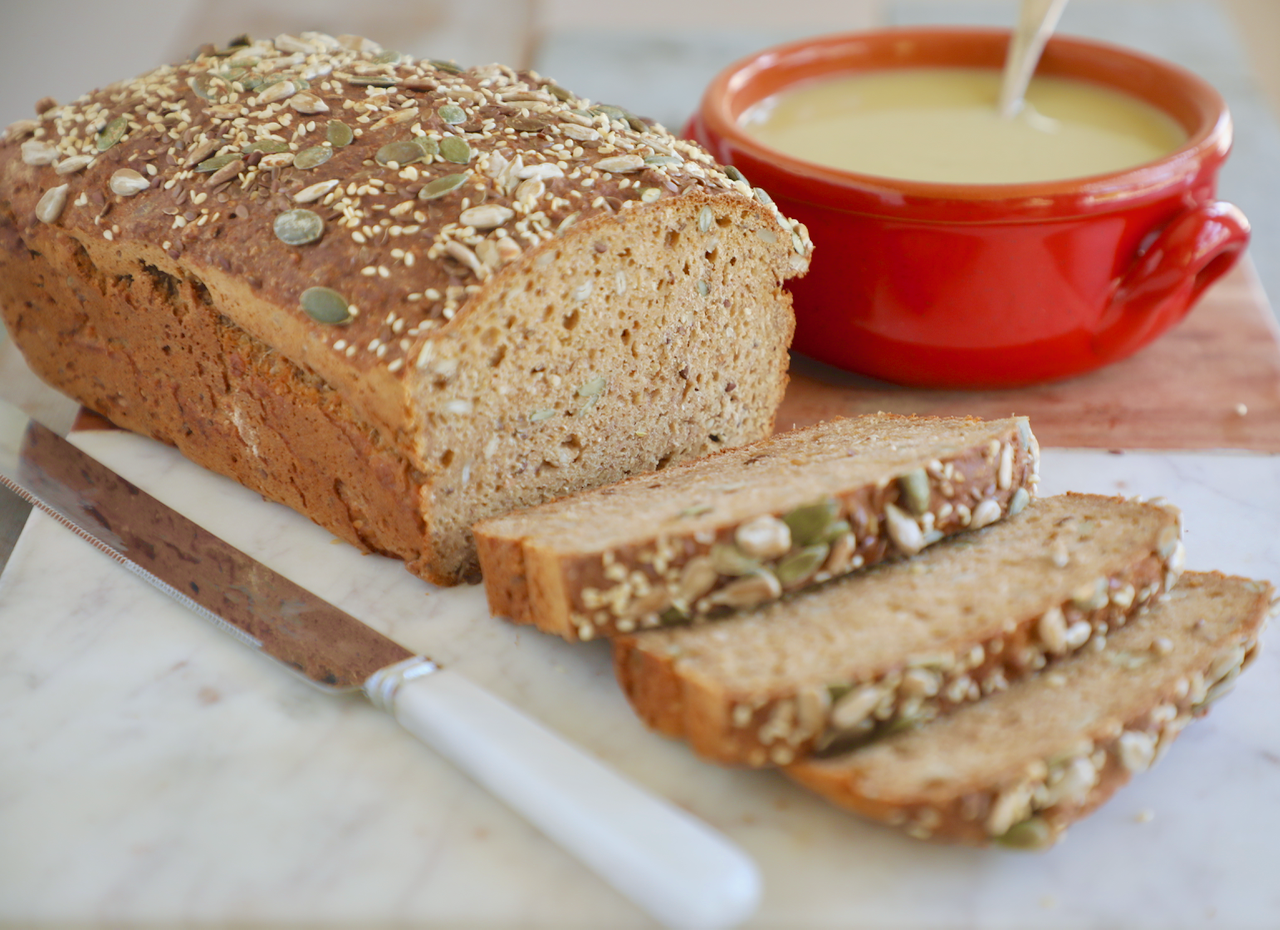
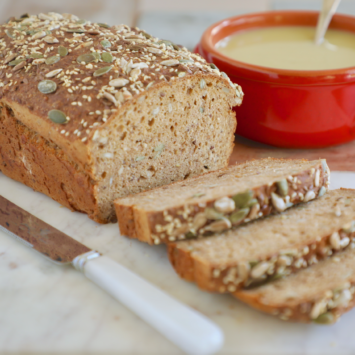
WHY YOU’LL LOVE THIS RECIPE: Growing up in Ireland, brown bread was an everyday staple at our table—simple, satisfying, and always best served warm with butter. My one-bowl, no-yeast Irish brown bread recipe comes together in minutes. The quick-mix batter bakes into a rustic loaf with a nutty, slightly malty flavor and a tender crumb, making it an easy, beginner-friendly recipe you can rely on anytime. Unlike Irish soda bread, this version uses baking powder instead of baking soda, creating a slightly lighter texture while still keeping its classic, hearty character.
- Hearty Texture: A satisfying, rustic crumb with a nutty bite.
- Quick & Easy: A true quick bread prepared in only 5 minutes—no yeast, no rising, no fuss.
- One-Bowl Recipe: Simple prep with minimal cleanup, no special equipment needed.
- Beginner-Friendly: Reliable results every time.
- Authentic Flavor: Traditional Irish taste, just like home.
- Versatile: Perfect for toast, sandwiches, or alongside soup.
- Make-Ahead Friendly: Freezer-friendly and great for meal prep.
Bold Bakers Loved This
I love this bread. Make it twice a week. Makes great toast and tastes even better when it gets ‘old’. I sometimes use crushed weetbix if I run out of bran, and I toast the seeds – love the nutty flavour. — Johanna
IMPORTANT NOTE: This recipe was improved and updated on 4./16/2026, to include a NEW step-by-step tutorial video, the difference between Irish brown bread, Irish soda bread, and Boston brown bread, explanations and substitutes of key ingredients, answers to the most frequently asked questions, and Pro Chef Tips.
Table of Contents
- What Is Irish Brown Bread?
- Tools You Need
- Key Ingredients and Substitutes
- How to Make Irish Brown Bread
- Gemma’s Pro Chef Tips
- Make-Ahead and Storage Instructions
- What to Serve with Irish Brown Bread
- FAQs
- More Irish Bread Recipes
What Is Irish Brown Bread?
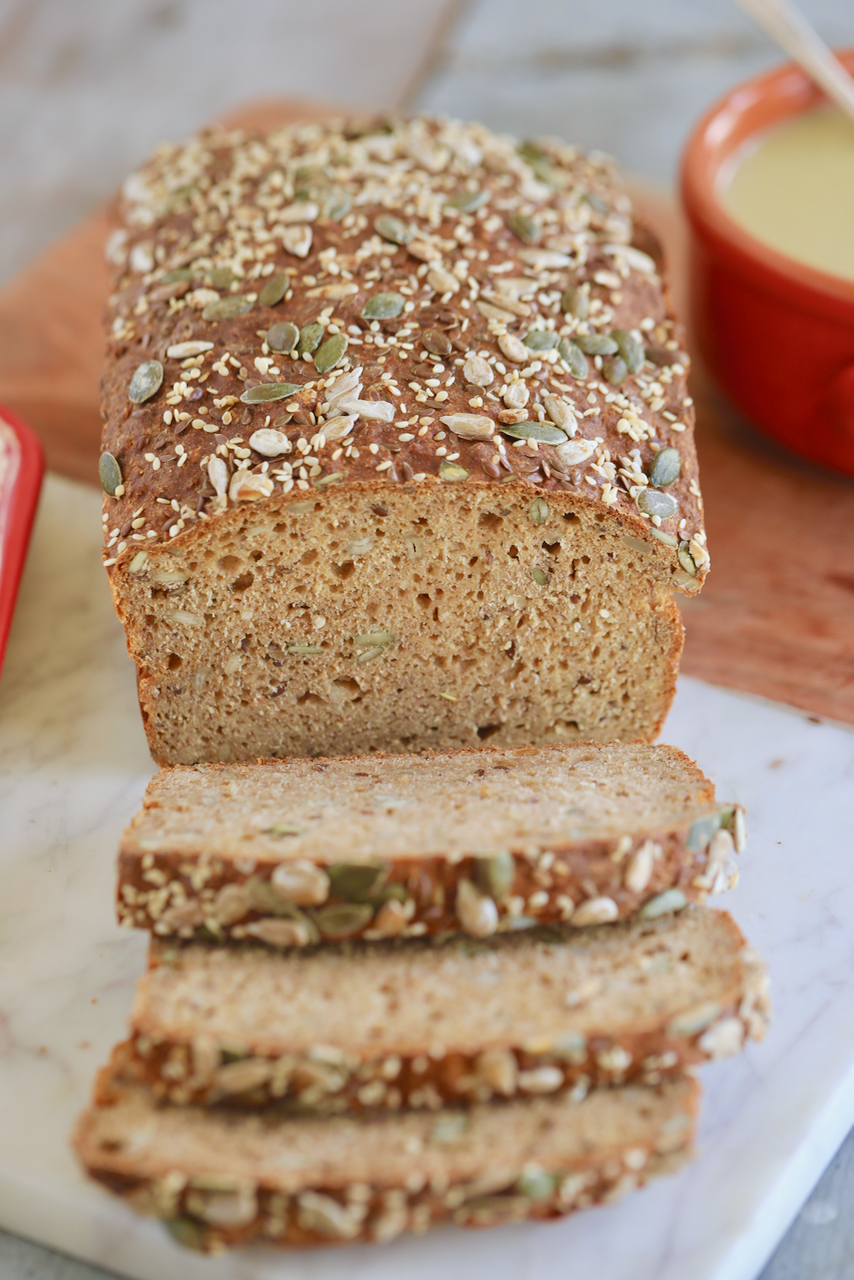
Irish brown bread is a traditional Irish quick bread made with whole wheat flour and leavened with baking powder instead of yeast. It’s known for its hearty texture, nutty flavor, and rustic crumb.
Unlike Irish soda bread, which uses baking soda and buttermilk, this version uses baking powder and milk, giving it a slightly lighter texture while still keeping its dense, satisfying character.
This is an everyday staple in Ireland—simple to make, filling, and versatile. It’s typically served sliced with butter, alongside soups and stews, or used for toast and sandwiches.
Tools You Need
- Measuring cups
- Measuring spoons
- Measuring jugs
- Large mixing bowl
- Whisk
- Loaf pan (9 x 5-inch)
- Parchment paper
- Cooling rack
Key Ingredients and Substitutes
Whole Wheat Flour
- This forms the base of the bread, giving it its signature hearty texture and nutty, slightly earthy flavor.
- Substitute: Replace part with all-purpose flour for a lighter, softer crumb.
All-Purpose Flour
- Balances the density of whole wheat flour and helps create a more tender interior.
- Substitute: Use all whole wheat flour for a more traditional, denser loaf. European white flour is usually softer and lower in protein than U.S. all-purpose flour, but they are similar enough to be used interchangeably in most recipes.
Mixed Seeds
- Add crunch, richness, and visual appeal while giving each slice texture and a bakery-style finish.
- Substitute: Use any seeds on hand or omit if preferred.
Wheat Bran & Wheat Germ
- Enhance texture and deepen the flavor, contributing to the bread’s rustic character.
- Substitute: Replace with additional whole wheat flour if unavailable.
Milk
- Hydrates the dry ingredients and creates the soft, scoopable batter.
- Important: Add gradually—you may not need the full amount.
Egg
- Provides structure and stability so the loaf slices cleanly.
Butter
- Adds richness and improves both flavor and texture.
Molasses
- Adds subtle sweetness and a deep, slightly caramelized flavor that complements the whole grains.
- Substitutes: use treacle if you live in Europe. Or make it at home using brown sugar with my recipe.
Baking Powder
- Leavens the bread without yeast, making this a true quick bread.
- This creates a slightly lighter crumb than soda bread while maintaining structure.
How to Make Irish Brown Bread
- Prepare the oven and pan: Preheat the oven to 375°F (190°C). Butter and line a 9 x 5-inch loaf pan.
- Mix the dry ingredients: In a large bowl, mix together the all-purpose flour, whole wheat flour, mixed seeds, bran, wheat germ, baking powder, and salt.
- Combine the wet ingredients: In a separate jug, whisk together the milk, egg, melted butter, and molasses.
- Bring the batter together: Pour the wet ingredients into the dry ingredients and mix to form a wet, almost sloppy mixture.
- Transfer to the pan: Transfer the batter into the prepared loaf pan.
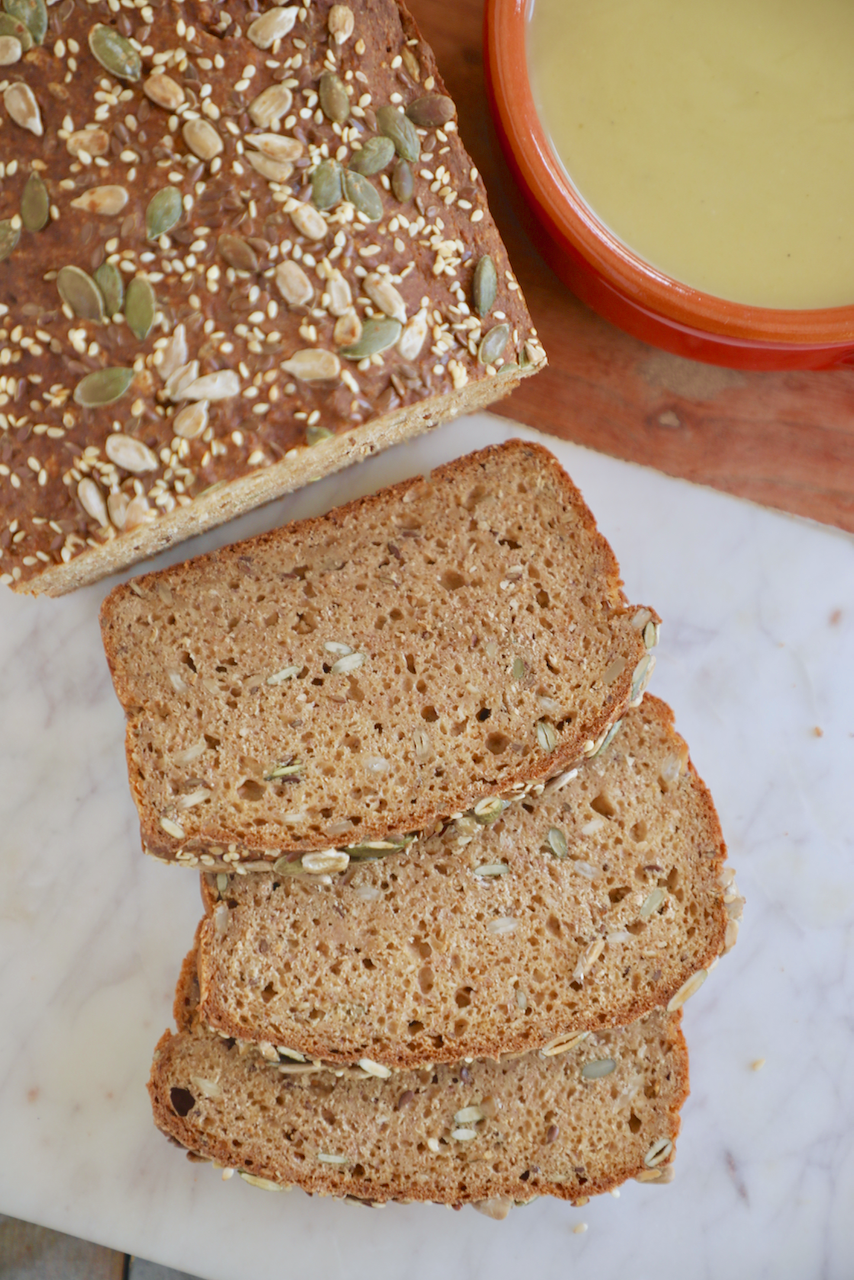
- Bake the bread: Bake for about 1 hour, or until the bread has risen and is set in the center.
- Cool before slicing: Remove from the pan and allow to cool on a wire rack before slicing. Serve warm or toasted with butter.
FULL (PRINTABLE) RECIPE BELOW!
Gemma’s Pro Chef Tips
- Start with less milk: Add the milk gradually and stop once you reach a thick, soft batter—too much liquid can lead to a dense or underbaked center.
- Watch the consistency: The batter should be thick and scoopable, similar to a heavy muffin batter. It should hold its shape slightly, not spread like a liquid.
- Don’t overmix: Stir just until the ingredients come together. Overmixing can develop too much gluten and make the bread tough instead of tender.
- Check early: Ovens can vary, so start checking the bread 10–15 minutes before the end of the baking time to avoid overbaking.
- Test doneness properly: Insert a knife or skewer into the center—it should come out clean or with just a few crumbs, not wet batter.
- Cool completely: Let the bread cool fully on a rack before slicing. This allows the crumb to set and prevents a gummy or dense texture.
- Toast before serving: Toasting brings out the nutty flavor and gives the bread a crisp, golden edge that makes it even more delicious.
- Customize easily: Add oats or extra seeds for more texture, or adjust the flour ratio slightly for a lighter or more rustic loaf.
Make-Ahead and Storage Instructions
Make ahead:
Bake the loaf up to 1 day in advance and store tightly wrapped
Room temperature storage:
Keep in an airtight container for up to 4–5 days
Freezing:
Slice before freezing for convenience and store for up to 1 month
Reheating:
Toast from frozen or warm in a low oven until heated through
FAQs
Why is my brown bread too wet inside?
This usually comes down to too much liquid or underbaking. Because this is a quick bread with a soft batter, it’s important to add the milk gradually—you may not need the full amount. The batter should be thick and scoopable, not loose or pourable.
Also, be sure to bake the bread fully. Even if the outside looks done, the center can still be underbaked. Test with a knife or skewer in the middle—it should come out clean or with just a few crumbs. If needed, return it to the oven for an additional 10–15 minutes. Let the bread cool completely before slicing so the crumb can fully set.
What should the batter look like?
The batter should be thick, soft, and scoopable—similar to a very thick muffin batter. It should hold its shape slightly when placed in the pan, not spread out like a liquid.
If the batter looks runny, it likely has too much milk and may result in a dense or underbaked loaf. If it’s too stiff, the bread can turn out dry. Aim for a balanced consistency that’s easy to mix but not loose.
Can I make this without seeds?
Yes, you can make this brown bread without seeds. Replace them with additional flour, oats, or even a small amount of chopped nuts if you still want some texture.
Keep in mind that seeds add both flavor and crunch, so the bread will be softer and more uniform without them—but still delicious and very versatile.
Is Irish brown bread the same as soda bread?
No, they are similar but vary mainly in leavening agent. Irish brown bread is typically made with baking powder and milk, while Irish soda bread uses baking soda and buttermilk as the leavening system.
This difference gives brown bread a slightly lighter, more even crumb, while soda bread tends to be more crumbly and rustic. Both are traditional Irish quick breads, but they have distinct textures and flavor profiles.
What’s the difference between Irish brown bread and Boston brown bread?
Irish brown bread is a savory, rustic loaf made with whole wheat flour, white flour, seeds, and milk, and it’s baked in the oven. Boston brown bread, on the other hand, is a sweeter, molasses-rich bread made with rye flour, cornmeal, and buttermilk, and it’s typically steamed, giving it a much softer, almost cake-like texture.
Irish brown bread is meant to be an everyday bread—perfect for toast, sandwiches, or serving with soup—whereas Boston brown bread is more of a side dish, often served with butter or alongside baked beans.
What should I serve with Irish brown bread?
Irish brown bread is incredibly versatile and pairs well with both savory and simple toppings. It’s especially delicious served warm or toasted with butter, letting its nutty, hearty flavor shine.
For everyday meals, serve it with soups and stews, where it’s perfect for soaking up broths and sauces. It also works beautifully as a base for sandwiches or alongside eggs for a simple breakfast.
For something a little extra, try it with jam, honey, or cheese for a sweet-savory balance.
More Irish Bread Recipes
IMPORTANT NOTE: This recipe was improved and updated on 4./16/2026, to include a NEW step-by-step tutorial video, the difference between Irish brown bread, Irish soda bread, and Boston brown bread, explanations and substitutes of key ingredients, answers to the most frequently asked questions, and Pro Chef Tips.
Try These Recipes!



Watch The Recipe Video!
Authentic Irish Brown Bread (Easy Whole Wheat Recipe)

Ingredients
- 2 cups (10 oz / 284 g) all-purpose flour
- 1½ cups (7½ oz / 216 g) whole wheat flour
- ¾ cup (3 oz / 85 g) mixed seeds (sunflower, sesame, linseed, pumpkin)
- 3 tablespoons bran
- 2 tablespoons wheat germ
- 2½ teaspoons baking powder
- 1 teaspoon salt
- 2 ¼ cups ( 18 fl oz / 540 ml) whole milk
- 1 large egg, at room temperature
- 2 tablespoons (1 oz/ 28 g) butter, melted
- 1 tablespoon molasses
Instructions
- Preheat the oven to 375°F (190°C). Butter and line a 9 x 5-inch loaf pan.
- In a large bowl, mix together the all-purpose flour, whole wheat flour, mixed seeds, bran, wheat germ, baking powder, and salt.
- In a separate jug, whisk together the milk, egg, melted butter and molasses, then pour into the dry ingredients and mix to form a wet, almost sloppy mixture.
- Transfer the batter into the prepared loaf pan. Run a knife down the middle of the batter to help is split in the middle while it's baking.
- Bake for about 50-60 minutes, or until the bread has risen.
- Remove from the pan and allow to cool on a wire rack before slicing. Serve with Irish butter and have with soup, as a sanwhich or toast.
Recipe Notes
- Start with less milk: Add the milk gradually and stop once you reach a thick, soft batter—too much liquid can lead to a dense or underbaked center.
- Watch the consistency: The batter should be thick and scoopable, similar to a heavy muffin batter. It should hold its shape slightly, not spread like a liquid.
- Don’t overmix: Stir just until the ingredients come together. Overmixing can develop too much gluten and make the bread tough instead of tender.
- Check early: Ovens can vary, so start checking the bread 10–15 minutes before the end of the baking time to avoid overbaking.
- Test doneness properly: Insert a knife or skewer into the center—it should come out clean or with just a few crumbs, not wet batter.
- Cool completely: Let the bread cool fully on a rack before slicing. This allows the crumb to set and prevents a gummy or dense texture.
- Toast before serving: Toasting brings out the nutty flavor and gives the bread a crisp, golden edge that makes it even more delicious.
- Customize easily: Add oats or extra seeds for more texture, or adjust the flour ratio slightly for a lighter or more rustic loaf.









YUM!!
My son has a culture project die next week & making this was incredibly easy & fun ( we have an Irish background as well). I had added a picture of the outcome..hope it showed up ????
Excellent recipe with a caveat: To avoid sloppy dough and uneven rising, start by adding about 2 cups of milk to the dry ingredients. Then add little by little until the dough pulls away from the side of the bowl when stirred. Also, check for doneness at about 15 minutes before the recommended time. Thanks, Gemma! Love your recipes!
Hi Gemma!
If I replace the nuts with flour, will this come out ok?
Thanks~ Michelle
I love all your recipes but found the instructions for this one lacking in detail. I was unsure as to the consistency needed when adding milk and ended up with what I now think was too runny a batter. Would like to try again but I will try using less liquid
What can I add instead of wheatgerm and bran? Can I just add whole wheat flour as a substitute?
Sorry but I need to add that I have just cut thr bread and the middle does not have the bread texture and still looks unbaked eventhough there’s a hollow sound after tapping it. I have put back the bread in the oven to further bake it until the middle looks baked. Will update you soon.
How I WISH they sold Odlums brown bread mix in America! Sure you can get it on Amazon, but its $15.00 for a bag that only makes one loaf :/
This recipe is a great approximation.
Thanks Gemma…my husband and I visited Ireland a few years ago and fell in love with the brown bread, ate it every day! I am now going to make it for St Patrick’s day. My Husband is of Irish decent.
Sadly this one didn’t work for me, it looked part though. I only added 600ml of the milk as it was getting very sloppy but even after 1 hour 40 minutes it was still wet in the middle even though it sounded hollow when tapped. I did still have a little taste though with home made butter and flavour was delicious. Any suggestions welcomed as I refuse to be defeated 🙂
Even after taking out of the oven and checking for the hollow sound it can be put back in for further baking?