This post may contain affiliate links. Please see my full disclosure for details.
Hi Bold Bakers!
WHY YOU’LL LOVE THIS GUIDE: Choosing the best apples for baking can mean the difference between a perfectly tender apple pie and one that’s watery, mushy, or lacking in flavor. I put six popular apples to the test to see which ones actually bake best—and which ones are better left for snacking.
- Tested side by side: I baked six popular supermarket apples using the same pie recipe and method so I could compare them fairly.
- Find the right apple for every bake: Some apples are perfect for pies, while others are better suited to cakes, crisps, applesauce, and apple butter.
- Get the texture you want: I’ll show you which apples hold their shape and which soften or break down in the oven.
- Balance sweetness and tartness: Learn why a great baking apple needs more than sweetness alone.
- Bake with confidence: My quick-reference chart makes it easy to choose the right apple for whatever you’re baking.
After more than 20 years as a professional chef, I’ve baked with varieties of apples in everything from pies and cakes to crumbles and sauces. And while a good recipe matters, the apple you choose matters just as much. Instead of simply telling you which apples I prefer, I baked six of the most common supermarket varieties side by side to see exactly how they performed.
Table of Contents
- Best Apples for Baking
- What Makes an Apple Good for Baking?
- I Tested 6 Apples for Baking
- Best Apples for Classic Apple Pie: The Results
- Get the Free Apple Guide
- Best Apples for Every Type of Baking
- Gemma’s Pro Chef Tips
- FAQs
- More Apple Recipes to Try
Best Apples for Baking
The best apples for baking generally have a firm texture and various flavors that become tender without completely breaking down in the oven. But there isn’t one apple that’s best for every recipe—and different varieties can behave surprisingly differently once they’re baked.
For pie, you generally want apples that become tender while maintaining distinct slices. For applesauce or apple butter, an apple that softens and breaks down easily can actually be an advantage. And for cakes and muffins, you can often use a sweeter, softer apple because the fruit doesn’t need to maintain as much structure.
That’s why I tested six widely available apples side by side. The key isn’t simply finding a “baking apple”; it’s choosing the best type of apples for what you’re baking.
What Makes an Apple Good for Baking?
Before we get to the test, it helps to understand why two apples can produce completely different results in the same recipe. These are the qualities I pay the most attention to when choosing apples for baking.
Firmness
A firm apple is more likely to maintain its structure during baking. That’s especially important for pies, galettes, and tarts, where you want tender slices of fruit rather than applesauce inside your pastry.
Sweetness and Acidity
Sweetness is important, but sweetness alone doesn’t necessarily make a great baking apple. Without enough acidity, an apple filling can taste flat.
Tart apples bring brightness and balance to sweet baked goods. This is one reason Granny Smith has remained such a classic pie apple: its acidity stands up beautifully to sugar, buttery pastry, and warm spices.
Moisture
All apples contain plenty of water, but some release considerably more juice as they cook. Too much liquid can give you a runny pie filling and contribute to a soggy bottom crust.
Pectin
Apples naturally contain pectin, which helps give the fruit structure. The variety of apple, its ripeness, and how long you cook it can all affect how well those apple pieces maintain their shape.
I Tested 6 Apples for Baking
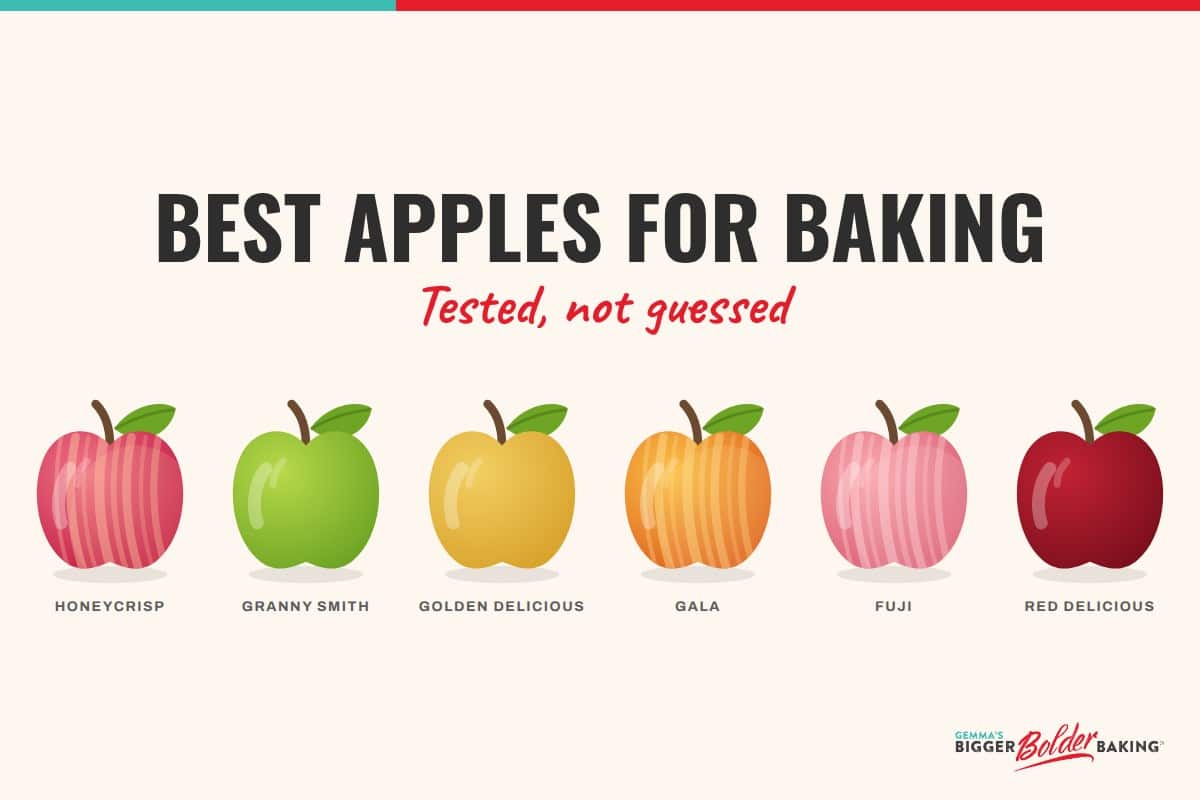
I wanted to take some of the guesswork out of choosing a baking apple, so I tested six popular apples you can find in most supermarkets:
- Honeycrisp
- Granny Smith
- Golden Delicious
- Gala
- Fuji
- Red Delicious
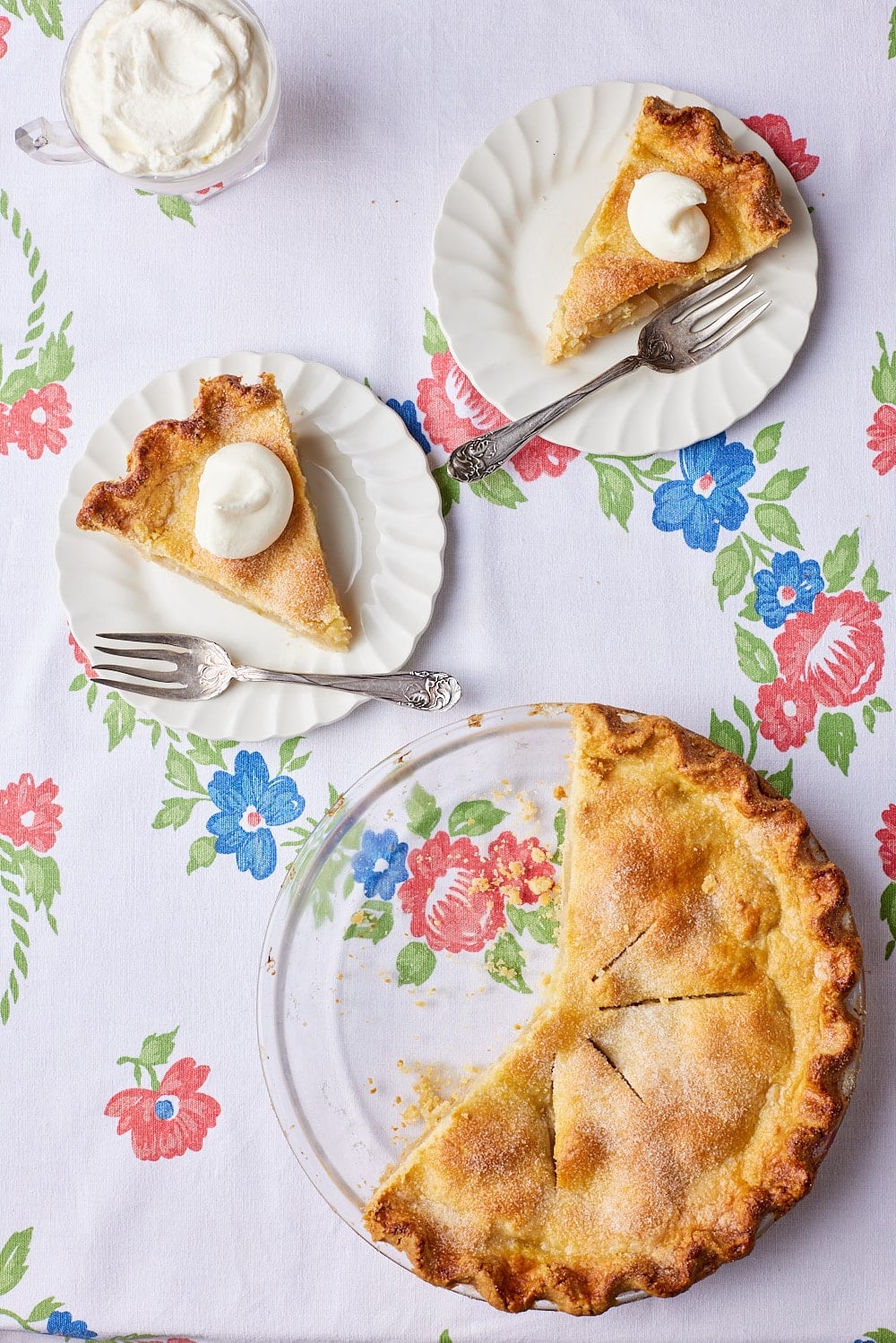
To make the comparison as fair as possible, I used the same pie recipe, same preparation, same oven temperature, and same baking time for each apple.
Then I compared four things:
- Flavor: Did the apple still taste vibrant once baked?
- Texture: Did the slices remain intact or turn soft and mushy?
- Moisture: How much liquid did the apple release?
- Overall performance: Would I actually choose this apple for a pie?
Here’s how each one performed.
Honeycrisp / Pink Lady
Honeycrisp is one of America’s favorite eating apples, but does paying more for an apple actually give you a better pie?
- What it’s like: Honey crisp apples are exceptionally crisp, juicy, and sweet-tart. It’s also often considerably more expensive than an everyday apple like Granny Smith.
- How it bakes: Honeycrisp gives baked desserts fantastic flavor and holds up well, but because it’s such a juicy apple, it can release more liquid during baking.
- Best for: Pies, crisps, crumbles, galettes, and eating fresh.
- Substitute: Pink Lady is a good alternative to Honeycrisp when you want a crisp apple with a sweet-tart flavor.
- My verdict: An excellent, flavorful baking apple, although its higher price and juiciness are worth considering.
Granny Smith
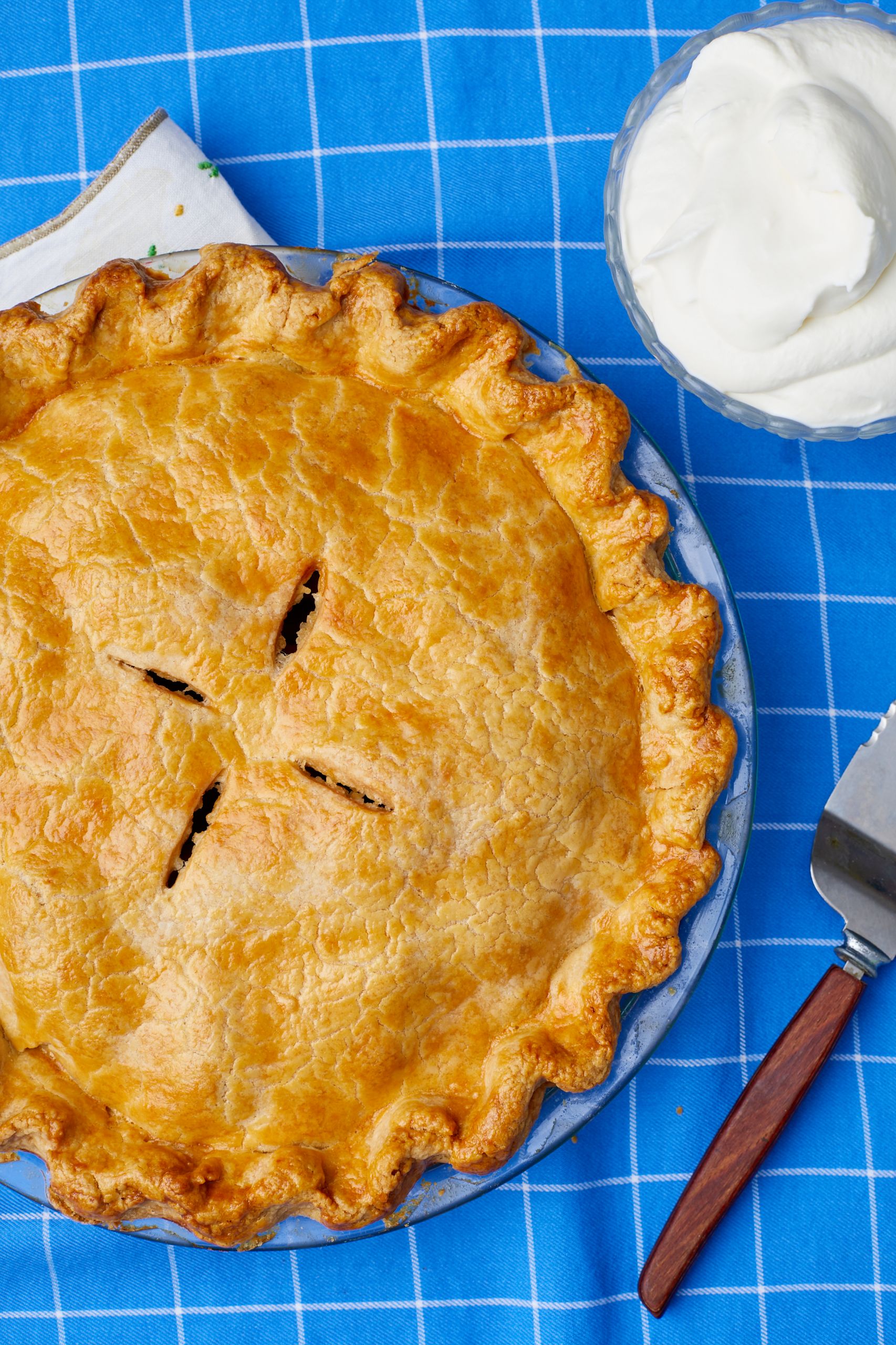
Granny Smith is probably the apple most Americans immediately associate with apple pie, so this was my benchmark for the test.
- What it’s like: Granny Smith apples are firm, crisp, and distinctly tart, similar to Bramley apples in Ireland. Their acidity balances the sugar in desserts beautifully, relatively high in pectin which helps to thicken up jam, and they’re inexpensive, easy to find, and available virtually year-round.
- How it bakes: Granny Smith becomes tender while maintaining good structure (while Bramley apples tend to lose shape), which is exactly what you want from an apple that has to withstand a long bake.
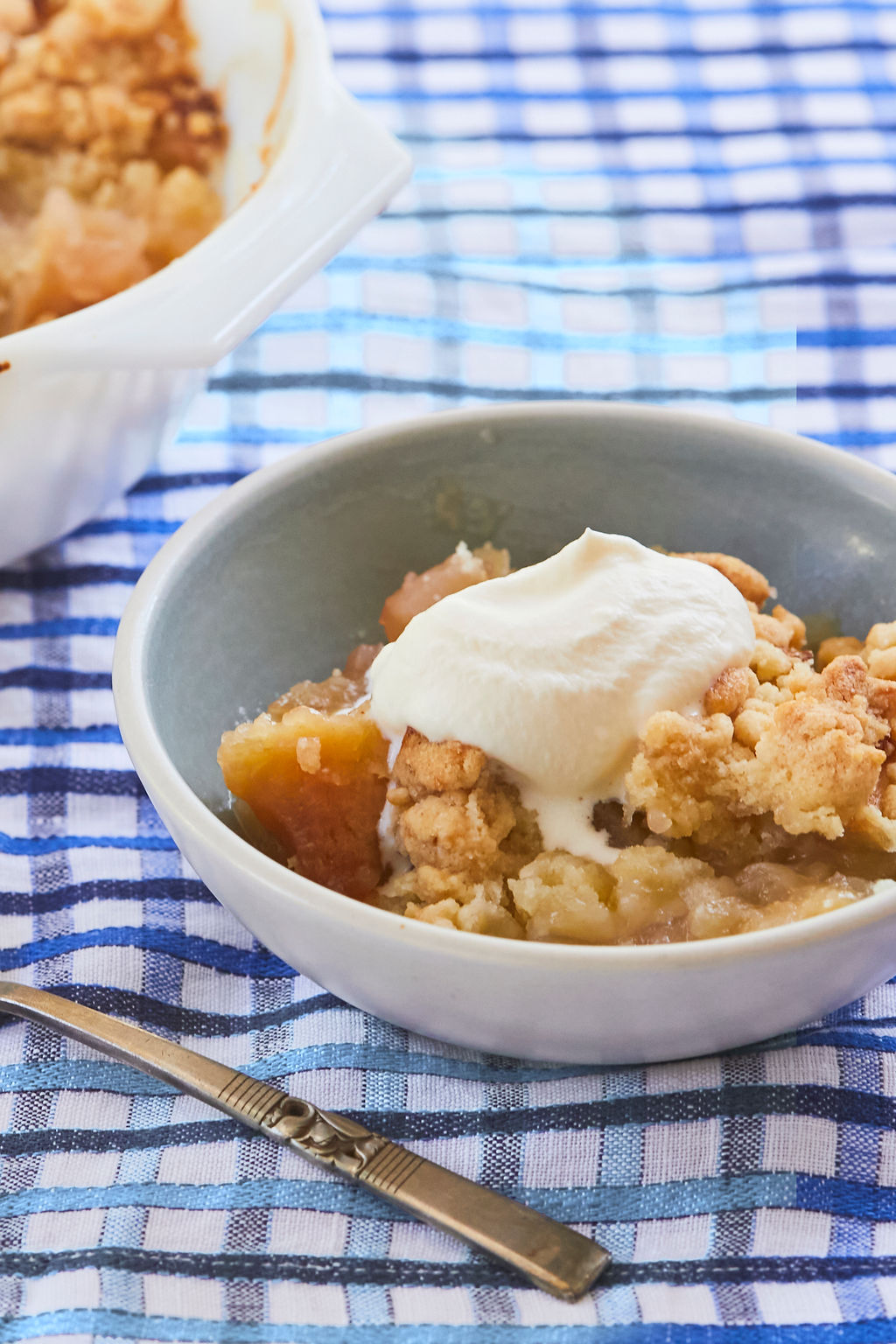
- Best for: Apple pie, tarts, galettes, crisps, crumbles (such as my Irish Apple Crumble) , applesauce, and cakes.
- My verdict: An excellent, dependable baking apple and the benchmark I compare other varieties against.
Golden Delicious
Don’t overlook this humble supermarket apple!
- What it’s like: Golden Delicious apples have thin skin, tender flesh, and a mild, honeyed sweetness. It doesn’t have the sharp acidity of Granny Smith, but it develops a lovely buttery quality when cooked. It’s also widely available and affordable.
- How it bakes: Golden Delicious becomes tender while still maintaining reasonable structure, giving baked desserts a softer apple texture.
- Best for: Apple cakes, apple butter, applesauce, baked apples, galettes, and pies.
- My verdict: A surprisingly versatile and underrated baking apple.
Gala
Gala apples are sweet, mild, and easy to find. They’re also a favorite snacking apple, especially for kids.
- What it’s like: Gala has a gentle sweetness and relatively mild apple flavor. Its flesh isn’t as robust as Granny Smith.
- How it bakes: Gala tends to soften more during baking and can become grainier or mushier than firmer varieties.
- Best for: Apple cakes, muffins, quick breads, crisps, and crumbles.
- My verdict: A useful everyday apple if it’s what you already have in your fruit bowl, but not my first choice when structure is important.
Fuji
Fuji are exceptionally sweet apples and crisp when eaten fresh.
- What it’s like: Originally developed in Japan, Fuji has high natural sweetness, plenty of juice, very crisp, and relatively low acidity compared with tarter baking apples.
- How it bakes: Fuji can become fairly soft during a long bake, and its sweetness doesn’t provide the same bright contrast as a tarter variety.
- Best for: Apple cakes (such as Caramel Upside Down Cake), muffins, quick breads, baked apples, and applesauce.
- My verdict: Sweet and versatile, but for pie I’d pair it with a tarter apple for a more balanced flavor.
Red Delicious
And now for the apple I wouldn’t usually reach for when I’m baking.
- What it’s like: Red Delicious is instantly recognizable by its deep red skin, but its flesh can be mild, soft, and mealy.
- How it bakes: It tends to lose structure quickly and can become grainy or mushy, while its already mild flavor becomes even more muted.
- Best for: I’d save this one for snacking rather than buying it specifically for baking.
- My verdict: There are much better choices when you’re making apple pie or another bake where the apple is the star.
Best Apples for Apple Pie: The Results
After comparing the six apples side by side, here’s how they stacked up in my test:
| Apple | Flavor | Texture | Juiciness | Overall Pie Verdict |
|---|---|---|---|---|
| Honeycrisp (or Pink Lady) | ⭐⭐⭐⭐⭐ | ⭐⭐⭐⭐ | ⭐⭐⭐ | Excellent |
| Granny Smith | ⭐⭐⭐⭐ | ⭐⭐⭐⭐⭐ | ⭐⭐⭐⭐ | Excellent |
| Golden Delicious | ⭐⭐⭐⭐ | ⭐⭐⭐ | ⭐⭐⭐⭐ | Very Good |
| Gala | ⭐⭐⭐ | ⭐⭐⭐ | ⭐⭐⭐⭐ | Good |
| Fuji | ⭐⭐⭐⭐ | ⭐⭐ | ⭐⭐⭐ | Fair |
| Red Delicious | ⭐⭐ | ⭐ | ⭐⭐⭐ | Poor |
Each apple is rated out of 5, and more stars is better. Juiciness rates how well the apple’s moisture worked in the pie, not simply how juicy it is raw — Honeycrisp is the juiciest of the six, which is exactly why it scores lower here.
Free 10-Page Guide
You’ve got the chart. Now get the whole guide.
I put everything from this test — and a lot that wouldn’t fit on this page — into a printable 10-page guide you can keep beside you while you bake.
- The right apple for 8 different bakes — pie, crisp, cake, galette, sauce and more
- Four more varieties worth knowing, and what each one is for
- My 8 pro chef tips, plus how to stop a watery filling
Free. Unsubscribe any time.
The big takeaway: For apple pie, I want an apple with enough firmness to hold its shape, enough acidity to balance the sweetness, and enough flavor to still taste distinctly of apple after a long bake.
Granny Smith remains an excellent, affordable, and reliable choice. Honeycrisp also delivers fantastic flavor, but it’s juicier and usually costs more. And as the test shows, just because an apple tastes good out of hand doesn’t necessarily mean it’s the best choice for pie.
Best Apples for Every Type of Baking
The best apple depends on what you’re making. Some recipes need firm apple slices that hold their shape, while others actually benefit from an apple that softens and breaks down.
Here’s my quick guide:
| What You’re Making | Best Apples | Try This Recipe |
|---|---|---|
| Apple Pie | Honeycrisp, Granny Smith, Pink Lady, Braeburn | Irish Apple Tart (Pie) |
| Apple Crisp or Crumble | Honeycrisp, Granny Smith, Pink Lady, Braeburn | Caramel Apple Crisp |
| Apple Cake | Granny Smith, Fuji, Gala, Golden Delicious | My Mum’s Irish Apple Cake |
| Apple Galette or Tart | Granny Smith, Pink Lady, Golden Delicious, Braeburn | Apple Blueberry Galette |
| Baked Apples | Fuji, Honeycrisp, Golden Delicious | — |
| Applesauce | McIntosh, Golden Delicious, Fuji | Best Homemade Applesauce |
| Apple Butter | McIntosh, Golden Delicious | — |
| Muffins and Quick Breads | Gala, Fuji, Granny Smith, Pink Lady | Zucchini Apple Bread |
Pink Lady, Braeburn, and McIntosh weren’t part of my six-apple pie test, but they’re useful varieties to know when choosing apples for other types of baking.
Should You Mix Apples for Apple Pie?
Absolutely! The best combination of two or more apple varieties is one of my favorite ways to make a more interesting apple pie.
Think about what each apple brings to the filling. A tart, firm Granny Smith provides acidity and structure, while a sweeter apple like Honeycrisp or Fuji can bring another layer of flavor and sweetness.
Instead of searching for one apple that does absolutely everything, combine varieties with complementary qualities.
A mixture of Granny Smith and Honeycrisp, for example, gives you tartness, sweetness, and plenty of apple flavor.
Should You Precook Apples for Pie?
You don’t always have to precook apples for pie, but doing so can give you much more control over the final filling.
Gently cook your sliced apples for about 5 to 10 minutes, or until they begin to become fork-tender. This gives them a head start on softening before they ever go into the crust.
Precooking also helps the apples settle before you assemble the pie. Raw apples shrink considerably in the oven, which can leave a large gap between the cooked filling and your top crust.
Another method I use is macerating the apples. Toss the sliced apples with the sugar called for in your recipe and let them sit for about an hour. The sugar draws excess juice from the fruit. Drain off that liquid, reduce it until concentrated, and stir it back into the apples for plenty of flavor without all of the excess moisture.
Gemma’s Pro Chef Tips
- Choose your apple for the dessert. Firm apples are important for pies and tarts, while softer varieties can be ideal for applesauce, apple butter, cakes, and muffins.
- Mix sweet and tart varieties. Combining apples gives your filling more complex flavor than relying on sweetness alone.
- Keep your slices even. Apples cut to roughly the same thickness will cook at the same rate, so you won’t end up with some pieces mushy and others still crunchy.
- Watch very juicy apples. If your apples release lots of moisture, macerating them before assembling a pie can help you control the liquid.
- Don’t assume Granny Smith is your only option. It’s dependable for a reason, but Honeycrisp, Pink Lady, Braeburn, and other firm varieties can also give you fantastic results.
- Taste before adding all of your sugar. Apples vary enormously in sweetness. A very sweet Fuji and a tart Granny Smith don’t necessarily need exactly the same treatment.
- Use fresh, firm fruit. Even a normally excellent baking variety won’t perform at its best if the apple has become old, soft, or mealy.
- Precook for more control. Giving apples a head start can help prevent a large gap beneath the top crust and make the final texture more predictable.
FAQs
What is the best apple for apple pie?
Granny Smith is one of the best and most dependable apples for apple pie because it’s firm, tart, widely available, and holds its shape well during a long bake. Honeycrisp is another excellent option if you prefer a sweeter apple with plenty of flavor, although it tends to release more juice.
Are Granny Smith apples good for baking?
Yes! Granny Smith apples are among the most dependable baking apples. They’re firm, tart, widely available, and hold their shape well, making them particularly good for pies, tarts, crisps, and crumbles.
Are Honeycrisp apples good for baking?
Yes. Honeycrisp apples have fantastic sweet-tart flavor, but they’re also very juicy. They’re excellent in crisps and crumbles and can work well in pie, although you may need to account for the additional moisture they release.
Can I use Gala apples for apple pie?
You can, but Gala apples soften more than firmer baking varieties and have a milder flavor. I prefer them in cakes, muffins, quick breads, and crisps, or mixed with a firmer apple in pie.
Are Fuji apples good for baking?
Yes. Fuji apples are naturally very sweet and work particularly well in cakes, muffins, baked apples, and applesauce. For apple pie, try pairing Fuji with a tart apple to give the filling more balance.
What apples should I avoid for apple pie?
I generally avoid Red Delicious for pie because it can become soft or mealy and doesn’t have the strong flavor or acidity I want in a great apple filling.
Is it better to use one apple or several apples in apple pie?
I love using a mixture. Combining a firm, tart apple with a sweeter variety gives you different flavors and textures in the same filling. If you only have one good baking apple, however, you can still make a fantastic pie.
Do you have to peel apples before baking?
It depends on the recipe, but for apple pie, cakes, and many pastries, I generally prefer peeled apples. The fruit cooks more evenly, and you won’t have pieces of tougher skin interrupting the texture.
Want all of this in one printable guide?
Apple Recipes to Try
- Best Apple Pie Recipe
- My Mum’s Irish Apple Cake
- Caramel Apple Crisp
- 5-Ingredient Apple Crumble Recipe
- Zucchini Apple Bread
Get More Articles!



Watch The Recipe Video!
About Us
Meet Gemma
About Us
Meet Gemma
Hi Bold Bakers! I’m Gemma Stafford, a professional chef originally from Ireland, best-selling cookbook author, and the creator of Bigger Bolder Baking and the Bold Baking Network. I want to help you bake with confidence anytime, anywhere with my trusted and tested recipes and baking tips. You may have seen one of my 1000+ videos on YouTube, Instagram, Facebook, or TikTok or as a guest judge on Nailed It! on Netflix or the Best Baker in America on Food Network. No matter your skills, my Bold Baking Team & I want to be your #1 authority for everything baking.








an apple you really should consider is the gravenstein. originally from northern germany, this summer apple has a brief season in july-august. sweet-tart flavor ideal for pie and holds it’s shape well. this is a green apple overlaid with red and then yellow stripes. by the time the yellow stripes appear, it can be eaten out of hand and makes great applesauce. since it is not a keeper, i can applesauce and pie filling and freeze whole cored and peeled apples to make apples baked in pastry. gravs also make tasty dried cinnamon apple slices.
Thanks for the apple exploration, mealy is a word as a Scot living in Canada hasn’t heard for a long time , have me a chuckle
I don’t know where you live but we have different apples here in Quebec. The best for apple pie have always been Cortland. And for French apple tart I always use Goldens. There is an apple cake that I make with anything happen to have around except McIntosh.