This post may contain affiliate links. Please see my full disclosure for details.
Hi Bold Bakers!
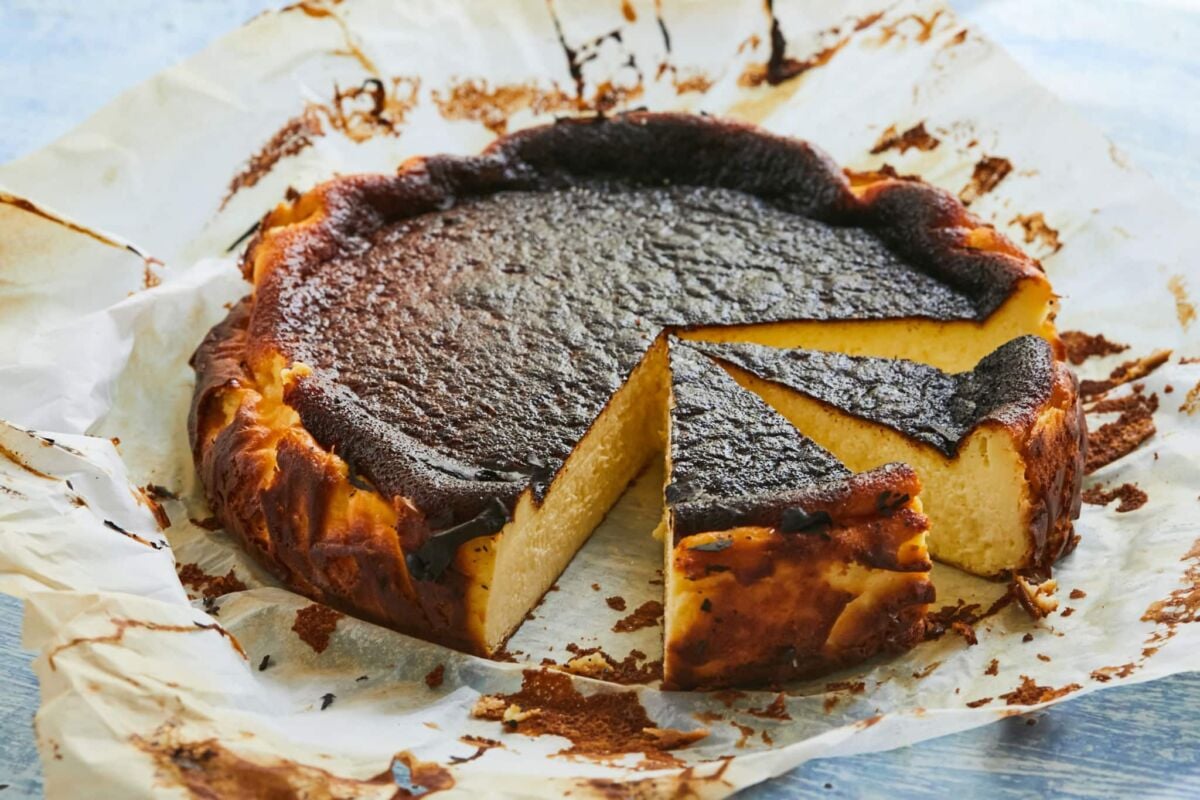
WHY YOU’LL LOVE THIS RECIPE: My luscious Burnt Basque Cheesecake combines a creamy, custardy center with a deeply caramelized, bittersweet top. Unlike typical New York-style cheesecake, it bakes at a high temperature to create its signature dark top, while keeping the center delectably soft.
- Irresistibly jiggly center: This cheesecake is meant to wobble when it comes out of the oven. As it cools, the center sets into a wonderfully custard-like texture that makes every bite irresistible.
- Deeply caramelized top: A high baking temperature creates the dark, almost burnt-looking exterior. It gives a gorgeous bittersweet contrast to the rich, creamy filling.
- Just 7 simple ingredients: Cream cheese, sugar, eggs, heavy cream, vanilla, salt, and a bit of flour are all you need!
- Easy crust-free recipe: Forget making a crust or fussing with a water bath. Simply mix the batter, pour it into the pan, and bake.
- A showstopper! With its dramatically browned top, naturally sunken center, and rustic cracked look, this cheesecake will create excitement at holidays, dinner parties, and other celebrations.
As a pro chef, I’m always inspired by creative techniques that turn simple ingredients into something delicious and surprising. This Burnt Basque Cheesecake is one of my favorites! At first glance, you might think you ruined it—burnt, cracked, sunk in the middle—but every bit of that is on purpose! Instead of baking it gently in a water bath at a low temperature, like traditional cheesecake, this is baked at a high temperature. The high heat deliberately caramelizes and darkens the exterior, creating a bittersweet natural crust that balances the creamy, custard-like center.
A few years ago, I went to Jon Cake in Barcelona, which went viral for its Basque cheesecake. Since then, I’ve been obsessed with figuring out how to recreate its signature flavor and texture at home, and you’ll love the result!
My top tip for this recipe is to embrace the wobble! Unlike a traditional cheesecake, Burnt Basque Cheesecake should still jiggle noticeably when you take it out of the oven. It will continue to set while it cools, creating that signature creamy, light-as-air texture. For more delicious Spanish-inspired desserts, you’ll love my Spanish Almond Cookies (Polvorones), Churros, and Flan (Creme Caramel).
Bold Bakers Loved This!
“While your cheesecake was baking, it filled our home with a wonderful aroma. I allowed the top to caramelize, but watched so it didn’t get black. So easy to make—I love this recipe!”—Eve
“Tried this and I’ll never go back to another cheesecake. So creamy and such wonderful flavors!”—Patimi
“I had seen this kind of cheesecake when I was on vacation, but I never thought it was something you could make at home. But then your Basque cheesecake popped up, and I thought I’d give it a try. It was such a surprise very easy and so tasty!!—Naomi
IMPORTANT NOTE: This recipe was improved and updated on 10/29/2026, to include a refreshed introduction, clearer steps, make-ahead and storage instructions, the most frequently asked questions, and enhanced Pro Chef Tips.
Table of Contents
- What is Burnt Basque Cheesecake?
- Tools You Need
- Key Ingredients and Substitutes
- How to Make Burnt Basque Cheesecake
- Gemma’s Pro Chef Tips
- Make-Ahead and Storage Instructions
- FAQs
- More Cheesecake Recipes

What is Burnt Basque Cheesecake?
Burnt Basque Cheesecake is a crustless cheesecake known for its deeply caramelized, dark brown top and soft, custard-like center. The cheesecake is baked at a high temperature, which creates a dark exterior with a bittersweet flavor and a creamy middle. This influential dessert originated at La Viña in San Sebastian, Spain’s Basque Country, in the late 1980s; chef Santiago Rivera, wanted to invent a unique signature dessert and developed this classic Basque cheesecake with a melt-in-your-mouth texture. It has inspired bakers at restaurants around the world, including Jon Cake in Barcelona.
Tools You Need
- Mixing bowl
- Measuring spoons
- Measuring cups
- Glass measuring jug
- Kitchen scale (optional)
- 10-inch (25-cm) springform pan
- Parchment paper
- Stand mixer
- Spatula
- Sieve
- Baking sheet
Key Ingredients and Substitutes
Cream cheese
- Cream cheese is the foundation of the cheesecake.
- It’s important to use full-fat, brick cream cheese in this recipe. Tub-style cream cheese or cream cheese spreads won’t create the proper texture.
- Be sure your cream cheese is softened before you start mixing the batter—otherwise, it will remain lumpy and won’t mix evenly.
- Substitutes: you can use an equal amount of full-fat mascarpone or ricotta. The texture tends to be softer.
Granulated sugar
- Sugar sweetens the cheesecake and balances the tanginess of the cream cheese.
- Additionally, granulated sugar contributes to the caramelized top.
- Substitute: Sugar-free sugar substitutes can’t caramelize, so you won’t get the same texture and color.
Eggs
- Eggs give the cheesecake structure, allowing it to set as it bakes.
- Additionally, eggs add richness.
- Use room temperature eggs so that they blend smoothly. Here are my tips for warming cold eggs.
- Substitutes: cornstarch can be used to help cheesecake set. Slake (combine) 2 Tbsp of cornstarch/arrowroot powder into 3 tablespoons of water (or liquid from the recipe) for every egg replacement.
Heavy whipping cream
- Heavy whipping cream gives the Basque cheesecake moisture and rich flavor.
- Be sure to use heavy whipping cream with at least 36% milkfat for a thick, creamy cheesecake.
- The cream also contributes to a silky texture.
- Substitute:
-
-
Sour Cream: Replace heavy cream with sour cream in a 1:1 ratio. It works well in baked cheesecake, adding tanginess and moisture.
-
Full-Fat Greek Yogurt: Replace heavy cream with full-fat Greek yogurt in a 1:1 ratio. It works in baked cheesecake but produces a tangier, less rich result.
-
Whole Milk + Melted Butter: Combine ¾ cup whole milk with ¼ cup melted butter to replace 1 cup heavy cream. This works for baked cheesecake but cannot be whipped.
-
Vanilla extract
- Vanilla extract adds depth and warm sweetness to the Basque cheesecake recipe.
- Substitute: Use the same amount of Vanilla Bean Paste if you prefer.
Salt
- Salt enhances the flavors in the cheesecake.
- No substitute.
All-purpose flour
- A small amount of flour gives this Basque burnt cheesecake stability.
- Because you’re using such a small amount, sieving the flour will distribute it evenly and help prevent lumps.
- Substitute: For a gluten-free cheesecake, use the same amount of a 1:1 gluten-free baking blend, like my Easy Almond Flour Baking Mix, or another gluten-free flour.
How to Make Basque Cheesecake
To Make the Basque Cheesecake Batter
- Prepare to bake. Preheat the oven to 400°F (200°C). Butter and line a 10-inch (25-cm) springform pan with 2 layers of parchment paper that come up to the rim of the pan.
- Whip the cream cheese and sugar. In the bowl of a stand mixer fitted with a whisk attachment, whip the softened cream cheese and sugar on high speed until smooth and lump-free, about 3 minutes.
- Add the eggs. Lower the speed to medium-low and add the eggs one at a time, mixing until combined. Scrape down the sides and bottom of the bowl to ensure the batter is smooth and lump-free.
- Mix in the cream and flavorings. Add the heavy cream, vanilla, and salt, then whip until the batter has thickened and is smooth.
- Add the flour. Turn off the mixer and sift the flour over the batter. Turn the machine on low and mix until JUST combined, then stop.
To Bake the Basque Cheesecake Perfectly
- Fill the pan. Pour the batter into the prepared pan and place the pan on a parchment-lined baking sheet.
- Bake until wobbly. Bake for 40 – 45 minutes, or until it is very wobbly. Unlike other baked cheesecakes, a Basque cheesecake has to come out of the oven VERY wobbly so the center remains soft and creamy.
To Brown the Top of the Basque Cheesecake
- Broil if needed. At this point, the top of the cheesecake should be a dark brown. If not, turn the broiler on to high and watch the cheesecake VERY carefully. It will only take a minute or so to darken more. Once it reaches a deep brown color, pull the cake out of the oven immediately.
To Chill the Basque Cheesecake
- Cool before chilling. Let cool to room temperature for 2 hours before covering and refrigerating until thoroughly chilled overnight.
- Serve and enjoy. Serve cold, perhaps with a side of whipped cream, fresh berries and a glass of sherry! Store in the fridge for up to 3 days.

FULL (PRINTABLE) RECIPE BELOW!
Gemma’s Pro Chef Tips
- Use room-temperature ingredients. Be sure your cream cheese is softened, and your eggs are at room temperature before you start mixing the batter, otherwise, the cream cheese won’t mix evenly and will remain lumpy.
- Use a big pan. This is a big cheesecake and rises quite high in the oven. Be sure to use a 10-inch (25-cm) springform pan or reduce the recipe by 1/3 or ½ to fit into a smaller pan.
- Line pan with parchment paper. This will make removal easier.
- You want a wobbly middle. This Spanish Basque cheesecake should be very wobbly when you take it out of the oven. It may seem almost raw at first, but don’t worry‚ once the cheesecake sets, the texture will be perfect.
- Broil if necessary. If the top of the cheesecake isn’t dark brown at the end of baking, broil it for a minute or so.
- If using the broiler, you want the cheesecake to get very dark brown but not black. A brown exterior will taste bittersweet, but a black one will just taste bitter.
- While the broiler is on, keep your oven mitts on so that you can remove the cake as soon as it is done. It can go from brown to black in a matter of seconds.
- Chill overnight. Since the cheesecake is so creamy, it is crucial to give it enough time in the fridge before attempting to cut a slice.
- Flavor variations. For pumpkin Basque cheesecake, serve each slice with a dollop of Pumpkin Butter.
- Make it caramel Basque cheesecake by serving with a pitcher of my Irish Whiskey Caramel Sauce.
- For a delightful flavor combination, drizzle each slice of cheesecake with Chocolate Sauce.
Make-Ahead and Storage Instructions
Make-ahead tips
- As the Burnt Basque Cheesecake has to chill in the fridge overnight, it’s a perfect make-ahead dessert.
- Make the cheesecake, let it sit on the countertop for two hours to cool, and then cover well and refrigerate overnight.
How to store leftovers
- Store leftover cheesecake in an airtight container for up to three days.

FAQs
Why is this Basque-style cheesecake baked at a high temperature?
- Unlike typical New York style cheesecake, which is baked slowly at a low temperature, this Basque style cheesecake is baked at a higher temperature for a shorter amount of time, which creates its dark top and creamy interior.
Do I need to whip the heavy cream before adding it to the cheesecake batter?
- No, there’s no need to whip the heavy cream separately. Add it directly to the cream cheese mixture along with the vanilla and salt, then mix until smooth and slightly thickened.
- The eggs provide the structure, while the heavy cream adds richness, moisture, and a silky, custard-like texture. Whipping the cream separately would incorporate extra air that isn’t necessary for this Burnt Basque Cheesecake.
Do I need a water bath to bake this Burnt Basque Cheesecake?
- No, you don’t. Unlike traditional cheesecakes, Burnt Basque Cheesecake is baked without a water bath.
Should my Basque cheesecake have a burnt-looking top?
- The “burnt” top is what makes a Basque cheesecake special. It’s baked hot and fast so the sugar caramelizes and the top gets deeply browned/dark amber in color, while the center stays soft, creamy, and jiggly.
- Technically, you want the top to be deeply brown/dark amber in color, which gives a caramelized, toasty taste. You don’t want the top to be black, as that will make the cheesecake taste bitter.
Is it bad if my cheesecake sinks in the middle?
- A sunken middle and cracks are normal in this cheesecake.
- The high baking temperature and the soft center will cause this cheesecake to settle, creating its signature rustic appearance.
How do I know when the center is baked enough?
- Don’t wait for the center to look completely set.
- You want a good jiggle in the middle because this cheesecake continues to set as it cools. That’s how you get that gorgeous creamy center.
- Please check out my recipe video (linked at the top of the post) to see just how much the center should jiggle when your Basque Cheesecake is done baking.
Do I remove the cheesecake from the pan before chilling overnight?
- No. Let the Burnt Basque Cheesecake cool in the pan at room temperature for 2 hours, then cover and refrigerate it overnight until thoroughly chilled and set.
- Remove the springform ring just before serving to help the cheesecake hold its shape.
Can I make this cheesecake gluten-free?
- Yes, you can make this cheesecake gluten-free.
- Replace the all-purpose flour with the same amount of a gluten-free baking blend, like my Easy Almond Flour Baking Mix or another gluten-free flour.
Can I make this Basque Cheesecake ahead of time?
- Yes, this Basque Cheesecake is perfect for making ahead of time because it has to chill overnight to set.
- Let cool to room temperature, then wrap well and refrigerate overnight.
More Cheesecake Recipes
- Caramel Apple Cheesecake
- New York Cheesecake
- White Chocolate Truffle Cheesecake
- No-Bake Lemon Cheesecake
- Turtle Cheesecake Bars
IMPORTANT NOTE: This recipe was improved and updated on 10/29/2026, to include a refreshed introduction, clearer steps, make-ahead and storage instructions, the most frequently asked questions, and enhanced Pro Chef Tips.
Try These Recipes!

Basque Cheesecake


Ingredients
- 4 cups (2 lbs /900 g) brick cream cheese , softened
- 1 ½ cups (12 oz/340 g) granulated sugar
- 6 large eggs , room temperature
- 1 cup (8 fl oz/240 ml) heavy whipping cream
- 1 ½ teaspoons vanilla extract
- 1 teaspoon salt
- 2 tablespoons all-purpose flour
Instructions
To Make the Basque Cheesecake Batter
- Preheat the oven to 400°F (200°C). Butter and line a 10-inch springform pan with 2 layers of parchment paper that comes up to the rim of the pan.
- In the bowl of a stand mixer, using a whisk attachment, whip the softened cream cheese and sugar on high speed until smooth with no lumps, about 3 minutes.
- Lower the speed to medium/low and add the eggs, one at a time, until combined. Run a spatula around the bottom of the bowl to ensure the batter is smooth and there a no lumps.
- Lastly, add in the cream, vanilla and salt and whip until the batter has thickened and is smooth.
- Turn off the machine and sift the flour over the batter. Turn the machine on low and mix until JUST combined, then stop.
To Bake the Basque Cheesecake Perfectly
- Pour into your prepared pan and place the pan on a baking sheet lined with parchment.
- Bake for 40 - 45 minutes, or until it is very wobbly. Unlike other baked cheesecakes, a Basque cheesecake has to come out of the oven VERY wobbly so the center remains soft and creamy.
To Brown the Top of a Basque Cheesecake
- At this point, the top of the cheesecake should be a dark brown. If not, turn the broiler on to high and watch the cheesecake VERY carefully. It will only take a minute or so to darken more. Once it reaches a deep brown color, pull the cake out of the oven immediately.
To Chill the Basque Cheesecake
- Let cool to room temperature for 2 hours before covering and refrigerating until thoroughly chilled overnight.
- Serve cold, perhaps with a side of whipped cream, fresh berries and a glass of sherry! Store in the fridge for up to 3 days.
Recipe Notes
- Use room-temperature ingredients. Be sure your cream cheese is softened, and your eggs are at room temperature before you start mixing the batter, otherwise, the cream cheese won’t mix evenly and will remain lumpy.
- Use a big pan. This is a big cheesecake and rises quite high in the oven. Be sure to use a 10-inch (25-cm) springform pan or reduce the recipe by 1/3 or ½ to fit into a smaller pan.
- Line pan with parchment paper. This will make removal easier.
- You want a wobbly middle. This Spanish Basque cheesecake should be very wobbly when you take it out of the oven. It may seem almost raw at first, but don’t worry‚ once the cheesecake sets, the texture will be perfect.
- Broil if necessary. If the top of the cheesecake isn’t dark brown at the end of baking, broil it for a minute or so.
- If using the broiler, you want the cheesecake to get very dark brown but not black. A brown exterior will taste bittersweet, but a black one will just taste bitter.
- While the broiler is on, keep your oven mitts on so that you can remove the cake as soon as it is done. It can go from brown to black in a matter of seconds.
- Chill overnight. Since the cheesecake is so creamy, it is crucial to give it enough time in the fridge before attempting to cut a slice.
- Flavor variations. For pumpkin Basque cheesecake, serve each slice with a dollop of Pumpkin Butter.
- Make it caramel Basque cheesecake by serving with a pitcher of my Irish Whiskey Caramel Sauce.
- For a delightful flavor combination, drizzle each slice of cheesecake with Chocolate Sauce.



Hello Gemma! How are you?
I’ve been a huge fan of yours since I was in like 6th grade (I’m 21 now haha) and I’ve made sooo many of your recipes, including this cheesecake…and I always LOVE the way all your recipes turn out, YOU ROCK!!
I do have a question though: could I perhaps substitute the flour for oat flour? And if so, how much of it would I have to add?
Thank you very much, have a lovely day!
Hi Ma’am, huge fan of your recipes – both blog & YouTube. Can you please share the substitute for eggs in this recipe & the measurements for the same? Thank you ????????????
Hi Gemma,
I am a big fan of your recipes. Love your recipe book. Please suggest what can I substitute for heavy cream.
Debjani
Just before I was to leave on holiday, your Basque cheese cake popped up. I thought I’d give it a try. Two days into my holiday Basque cheesecake shows up on the restaurant menu in Japan! It looks very similar to yours! Quite tasty!!
Hi gma, I want to make mini individual cheesecakes, if I do this in cupcake pans how long should I bake for and do I need to increase the temperature and reduce cooking time.
I wanted a small cheese cake in a 6″ pan so I cut the recipe to only 1/4 of original portion.
It turned out well and it was a super easy process.
Thank you for the recipe!
I made two minis! They filled our home with a wonderful aroma. I cannot wait to share them for Cheesefare Sunday church fellowship! I allowed the tops to carmelize. I didn’t dare make the tops go black. I KNOW they will taste fantastic! Recipe was SO easy to make. I just dumped everything in a glass bowl and blended until smooth. Last thing to add was the flour. SO EASY!!! Love this recipe!
Gemma, can I substitute the white flour with anything keto approved? Thank you.
Hi Gemma. I understand you leave the cheesecake to cool in the pan for 2 hours. To leave it overnight would you take it out of the pan, or leave it until you serve? Thank you mostest
Hello. Does the heavy Creme need to be whipped so it ‚standing‘?