This post may contain affiliate links. Please see my full disclosure for details.
Hi Bold Bakers!
- Cloud-like texture: You’ll love the ultra-soft, pillowy crumb that pulls apart beautifully.
- Long-lasting freshness: The tangzhong method locks in moisture so the bread stays soft for days.
- Lightly sweet flavor: A subtle sweetness makes it perfect for both sweet and savory uses.
- Versatile base: Ideal for sandwiches, toast, or serving alongside your favorite spreads.
- Make-ahead friendly: The dough can be prepared in advance for added flexibility and flavor.
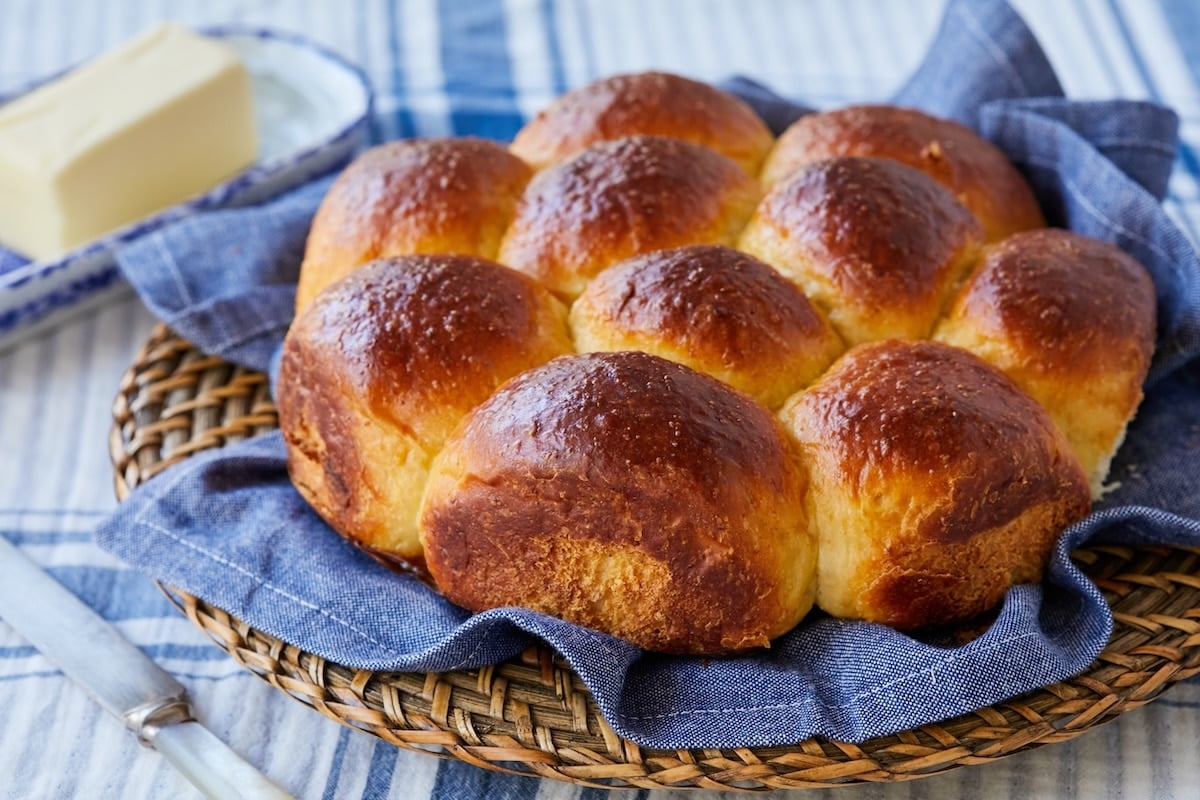
To me, a great bread recipe should be both reliable and rewarding. When I developed this Japanese milk bread recipe, I wanted something that delivers bakery-quality results at home while still being approachable. This enriched dough is soft, tender, and incredibly versatile, making it a staple you’ll come back to again and again.
My top tip for you when making this recipe is not to skip the tangzhong step. This simple cooked starter gives the bread its signature soft texture and helps it stay fresh longer. For more bread recipes, be sure to try Brioche, Irish Brown Bread, and Homemade Sandwich Bread.
Table of Contents
- What is Japanese Milk Bread (Hokkaido Bread)?
- What is a Tangzhong?
- Tools You Need
- Key Ingredients and Substitutes
- How to Make Japanese Milk Bread (Hokkaido Bread)
- Gemma’s Pro Chef Tips
- Make-Ahead and Storage Instructions
- FAQs
- More Bread Recipes
What is Japanese Milk Bread (Hokkaido Bread)?
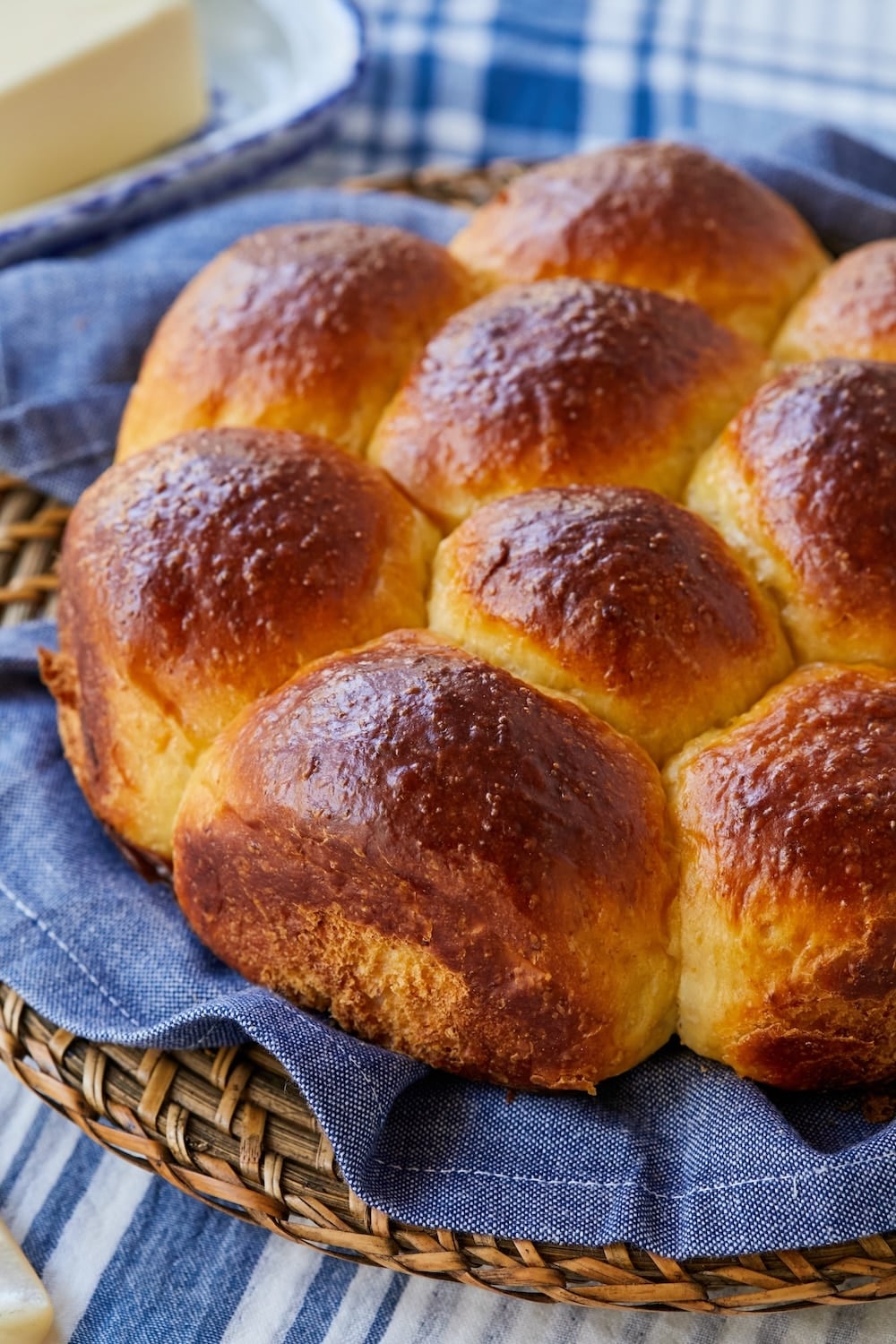
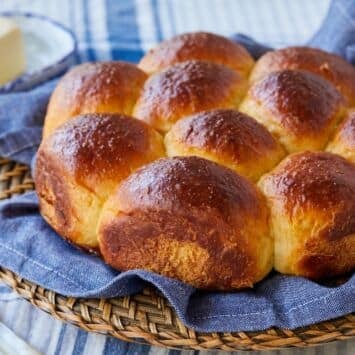
Japanese Milk Bread, also known as Hokkaido milk bread (ho-kie-do) or shokupan, is a soft, enriched yeast bread that is rich, buttery, and incredibly fluffy. It’s similar to Hawaiian bread rolls but even softer, making it perfect for dinner rolls, sandwich buns, or sliders.
What makes this bread different is the tangzhong method—a cooked flour paste that allows the dough to absorb more moisture, creating a softer texture and longer shelf life.
What is a Tangzhong?
A tangzhong is a roux—a cooked mixture of flour and liquid. While traditionally used to thicken sauces, here it transforms the texture of bread.
- Adds hydration: Allows the dough to absorb more liquid.
- Creates steam: Produces air pockets for a lighter crumb.
- Improves softness: Results in a fluffy, pillowy texture.
- Extends freshness: Keeps bread softer for longer.
Tools You Need
- Measuring cups
- Measuring spoons
- Measuring jugs
- Mixing bowls
- Kitchen scale (recommended for accuracy)
- Small saucepan
- Wire whisk
- Stand mixer or knead by hand
- Silicone spatula
- 9-inch (23 cm) round cake pan
- Pastry brush
- Wire rack
- Dough cutter
Key Ingredients and Substitutes
For the Tangzhong Starter
Water
- Water hydrates the flour and forms the tangzhong paste.
- Importantly, this step gelatinizes the starches, allowing the dough to retain significantly more moisture.
- This is what gives this Japanese Milk Bread Recipe (Hokkaido) its signature soft texture that lasts for days.
Whole milk
- Whole milk adds richness and contributes to a softer, more tender crumb.
- Additionally, it enhances flavor and gives the bread a subtle creamy sweetness.
- Substitute: Use whole milk or full-fat plant based milk for best results—lower-fat milk will yield a less rich texture.
Bread flour
- Bread flour thickens the tangzhong and forms a smooth, pudding-like paste.
- Because of its higher protein content, it supports the structure of the final dough.
- This ensures the bread stays soft yet strong enough to hold its shape.
For the Japanese Milk Bread Dough
Bread flour
- Bread flour has a higher protein content, which creates a strong gluten network while still allowing for a soft, airy crumb.
- This strength is essential to support the enriched dough and achieve that signature pull-apart texture.
- It also helps the bread rise higher and maintain its structure during baking.
- Substitute: You can use all-purpose flour, but the bread will be slightly less chewy and structured.
Granulated sugar
- Granulated sugar activates yeast, sweetens the dough and balances the richness of the milk and butter.
- Importantly, sugar helps tenderize the crumb by limiting gluten development.
- Additionally, it contributes to browning, giving the bread its golden crust. Sugar-free sugar substitute will not work so well.
- It also helps retain moisture, keeping the bread softer for longer.
Dry milk powder
- Dry milk powder adds concentrated dairy flavor without adding extra liquid.
- Importantly, it improves the softness of the crumb and enhances the overall texture.
- It also helps create a finer, more even crumb structure.
- Substitute: You can omit it, but the bread will be less rich and slightly less tender.
Instant yeast
- Instant yeast provides a reliable and consistent rise throughout the dough.
- It works quickly and evenly without needing to be activated in liquid first.
- This helps create a light, airy texture with even fermentation.
- Substitute: for every teaspoon of instant yeast, use 1 1/4 teaspoons of active dry yeast. Bring the water or whole milk to lukewarm temperature and mix in the active dry yeast. Let it sit for about 5 minutes until tit hickens with foam on top.
- Put your cleaner finger in; if the water feels close to your body temperature or slightly warmer, it’s lukewarm.
Salt
- Salt enhances the overall flavor of the bread and balances the sweetness.
- Importantly, it strengthens the gluten structure, helping the dough hold its shape.
- It also regulates yeast activity for a controlled, even rise.
Whole milk
- Whole milk adds moisture and richness to the dough.
- Additionally, it contributes to a softer crumb and fuller flavor.
- Use lukewarm milk (not hot) to support proper yeast activity.
Egg
- Egg provides structure and stability to the dough.
- Importantly, it emulsifies the mixture, creating a smooth, cohesive dough.
- It also adds richness, color, and contributes to the soft, tender crumb.
- Substitute: egg substitutewon’t deliver the same result.
Butter
- Butter adds richness and depth of flavor to the bread.
- Importantly, it tenderizes the dough, creating a soft, delicate crumb.
- It also improves the mouthfeel, giving the bread a soft, almost melt-in-your-mouth texture.
- Use melted butter so it incorporates smoothly into the dough.
- Substitute: Salted butter adds extra flavor, but unsalted butter works just as well. You can also use coconut oil or avocado oil.
Egg wash
- Egg wash is brushed over the shaped dough before baking.
- It creates a glossy, golden-brown finish.
- Additionally, it enhances the overall appearance, giving the bread a professional, bakery-style look.
- Substitute: full-fat milk, yogurt, or cream will also work.
How to Make Japanese Milk Bread (Hokkaido Bread)
To Make the Tangzhong
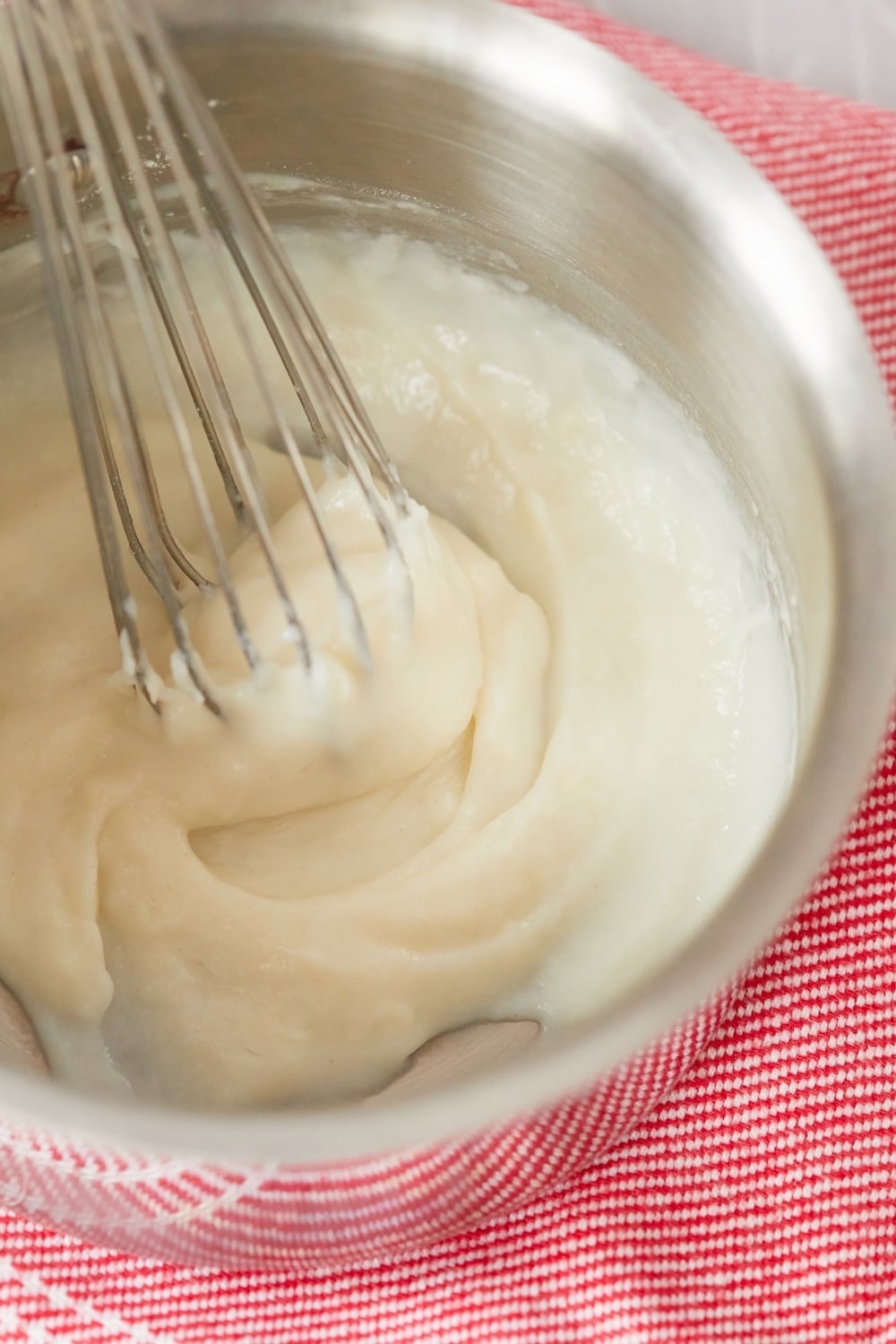
- Cook the tangzhong: In a small saucepan over low heat, add the water, milk, and bread flour and whisk until thickened, 2–3 minutes.
- Cool the mixture: Remove from the heat and set aside to cool.
To Make the Japanese Milk Bread Dough
- Combine dry ingredients: In the bowl of a stand mixer fitted with a dough hook, add the bread flour, sugar, milk powder, yeast, and salt and stir to combine.
- Knead the dough: Add the tangzhong, milk, egg, and butter, and knead on medium-low speed for 8–10 minutes, or until a smooth, elastic dough forms and clears the sides of the bowl. (This step can also be done by hand.)
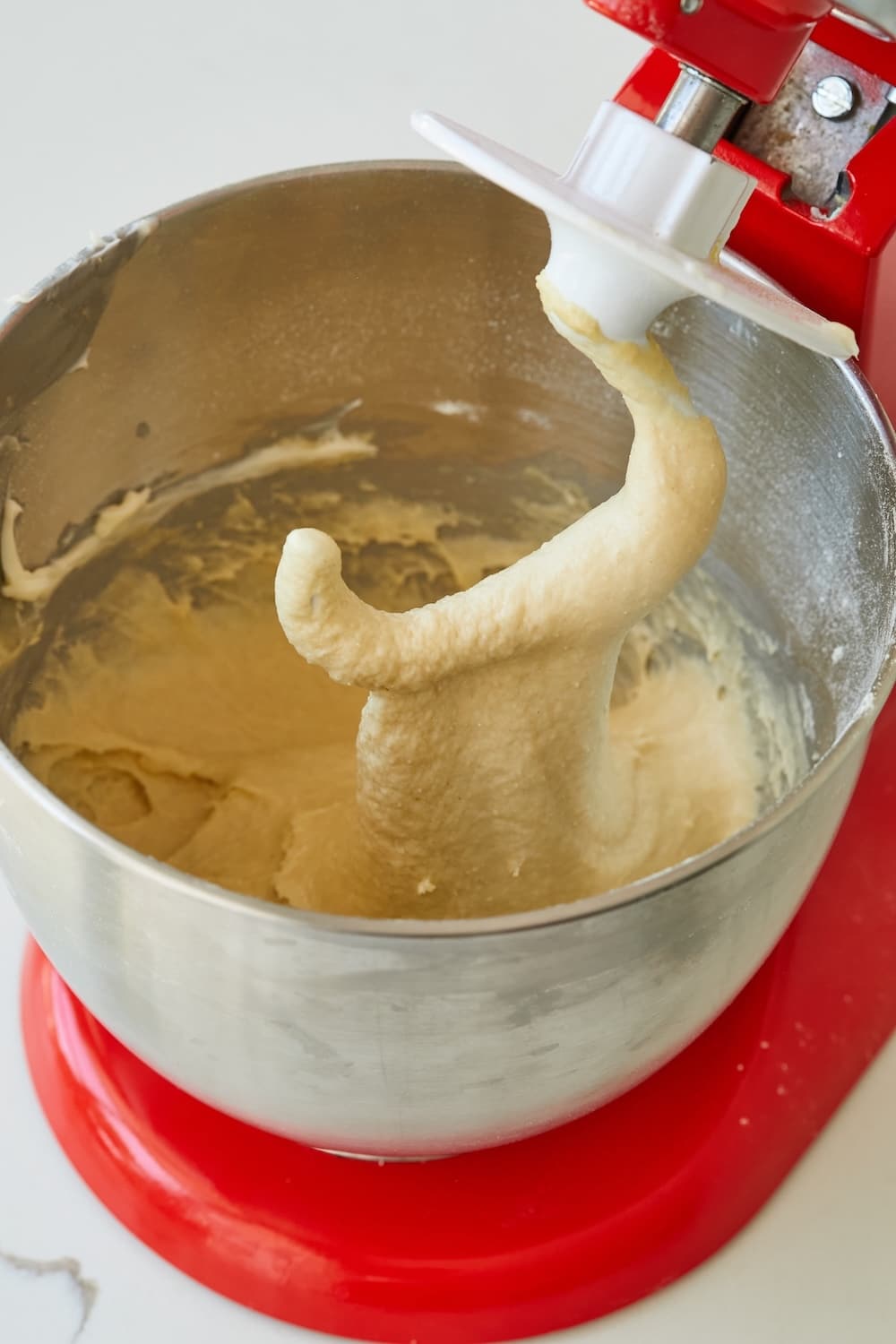
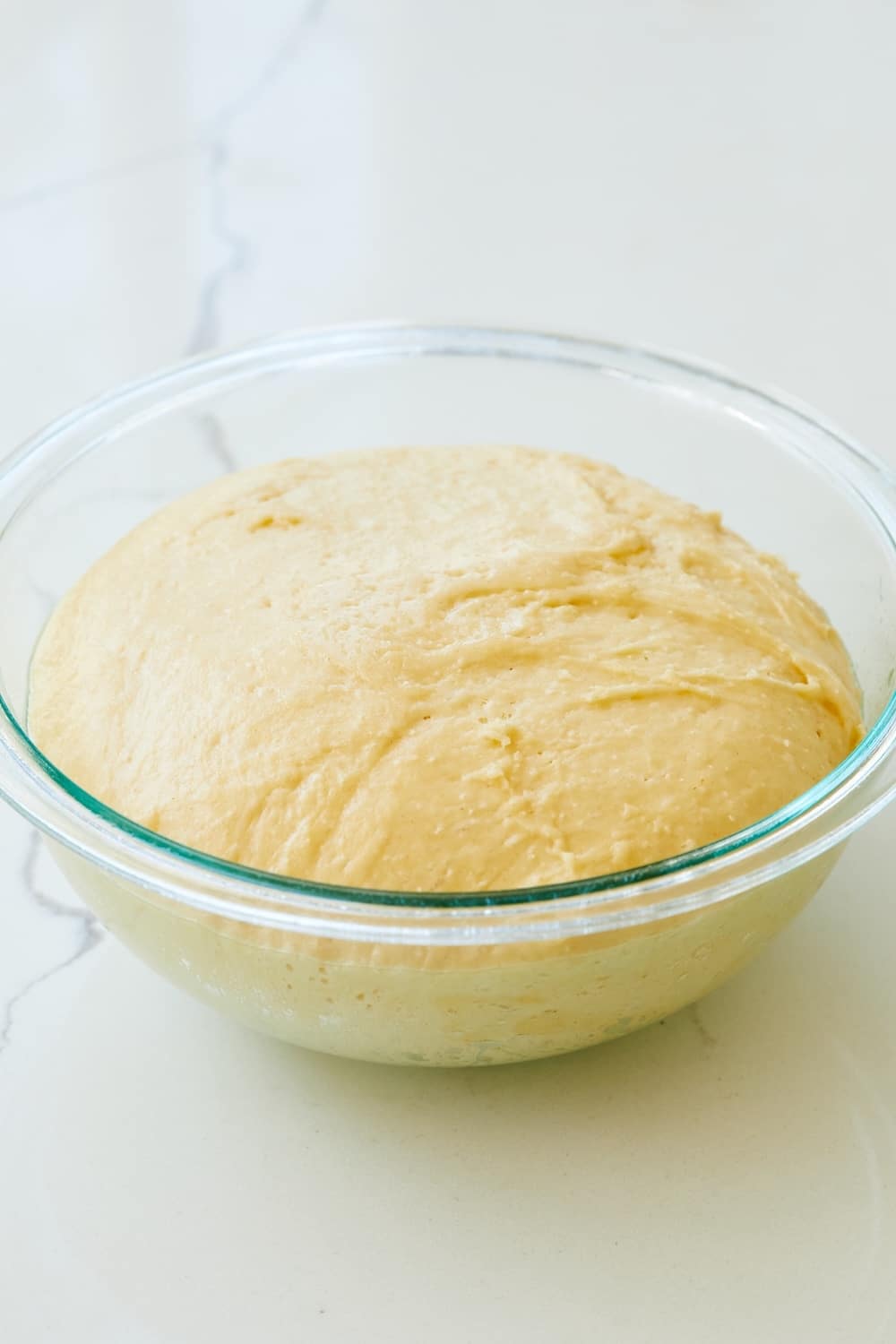
- First proof: Transfer the dough ball to a large, oiled bowl. Cover with plastic wrap or a lid and let rise in a warm place until doubled, 60–90 minutes.
To Shape and Proof the Dough
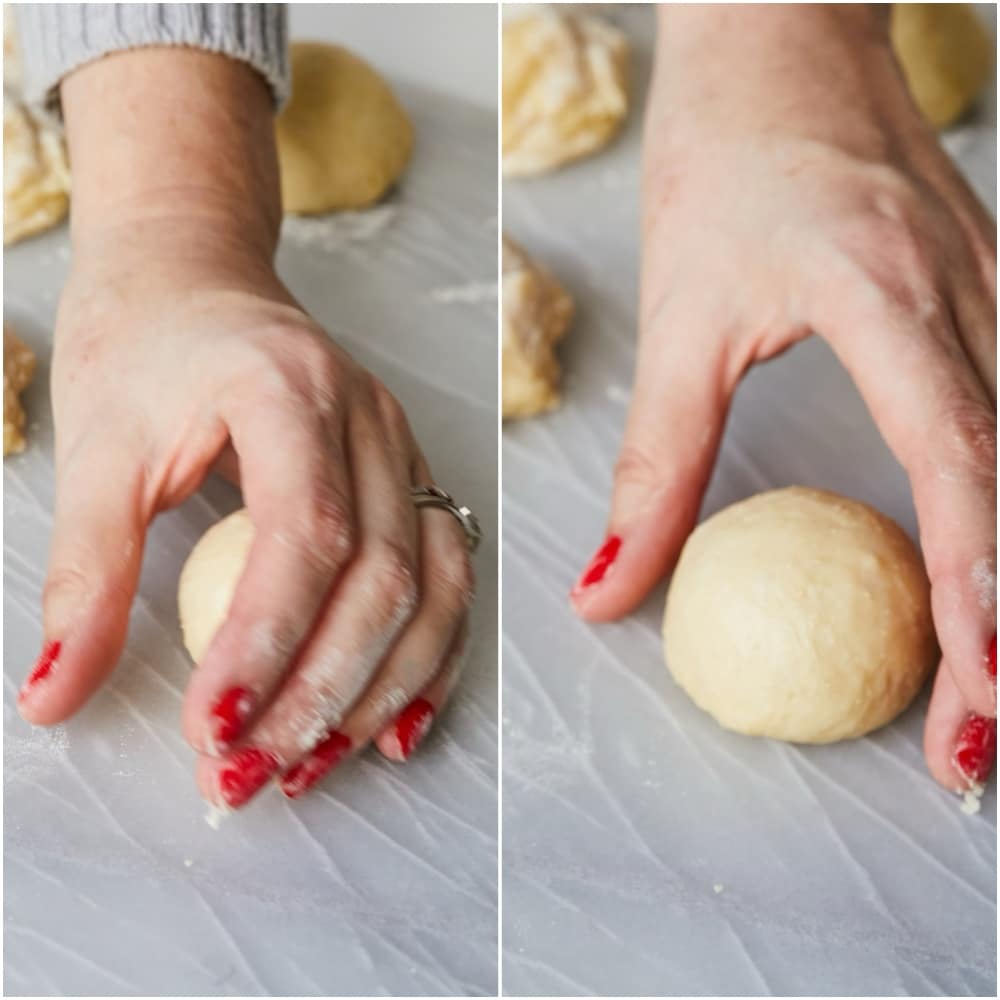
- Divide and shape the dough: Gently deflate and divide it into 10 equal pieces (roughly 75g each), and shape each piece of dough on a lightly floured work surface into a ball with no lumps.
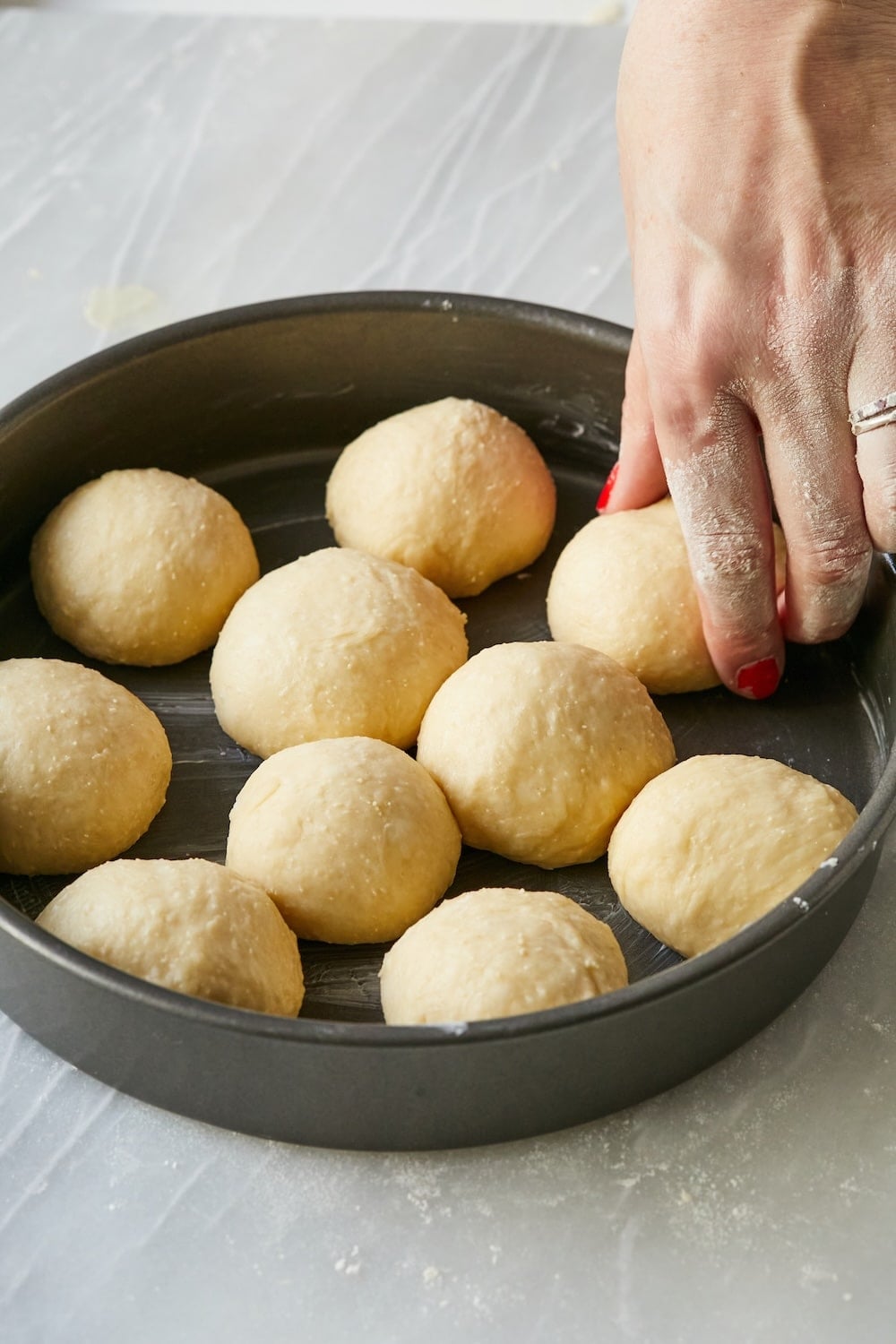
- Second proof: Place the rolls into a lightly greased 9-inch (23 cm) round cake pan. Cover with plastic wrap and let the rolls rise until doubled, 40–50 minutes.
To Bake the Japanese Milk Bread
- Preheat the oven: Towards the end of the rising time, preheat the oven to 350°F (180°C).
- Egg wash and bake: Egg wash the rolls carefully and bake for 25–30 minutes, or until golden brown on top.
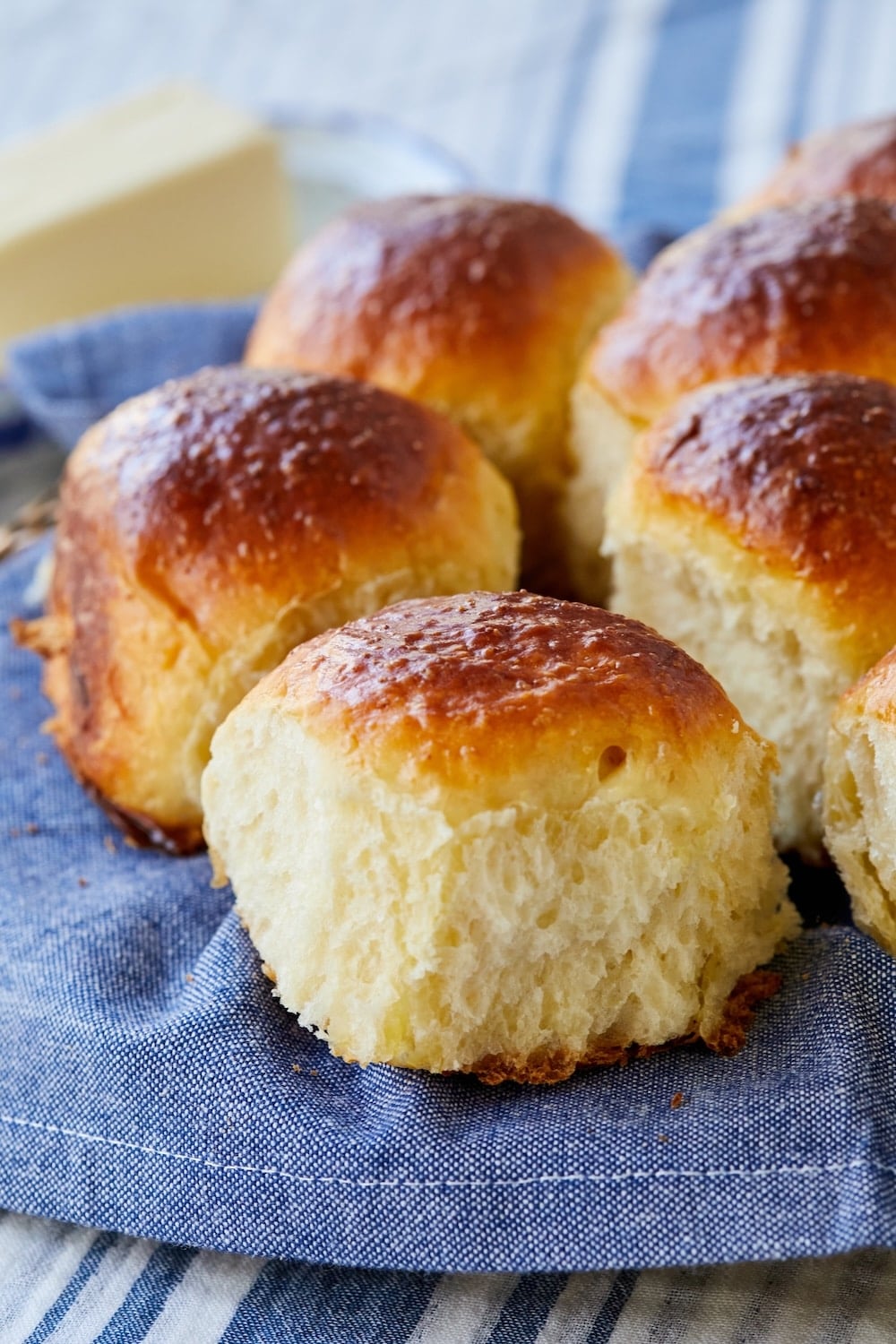
- Cool the rolls: Remove from the oven. Allow them to cool in the pan for 10 minutes, then transfer them to a rack to cool completely.
- Store the rolls: These rolls are best enjoyed fresh, but you can store them at room temperature for up to 3 days. They also freeze really well for up to 2 months.
FULL (PRINTABLE) RECIPE BELOW!
Gemma’s Pro Chef Tips
- Don’t skip the tangzhong: This is the key to achieving that signature soft, fluffy texture and longer-lasting freshness.
- Use bread flour for best results: Its higher protein (12–14%) builds strong gluten, giving you a light, airy structure with a slightly chewy bite.
- Use “blood temperature” liquid: Warm but not hot—too hot can kill yeast, while too cold slows fermentation.
- Don’t let salt sit directly on yeast: Always mix them into the flour first to prevent inhibiting yeast activity.
- Handle sticky dough carefully: This dough should remain soft and slightly tacky—adding too much flour will make the bread dense.
- Knead until properly developed: The dough should pass the windowpane test for proper gluten strength.
- Kneading by hand works too: Proper kneading develops gluten, which gives the bread its light, airy, chewy texture.
- Keep dough covered at all times: Exposure to air forms a dry skin, which affects rise and texture (a reusable shower cap works great).
- Use a dough cutter instead of a knife: This prevents tearing and protects the gluten structure.
- Make ahead for better flavor: Shape the dough and refrigerate overnight, then bring to room temperature before baking.
Make-Ahead and Storage Instructions
Make-ahead tips
- Shape the rolls and refrigerate overnight.
- The next day, let them sit at room temperature for about 90 minutes before baking.
How to store leftovers
- Store in an airtight container at room temperature for up to 3 days.
- Freeze for up to 2 months and thaw at room temperature.
FAQs
Can I knead this dough by hand?
Yes, you can absolutely knead this dough by hand. Kneading develops the gluten structure, which gives the bread its light, airy, and slightly chewy texture. Avoid adding too much flour—this dough should remain soft and slightly tacky for best results.
Why is my dough sticky?
This is a soft, enriched dough, so a slightly sticky texture is completely normal. The high hydration from the tangzhong and milk is what gives this Japanese Milk Bread Recipe (Hokkaido) its signature softness. Adding too much flour will make the bread dense, so instead, lightly oil your hands if needed.
Can I use all-purpose flour instead of bread flour?
Yes, you can use all-purpose flour, but the results will be slightly different. Bread flour has a higher protein content, which creates stronger gluten and a better rise. All-purpose flour will yield a softer, less structured bread.
How Can I Make This Japanese Milk Bread Recipe in a 9×5-Inch (23 × 12.5 cm) Loaf Pan?
- Prepare the pan: Grease the sides and the bottom of the pan and line with parchment paper for easy release.
- Divide the dough: After the first proof, gently deflate the dough and divide it into 3–4 equal pieces.
- Shape the dough: Flatten each piece into an oval or rectangle, fold it in thirds like a letter, then roll it up tightly into a log to build structure.
- Arrange in pan: Place the logs seam side down in the prepared bread tin side by side, evenly spaced.
- Second proof: Cover the pan and let the dough rise until it reaches about 1 inch (2–3 cm) above the rim, about 45–60 minutes.
- Preheat the oven: Towards the end of the rise, preheat the oven to 350°F (180°C).
- Egg wash: Brush the top lightly with egg wash for a glossy, golden finish.
- Bake the loaf: Bake for 30–35 minutes, or until the loaf is deep golden brown on top.
- Check doneness: The loaf should sound hollow when tapped, or reach an internal temperature of about 190°F (88°C).
- Cool the bread: Let the loaf cool in the pan for 10 minutes, then transfer to a wire rack to cool completely before slicing.
More Bread Recipes
Try These Recipes!


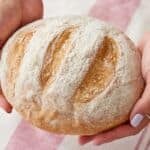

Japanese Milk Bread (Hokkaido Bread)

Ingredients
Tangzhong Starter
- 3 tablespoons (1 ½ fl oz/43 ml) water
- 3 tablespoons (1 ½ fl oz/43 ml) whole milk
- 2 tablespoons bread flour
Japanese Milk Bread Dough
- 2 ¼ cups (11 ¼ oz/319 g) bread flour
- ¼ cup (2 oz/57 g) granulated sugar
- 2 tablespoons dry milk powder
- 1 tablespoon instant yeast
- 1 teaspoon salt
- ½ cup (4 fl oz/120 ml) whole milk , lukewarm
- 1 large egg , at room temperature
- 4 tablespoons (2 oz/57 g) butter , melted
- Egg wash , for glazing
Instructions
To Make the Tangzhong
- In a small saucepan, over low heat, add the water, milk and bread flour and whisk until thickened, 2-3 minutes.
- Remove the mixture from the heat and set aside to cool.
To Make the Japanese Milk Bread Dough
- In the bowl of a stand mixer fitted with a dough hook, add the bread flour, sugar, milk powder, yeast and salt and stir to combine.
- Add the Tangzhong, milk, egg and butter, and knead on medium-low speed for 8-10 minutes or until a smooth, elastic dough forms and clears the sides of the bowl. (This step can also be done by hand)
- Transfer the dough to a large, oiled bowl. Cover with plastic wrap and let rise until doubled, 60-90 minutes.
To Shape and Proof the Dough
- Gently deflate the dough, divide it into 10 equal pieces (roughly 75g each), and shape each piece into a ball.
- Place the rolls into a lightly greased 9" round cake pan. Cover the pan with plastic wrap and let the rolls rise until doubled, 40 to 50 minutes.
To Bake the Japanese Milk Bread
- Towards the end of the rising time, preheat the oven to 350°F (180°C).
- Egg wash the rolls carefully and bake for 25 to 30 minutes, or until golden brown on top.
- Remove the rolls from the oven. Allow them to cool in the pan for 10 minutes, then transfer them to a rack to cool completely.
- These rolls are best enjoyed fresh, but you can store them at room temperature for up to 3 days. They also freeze really well for up to 2 months.
Recipe Notes
- Don’t skip the tangzhong: This is the key to achieving that signature soft, fluffy texture and longer-lasting freshness.
- Use bread flour for best results: Its higher protein (12–14%) builds strong gluten, giving you a light, airy structure with a slightly chewy bite.
- Use “blood temperature” liquid: Warm but not hot—too hot can kill yeast, while too cold slows fermentation.
- Don’t let salt sit directly on yeast: Always mix them into the flour first to prevent inhibiting yeast activity.
- Handle sticky dough carefully: This dough should remain soft and slightly tacky—adding too much flour will make the bread dense.
- Knead until properly developed: The dough should pass the windowpane test for proper gluten strength.
- Kneading by hand works too: Proper kneading develops gluten, which gives the bread its light, airy, chewy texture.
- Keep dough covered at all times: Exposure to air forms a dry skin, which affects rise and texture (a reusable shower cap works great).
- Use a dough cutter instead of a knife: This prevents tearing and protects the gluten structure.
- Make ahead for better flavor: Shape the dough and refrigerate overnight, then bring to room temperature before baking.









This reminds me of biscuits or cake you find in Chinese “dim-sum” like “moon cakes”and similar light pastry-bread with a filling.Now I live “Chinese-less” without a Chinatown any where.Boy do I miss that! went with friends to a Chinese restaurant that was open one am or 3 am in the morning–(it was famous for having a gang-shootout right in the restaurant!)—But now I live in Oregon,and you can’t even find a decent BAGEL HERE. OK BAKER HERE IS A CHALLENGE: I have made bagels at home you gotta bake em,simmer em in foiling water and bake em under the broiler–THOSE… Read more »
I made these rolls yesterday — Delicious! Beautiful color, wonderful texture & flavor. Thank you for your efforts Gemma.
I made a loaf of this bread today. I wanted to try this kind of bread for a long time. I’m glad I finally did because it’s so good and fluffy! I think it’s now my favorite bread recipe!
Hi I would like to use this recipe but can I replace the egg with anything? Or leave it out.
any thoughts on trying to mix this in a bread machine?
Hi, Gemma,
This looks great! Can you just substitute milk for the powdered milk and use less liquid overall? Or just omit the powdered milk? Thanks!
Hi Gemma. I live in Australia where a tablespoon is 20 mls.
Do you use a 15 mls tablespoon in your recipes?
And are your oven temperatures using a fan force oven ? My oven bakes beautifully uses the fan mode.
Love your recipes. Thank you!
Can you make this into a loaf? 🍞
What is the window pane test in bread making?
This looks doable, thank you fur explaining the technique so well! Looking forward to trying it. There’s a woman who runs a home bakery near me and she uses a Japanese milk bread (with some of her sourdough starter) as a base for sweet rolls – cinnamon, berry, etc. Do you think this would work for something like that?