
This post may contain affiliate links. Please see my full disclosure for details.
Hi Bold Bakers!
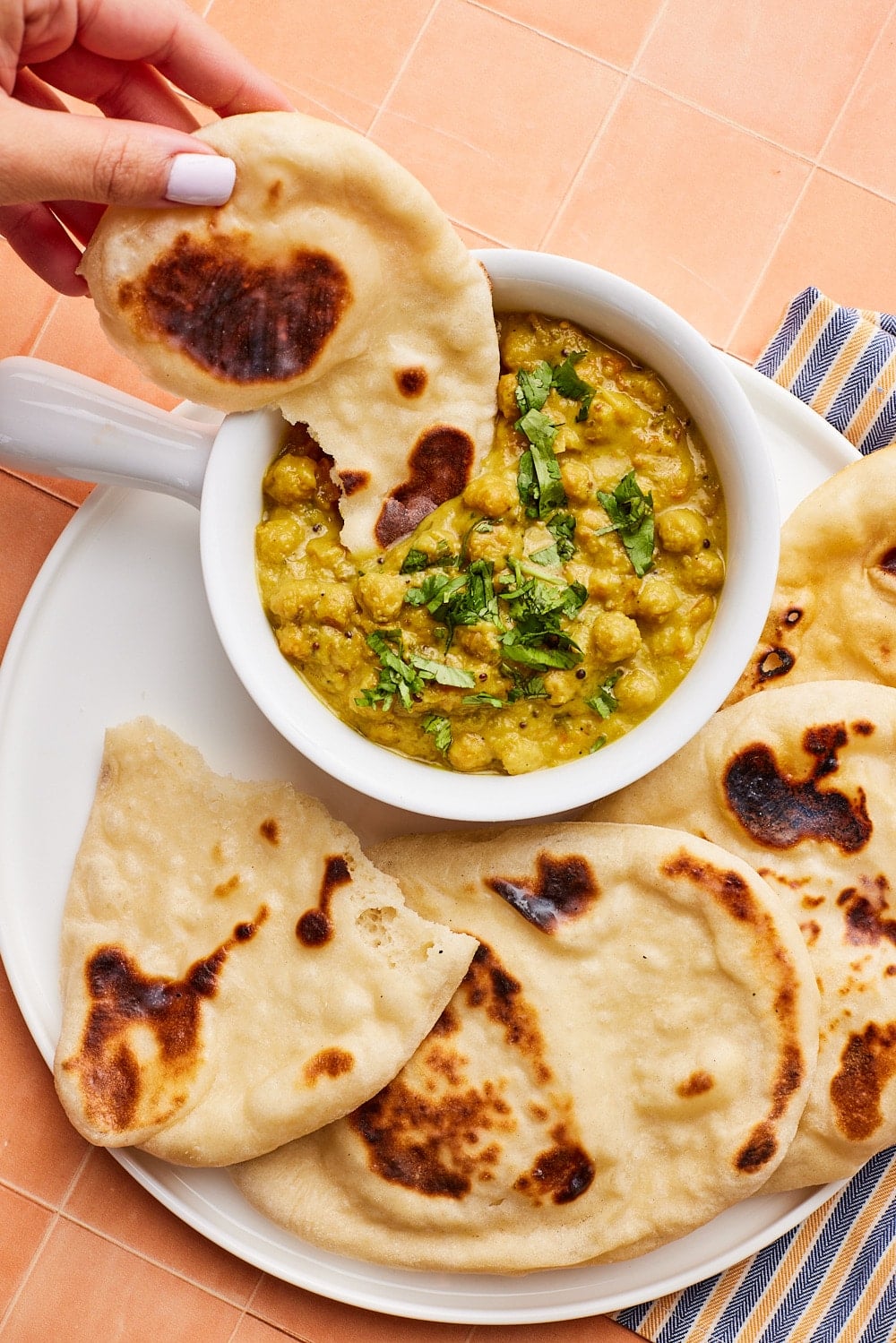
WHY YOU’LL LOVE THIS RECIPE: My foolproof Sourdough Naan gives the beloved flatbread satisfying chew and a delightful tang! Even if you’ve never made this traditional bread, my step-by-step directions make the process easy.
- No machine (or oven!) needed: Mix and knead this dough by hand, and cook the naan on the stovetop.
- Sourdough magic: It’s amazing how much this increases the flavor. If you’re a sourdough beginner, I’ve got you covered with my sourdough Q&A guide.
- Pillowy texture: Soft, puffy, irresistible!
- 7 simple ingredients: Besides the sourdough starter, this recipe uses kitchen basics. And if you don’t have a starter, I’ll show you how to make your own today.
- Stock your freezer: Store this wonderful flatbread, and it will be available whenever you want.
An order of warm, irresistibly soft naan is a must when we’re eating at my favorite Indian restaurant, but since I started making this flatbread, I always have a supply in my freezer! It’s so good with savory dishes, dips, and I love to use it as a wrap. I’ve talked about using sourdough starter—a naturally fermented mixture of flour and water—in recipes from popovers to banana bread to cinnamon rolls. When I tested this sourdough naan recipe, I was so pleased with how it added a lightly bubbly, pleasantly chewy texture and a great tang.
My most important tip for you here is to monitor the heat of your skillet. It has to be hot enough to puff up the bread and give it a little char, but not so hot that it burns and sticks. Be sure to preheat the cast-iron skillet for the full 5 minutes. If your first naan is pale and slow to puff up, increase the heat a bit. And if it burns before it puffs, lower the heat a bit. It’s best to wait 30 to 60 seconds between each naan to avoid heat spikes.
Table of Contents
- What is Sourdough Naan?
- Tools You Need
- Key Ingredients and Substitutes
- How to Make Sourdough Naan
- Gemma’s Pro Chef Tips
- Make-Ahead and Storage Instructions
- FAQs
- More Flatbread Recipes

What is Sourdough Naan?
Sourdough Naan is a soft, pillowy flatbread that’s made with a natural starter instead of commercial yeast, giving it a subtle tang and airy, chewy texture. The naan is cooked over high heat, causing it to puff and develop flavorful char marks. Naan (the name comes from the Persian word nān, meaning bread) has been enjoyed in South and Central Asia for centuries. In India, it was originally a bread enjoyed only by nobles. It’s traditionally baked in tandoor ovens, but this recipe uses a cast-iron skillet so you can make it easily at home. Enjoy it eaten on its own, brushed with ghee or butter, and sprinkled with herbs, with curries, stews, favorite soup, and dips like hummus, for sandwiches, or for flatbread pizza!
Tools You Need
- Mixing bowls
- Measuring spoons
- Measuring spoons
- Glass measuring jug
- Kitchen scale (optional)
- Spoon
- Plastic wrap
- Kitchen towel
- Rolling pin
- Cast iron skillet or electric griddle
- Pastry brush
Key Ingredients and Substitutes
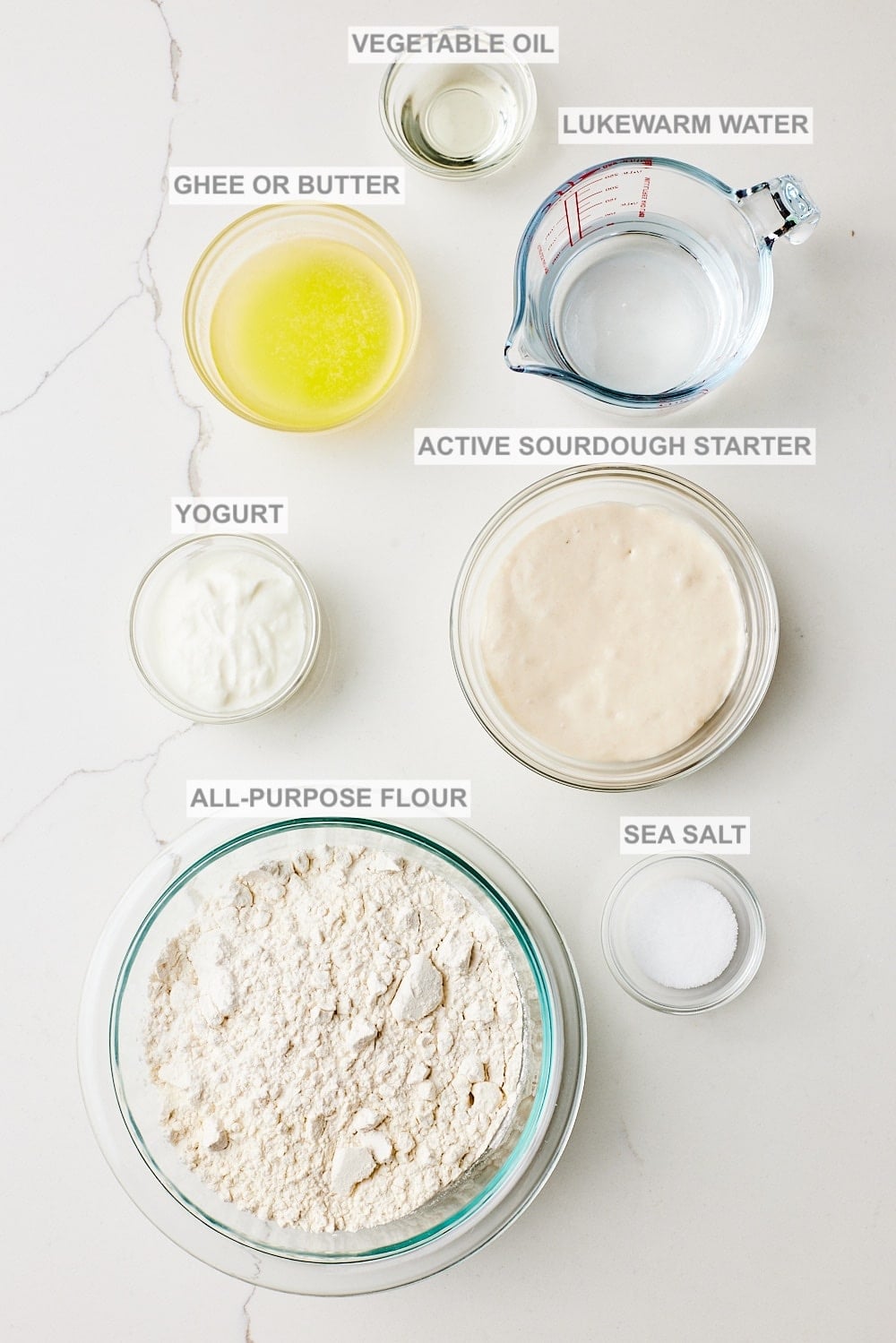
Active sourdough starter
- Active sourdough starter leavens the naan.
- Importantly, active sourdough starter in this naan recipe adds a subtly tangy flavor.
- Additionally, the acidity in an active sourdough starter tenderizes the gluten, contributing to a light, bubbly texture and chew.
- If you don’t have an active sourdough starter, my post gives easy step-by-step instructions.
- You’ll love using the sourdough starter and sourdough starter discard in recipes like Sourdough Pizza Crust and Sourdough Discard Crackers.
Water
- Lukewarm (or blood temperature) water hydrates the dough.
- Importantly, the lukewarm water encourages fermentation.
- To make sure your water is the correct temperature, take a small amount of water and put your finger in it; if it feels close to your body temperature or slightly warmer, it’s lukewarm.
- Note that hot water could damage the rise, and cool water could cause a slow rise.
Plain whole-milk yogurt
- Plain, whole-milk (full-fat) yogurt gives the naan tenderness and contributes to a pliable texture.
- Additionally, the plain yogurt adds to the pleasantly tangy flavor.
- Substitutes:
- Use the same amount of Greek yogurt, but thin it with water first.
- You can also use the same amount of plant-based yogurt.
Vegetable oil
- Vegetable oil adds moisture and richness, keeping the dough from drying out.
- Importantly, vegetable oil’s neutral taste doesn’t interfere with the naan’s flavor.
- Substitute: Use the same amount of olive oil or melted butter.
All-purpose flour
- All-purpose flour gives the sourdough naan structure while still being soft.
Sea salt
- Salt flavors the naan and strengthens the gluten.
Ghee or butter
- Ghee (cooked-down, clarified butter with a nutty taste) or melted butter brushed on the flatbread adds a rich finish.
- Substitute: Use the same amount of olive oil or garlic butter.
How to Make Sourdough Naan
Make and Proof the Naan Dough
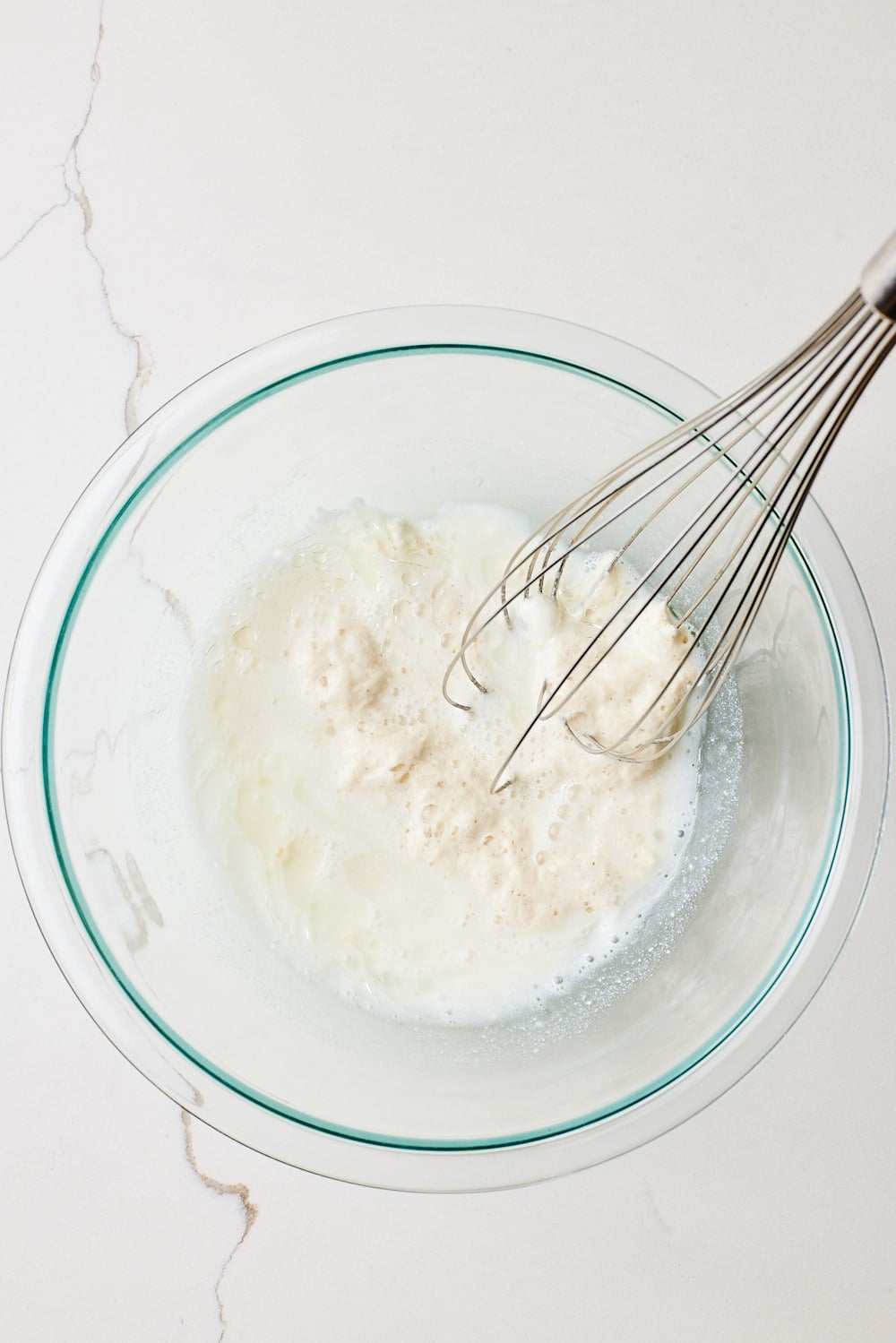
- Start dough: In a large bowl, combine the sourdough starter, water, yogurt, and vegetable oil until smooth.
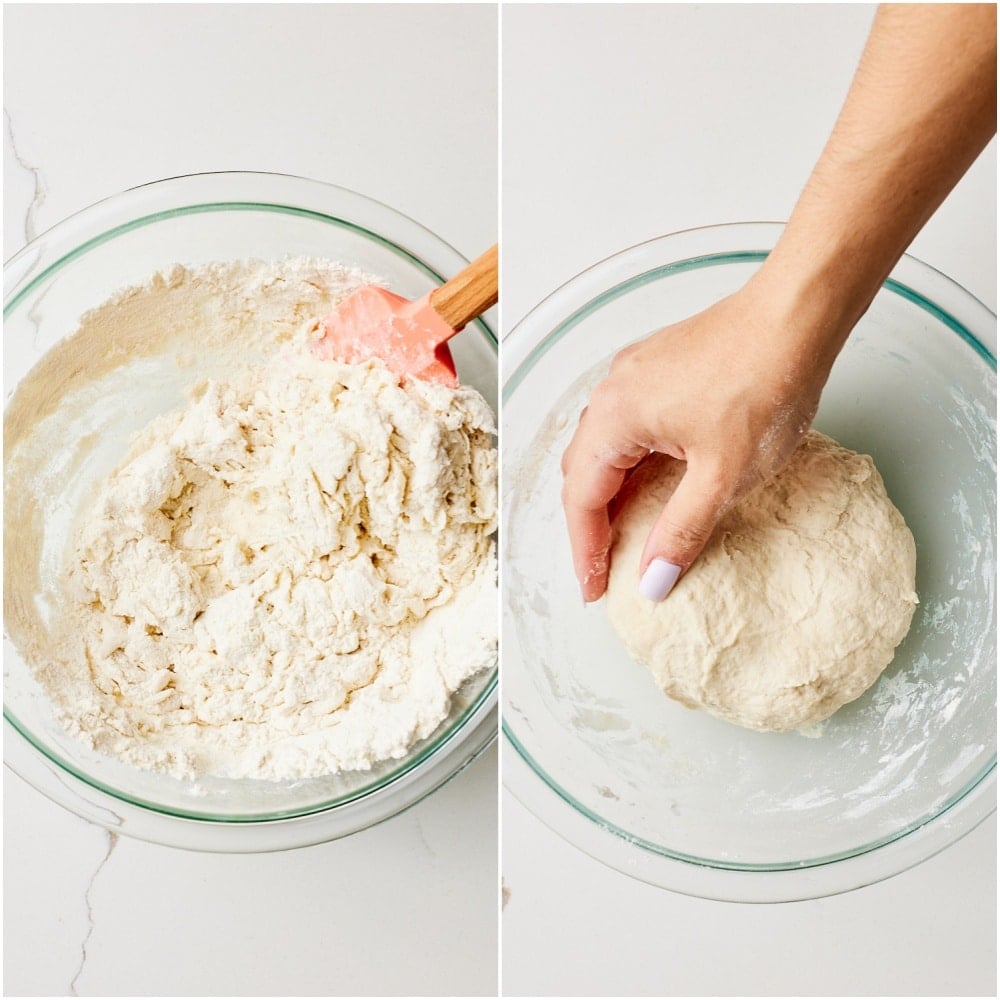
- Finish dough: Add the flour and salt and stir until a shaggy dough forms, then knead by hand until smooth and soft.
- Proof dough: Transfer the dough to a lightly oiled bowl, cover with cling wrap and a kitchen towel, and let rise in a warm place until doubled in size, about 2 hours.
Shape the Dough
- Divide dough: Turn the dough out onto a lightly floured surface and divide into 8 equal portions (about 2 ¾ oz / 78 g each).
- Shape and let rest: Shape each portion into a ball, cover with a kitchen towel, and let rest for 30 minutes.
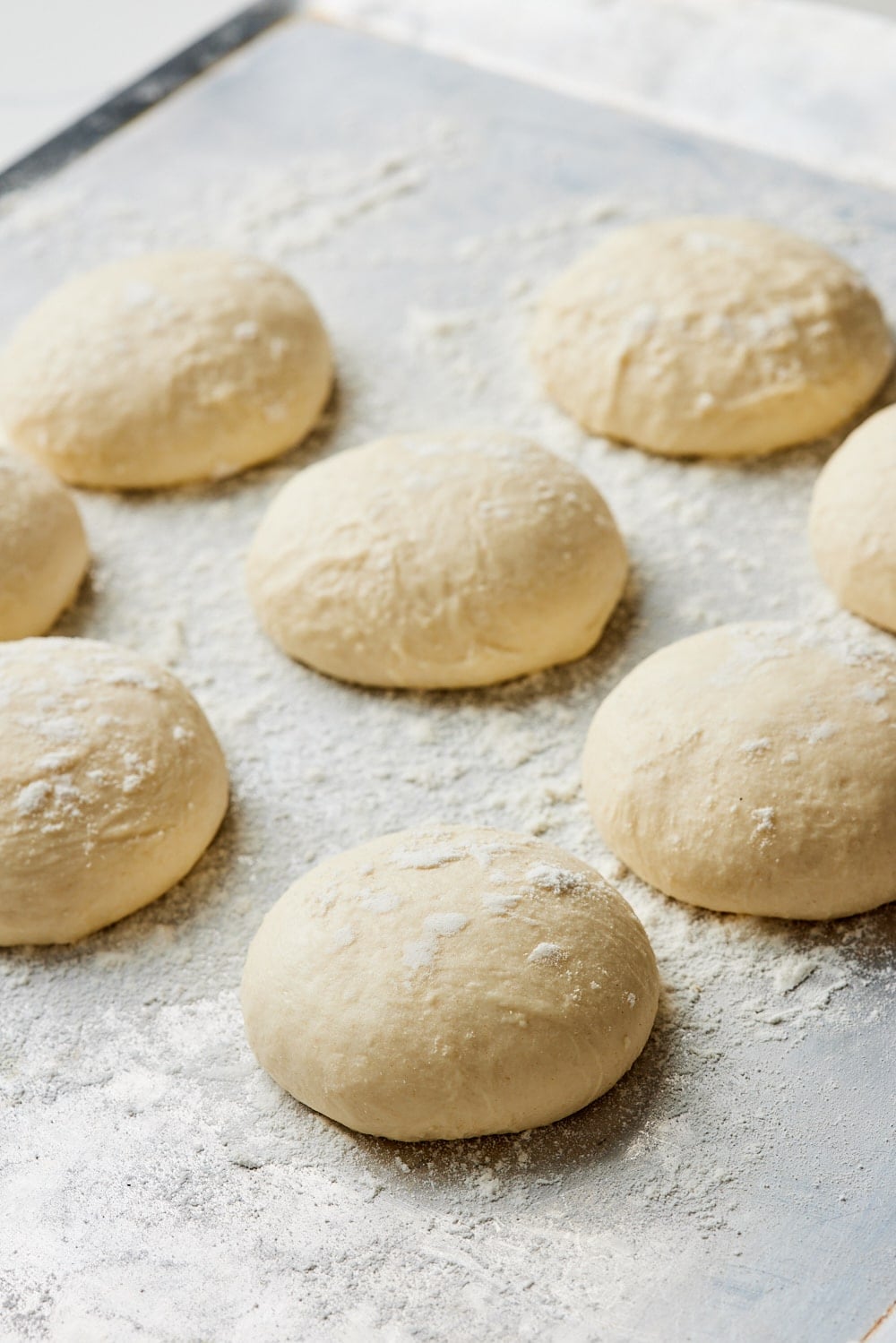
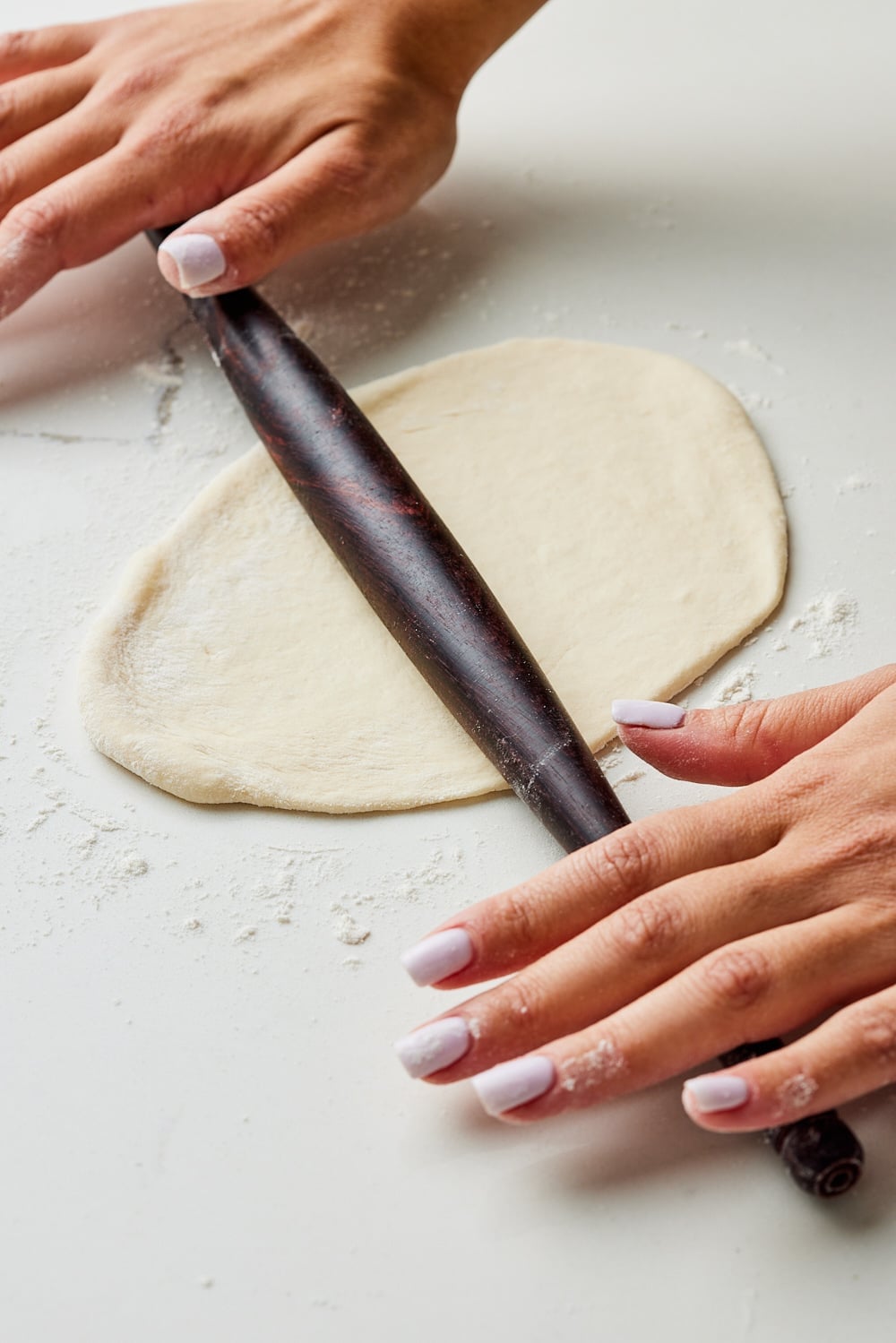
- Roll dough: Roll each ball into an oval about 6 x 8 inches (15 x 20 cm). Keep the rolled naan covered with a tea towel while you work.
Cook the Naan
- Heat skillet: Heat a dry cast-iron skillet over medium heat for about 5 minutes, until very hot but not smoking.
- Begin cooking: Cook one naan at a time for about 2 minutes on the first side, until bubbles form.
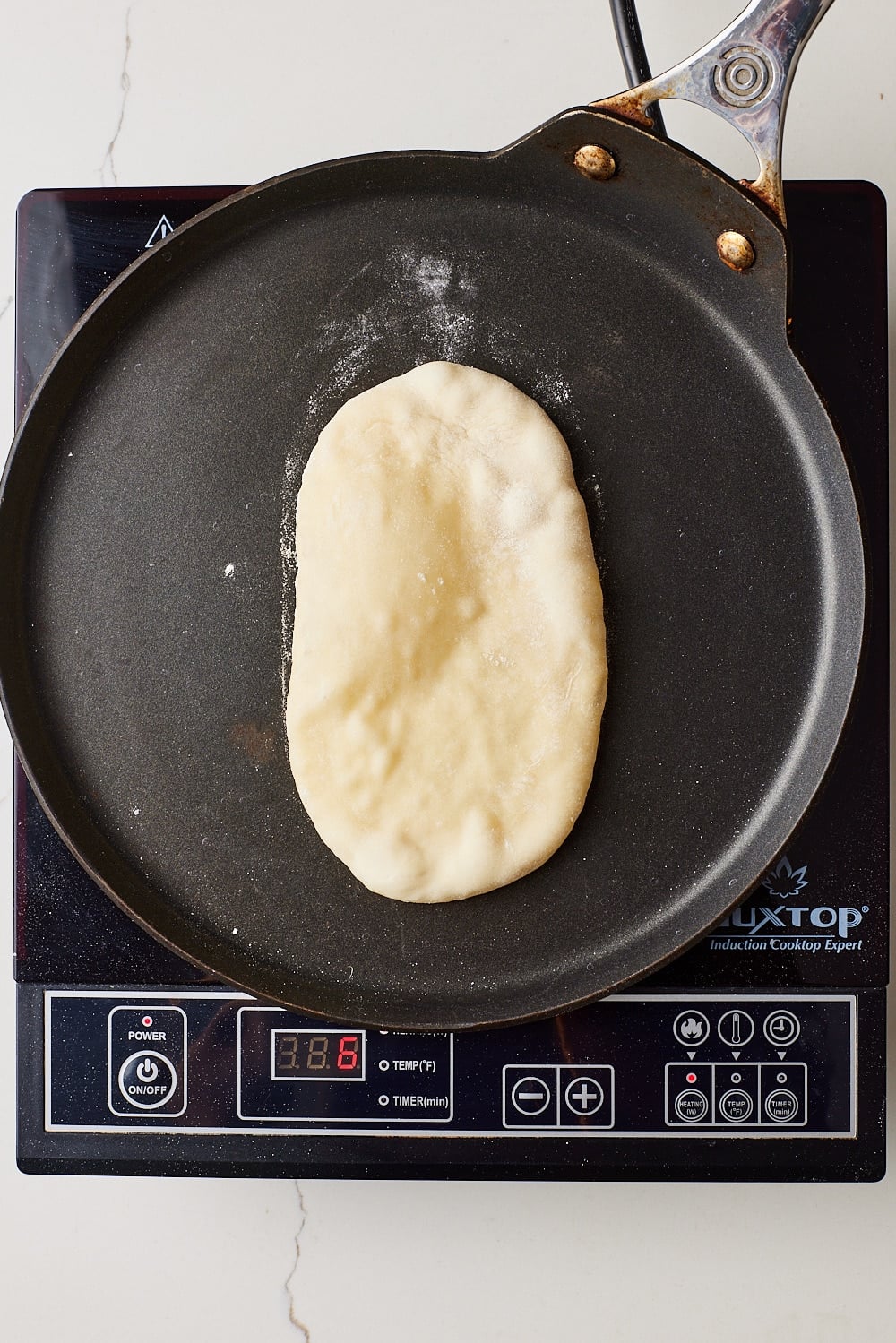
- Flip naan: Flip and cook for about 2 minutes on the second side, until charred and puffed.
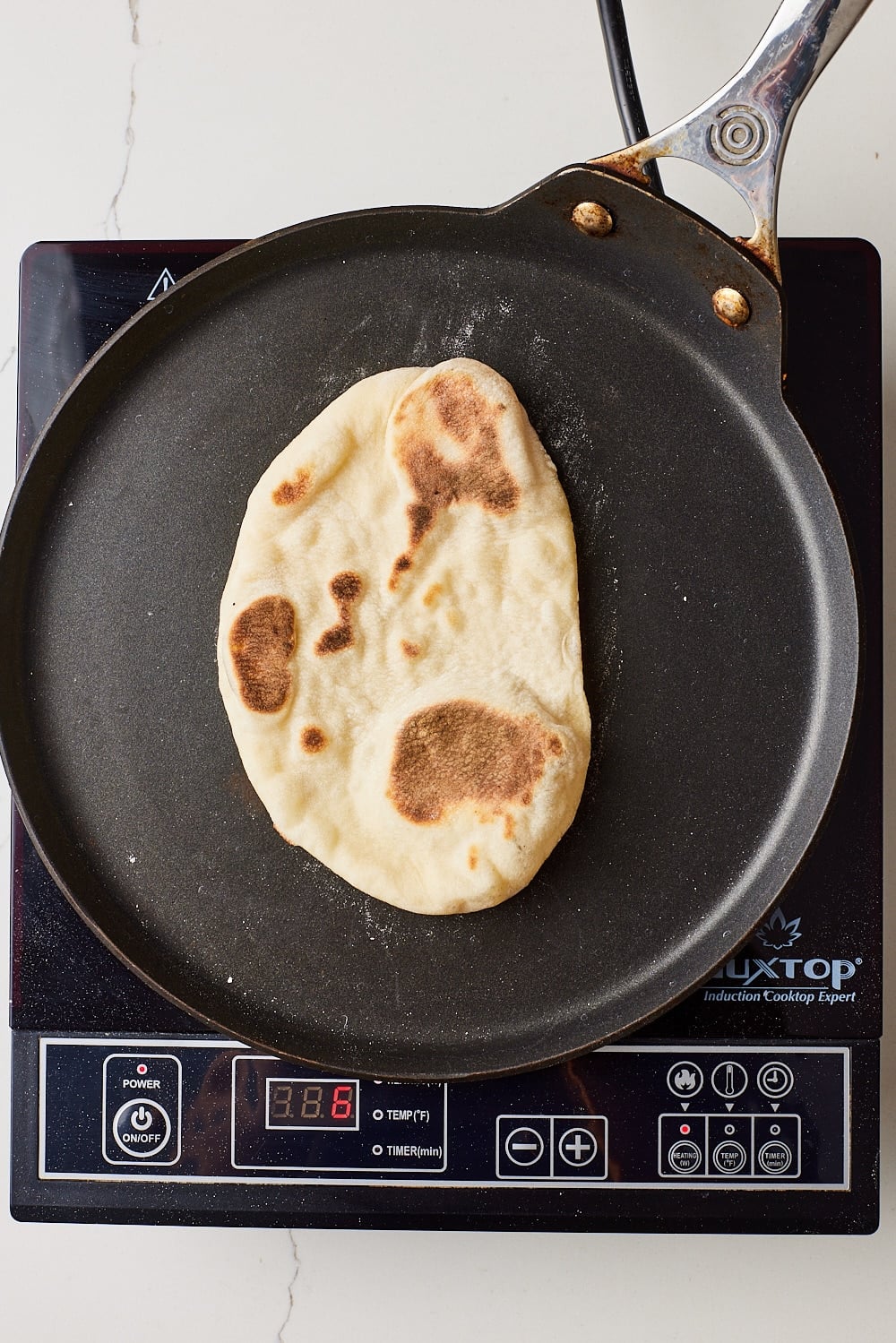
- Finish cooking: Flip once more to char the first side, about 1 more minute.
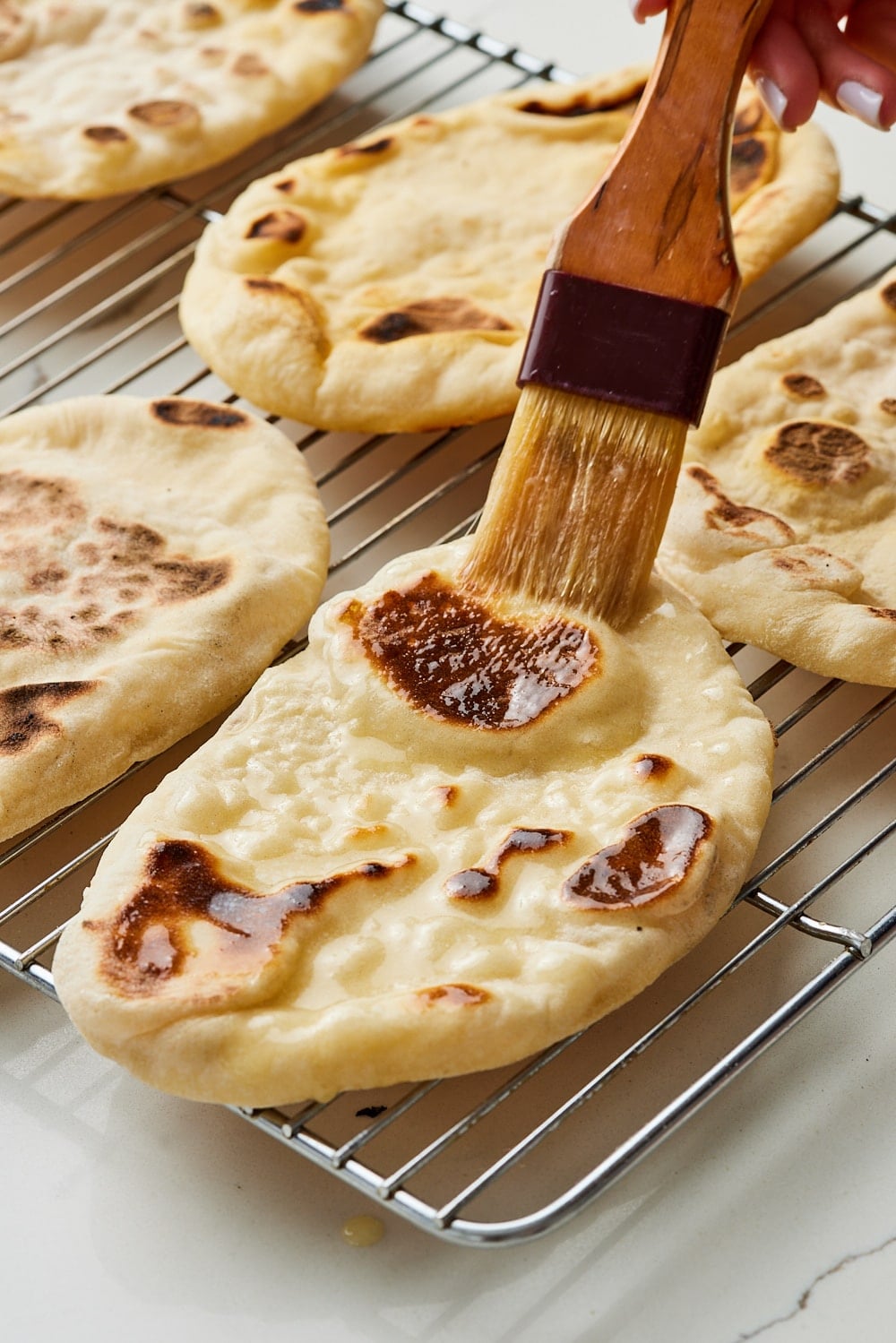
- Brush and serve: Remove from the pan and immediately brush with melted butter or ghee. Serve warm.
FULL (PRINTABLE) RECIPE BELOW!
Gemma’s Pro Chef Tips
- Use a well-fed, active sourdough starter. A sluggish starter will result in dense naan.
- Note: Unlike some recipes made with sourdough discard, we use active sourdough starter here.
- Use lukewarm water. Use water that’s about 95–100°F / 35–38°C to encourage fermentation without harming the starter. It should feel warm, but not hot to the touch.
- Oil your hands first. This makes the dough easier to handle, and using oiled hands instead of adding flour will keep the naan tender.
- Look for the dough to double in size. That’s when you’ll know it’s proofed enough.
- Rest the dough after shaping. This relaxes the gluten, making it easier to flatten and roll out the naan. If it springs back on you, let the dough rest a while longer.
- Roll the naan dough to 1/8-inch thickness. The dough should be thinner than pizza dough, and if you hold it up, it should be see-through in spots.
- A dry cast iron skillet works best here. Make sure it’s properly preheated so you get the proper charring and puffing.
- Make sure the naan puffs up. Puffing while cooking creates steam that properly cooks the inside of the bread.
- Monitor your skillet. You want to keep it at the correct temperature—If it is not hot enough, the naan will not char and puff up. But if it is too hot, the naan will burn and stick to the pan. Adjust the heat as needed.
- An electric griddle is a good option. Set the temperature to 450°F (230°C). This is the perfect temperature for cooking naan.
- Keep cooked naan covered. Loosely covering with a kitchen towel keeps the naan from drying out.
- Make naan pizzas! Place the cooked naan on a sheet pan, top with sauce, cheese, and toppings, and pop in the oven at 400°F (200°C) until the cheese melts.
Make-Ahead and Storage Instructions
Make-ahead tips
- You can refrigerate the dough after it has risen for 3o mintues. Place in an oiled bowl, cover well, and keep in the fridge for up to 48 hours.
- Before dividing the dough and cooking, let it stand at room temperature for about an hour until soft and slightly puffy.
- For slightly faster proofing, you can take the dough from the fridge, divide it into eight balls, and let them sit at room temperature until soft and slightly puffy.
- You can cook and freeze the Sourdough Naan, so you always have some on hand.
- Freeze cooked, cooled naan on a parchment-lined tray.
- After it’s solid, place it in an airtight container and freeze for up to two months.
- Defrost naan in the microwave for about 30 seconds, or heat it in a 350°F (180°C) oven for 5 minutes.
How to store leftovers
- Store leftover cooled naan in an airtight container in the fridge for up to three days.
- For longer storage, freeze in a single layer on a parchment-lined tray.
- Once solid, transfer to an airtight container for up to 2 months.
- Defrost for about 30 seconds in the microwave or for 5 minutes in a 350°F (180°C) oven.
FAQs
What is sourdough starter, and how do I make it?
- Sourdough starter is a live, fermented mixture of flour and water used to naturally leaven bread. It’s the heart of sourdough baking, providing flavor, structure, and rise without commercial yeast.
- A sourdough starter is created through the natural fermentation of wild yeast and lactic acid bacteria, giving it a tangy, complex flavor.
- It’s very easy to make, and all you need is flour and water!
- My Sourdough Starter Recipe will get you an active sourdough started in no time!
Can I make this sourdough naan bread recipe gluten-free?
- Because this recipe uses a traditional sourdough starter, it will contain gluten.
- If you’re looking for a flatbread option, check out my Gluten-Free Flatbread Recipe (3 Ingredients).
What are some tips for properly cooking sourdough naan?
- For cooking sourdough naan properly, preheat your cast iron pan for 5 minutes at medium heat until hot but not smoking.
- If you’re using an electric griddle, keep it at 450°F (230°C).
- Monitor your skillet to keep it at the correct temperature. If it is not hot enough, the naan will not char and puff up. But if it is too hot, the naan will burn and stick to the pan. Adjust the heat as needed.
- If your first naan is pale and slow to puff up, increase the heat a bit. And if it burns before it puffs, lower the heat a bit.
- If the skillet is getting too hot, wait 30 to 60 seconds before cooking the next naan.
More Flatbread Recipes
Try These Recipes!



Sourdough Naan


Ingredients
- ½ cup (4 oz/115 g) active sourdough starter
- ½ cup (4 fl oz/120 ml) water , lukewarm
- ⅓ cup plus 1 tablespoon (3 oz/85 g) plain whole milk yogurt
- 1 tablespoon vegetable oil
- 2 ¼ cups (11 ¼ oz/319 g) all-purpose flour
- 1 ½ teaspoons sea salt
- butter or ghee , melted (for brushing)
Instructions
To Make the Sourdough Naan Dough and Proof (2 Hours)
- In a large bowl, combine the sourdough starter, water, yogurt, and vegetable oil until smooth.
- Add the flour and salt and stir until a shaggy dough forms, then knead by hand until smooth and soft.
- Transfer the dough to a lightly oiled bowl, cover with cling wrap and a kitchen towel, and let rise in a warm place until doubled in size, about 2 hours.
To Shape the Sourdough Naan (55 minutes)
- Turn the dough out onto a lightly floured surface and divide into 8 equal portions (about 2 ¾ oz / 78 g each).
- Shape each portion into a ball, cover with a kitchen towel, and let rest for 30 minutes.
- Roll each ball into an oval about 6 x 8 inches (15 x 20 cm). Keep the rolled naan covered with a tea towel while you work.
To Cook the Sourdough Naan and Serve
- Heat a dry cast iron skillet over medium heat for about 5 minutes, until very hot but not smoking.
- Cook one naan at a time for about 2 minutes on the first side, until bubbles form.
- Flip and cook for about 2 minutes on the second side, until charred and puffed.
- Flip once more to char the first side, about 1 more minute.
- Remove from the pan and immediately brush with melted butter or ghee.
- Serve warm with any meal that calls for flatbread. Store completely cooled leftovers in an airtight container in the refrigerator for up to 3 days.
Recipe Notes
- Use a well-fed, active sourdough starter. A sluggish starter will result in dense naan.
- Note: Unlike some recipes made with sourdough discard, we use active sourdough starter here.
- Use lukewarm water. Use water that's about 95–100°F / 35–38°C to encourage fermentation without harming the starter. It should feel warm, but not hot to the touch.
- Oil your hands first. This makes the dough easier to handle, and using oiled hands instead of adding flour will keep the naan tender.
- Look for the dough to double in size. That's when you'll know it's proofed enough.
- Rest the dough after shaping. This relaxes the gluten, making it easier to flatten and roll out the naan. If it springs back on you, let the dough rest a while longer.
- Roll the naan dough to 1/8-inch thickness. The dough should be thinner than pizza dough, and if you hold it up, it should be see-through in spots.
- A dry cast iron skillet works best here. Make sure it's properly preheated so you get the proper charring and puffing.
- Make sure the naan puffs up. Puffing while cooking creates steam that properly cooks the inside of the bread.
- Monitor your skillet. You want to keep it at the correct temperature—If it is not hot enough, the naan will not char and puff up. But if it is too hot, the naan will burn and stick to the pan. Adjust the heat as needed.
- An electric griddle is a good option. Set the temperature to 450°F (230°C). This is the perfect temperature for cooking naan.
- Keep cooked naan covered. Loosely covering with a kitchen towel keeps the naan from drying out.
- Make naan pizzas! Place the cooked naan on a sheet pan, top with sauce, cheese, and toppings, and pop in the oven at 400°F (200°C) until the cheese melts.









I haven’t made these yet but I want to. Do they freeze well?