
This post may contain affiliate links. Please see my full disclosure for details.
Hi Bold Bakers!
WHY YOU’LL LOVE THIS RECIPE: My dreamy Lemon Meringue Pie Cookies are just what you need for spring! Mini versions of everyone’s favorite citrus dessert are the hit of any gathering.
- Layers of luscious flavor and texture: A soft Graham sugar cookie cradles creamy lemon curd and fluffy meringue.
- Easier than pie: Everything you love about traditional Lemon Meringue Pie without fussing with a plate and fork.
- Sunshine on a plate: These gorgeous treats have a light, fresh lemon flavor.
- Bakes in 15 minutes: Most of the total time for this recipe is hands-off while it’s in the fridge.
- Holiday-perfect: Easy to transport and serve for Easter or bring to parties or bake sales.
Lemon is my go-to for spring—everyone loves that energizing, tart flavor, and burst of lovely color. I was thinking about how to scale down my crowd-favorite Lemon Meringue Pie, by keeping all of the iconic flavor and texture, but making it fun and portable. And after perfecting these pie cookies, I’m so excited to share them. They’re the ideal serving size and so easy to serve as a special holiday dessert.
My biggest tip for you here is keep your eye on the oven. It’s important not to overbake the cookies when you first put them in, as they need to be soft enough to make a divot for the lemon curd.
Table of Contents
- What are Lemon Meringue Pie Cookies
- Tools You Need
- Key Ingredients and Substitutes
- How to Make Lemon Meringue Pie Cookies
- Gemma’s Pro Chef Tips
- Make-Ahead and Storage Instructions
- FAQs
- More Lemon Recipes
What are Lemon Meringue Pie Cookies?
Lemon Meringue Cookies are a handheld version of traditional lemon meringue pie. A sugar cookie with bits of toasty Graham cracker is topped with homemade lemon curd and marshmallow-like meringue for a modern, elevated twist on the classic. Lemon Meringue Pie Cookies are ideal for Easter, Mother’s Day, bridal showers, baby showers, brunch, or any other springtime occasion.
Tools You Need
- Mixing bowls
- Measuring spoons
- Measuring cup
- Glass measuring jug
- Kitchen scale (optional)
- Fine mesh sieve
- Heatproof bowl
- Whisk
- Small saucepan
- Spoon
- Cling wrap
- 13×18-inch (33×46-cm) baking sheet
- Parchment paper
- Stand mixer (optional) or an electric hand mixer
- Piping bag with large petal tip (optional)
- Kitchen torch (optional)
Key Ingredients and Substitutes
Lemon Curd Filling
Eggs
- Eggs thicken the curd mixture, adding richness and body.
- Use room-temperature eggs here so they blend in smoothly. Here are my tips to warm up eggs.
- Substitute: For an egg-free alternative, check out my Vegan Lemon Curd recipe.
Granulated sugar
- Granulated sugar sweetens the curd and balances the acidity of the lemons.
- Additionally, granulated sugar contributes to a smooth texture.
- Substitute: If you prefer, replace the granulated sugar with coconut sugar, honey, or agave from my Sugar Substitute Chart. Note that sugar-free substitutes won’t work well in this recipe.
Lemon juice
- Lemon juice gives the curd a pure, tangy citrus taste.
- I recommend using fresh lemon juice for the best flavor.
Lemon zest
- Zest contains rich, flavorful oils from the peel, adding wonderful intensity without excess liquid.
Butter
- Butter gives the curd a velvety mouthfeel and rich flavor.
- Importantly, butter helps stabilize the curd mixture, keeping it smooth and uniform.
- Substitute: Use the same amount of softened solid coconut oil if you prefer.
Cookie Dough
All-purpose flour
- All-purpose flour provides enough structure while still creating a soft cookie.
- Substitute: Use the same amount of a 1:1 gluten-free baking mix, such as my almond flour baking mix, or another gluten-free flour.
Graham cracker crumbs
- Graham cracker crumbs in the dough give the cookies the same crunch and toasty flavor as a Graham cracker pie crust.
- Substitutes: You can also use the same amount of crumbled Biscoff Cookies, Digestive Biscuits, or Vanilla Wafers.
Baking powder
- Baking powder is activated when mixed with the liquid ingredients and again by the heat of the oven, creating carbon dioxide that gives the cookies lift.
Baking soda
- Baking soda contributes to the lift and browning of the cookies.
Butter
- Butter makes the cookies tender and moist.
- Additionally, butter enhances the toasty notes of the Graham crackers.
- Use salted butter or unsalted butter.
Granulated sugar
- Granulated sugar sweetens the cookies and contributes to the delectable crispy edges.
Dark brown sugar
- Dark brown sugar adds deep flavor and moisture.
- Additionally, dark brown sugar keeps the cookies soft.
- Make your own brown sugar with my simple recipe.
Salt
- Salt is essential for bringing out flavors.
Egg
- Egg binds the cookie dough, providing moisture and richness.
- Substitute: In place of the egg, mix 1 tablespoon ground flax seeds with 3 tablespoons water and let sit for 5 minutes before using.
Vanilla extract
- The vanilla in the cookie is a perfect balance to the tart filling.
- Use the same amount of Vanilla Bean Paste if you prefer.
Meringue Topping
Egg whites
- When whipped, the proteins in egg whites form a network that traps air, giving the meringue structure and volume.
- Be sure to use room-temperature eggs, as they whip up better than cold eggs.
- Substitute: Instead of egg whites, use a commercial egg replacer or aquafaba.
- See my Complete Guide To Aquafaba, A Surprising Vegan Egg Substitute for more information.
Granulated sugar
- Granulated sugar sweetens the meringue.
- Importantly, sugar strengthens the meringue by helping to hold the air in place.
- Additionally, sugar helps with browning.
Cream of tartar
- Cream of tartar stabilizes the meringue and helps prevent weeping.
- Additionally, cream of tartar makes the meringue glossy.
- Substitute: If you don’t have cream of tartar, use 1 teaspoon of white vinegar or lemon juice instead.
How to Make Lemon Meringue Pie Cookies
Lemon Curd Filling
- Prepare to make curd: Place a fine-mesh sieve over a medium heatproof bowl and set aside.
- Whisk eggs and sugar: In a separate medium heatproof bowl, whisk together the eggs and granulated sugar until smooth.
- Heat juice and zest: Bring the lemon juice and lemon zest to a simmer in a small saucepan over medium heat.
- Combine and whisk: Slowly pour the lemon juice into the egg mixture while whisking constantly.
- Cook over low heat: Return to the saucepan and cook over low heat, stirring constantly, until thick enough to coat the back of a spoon, about 5 minutes.
- Strain and add butter: Strain through the sieve, then whisk in the butter until melted and smooth.
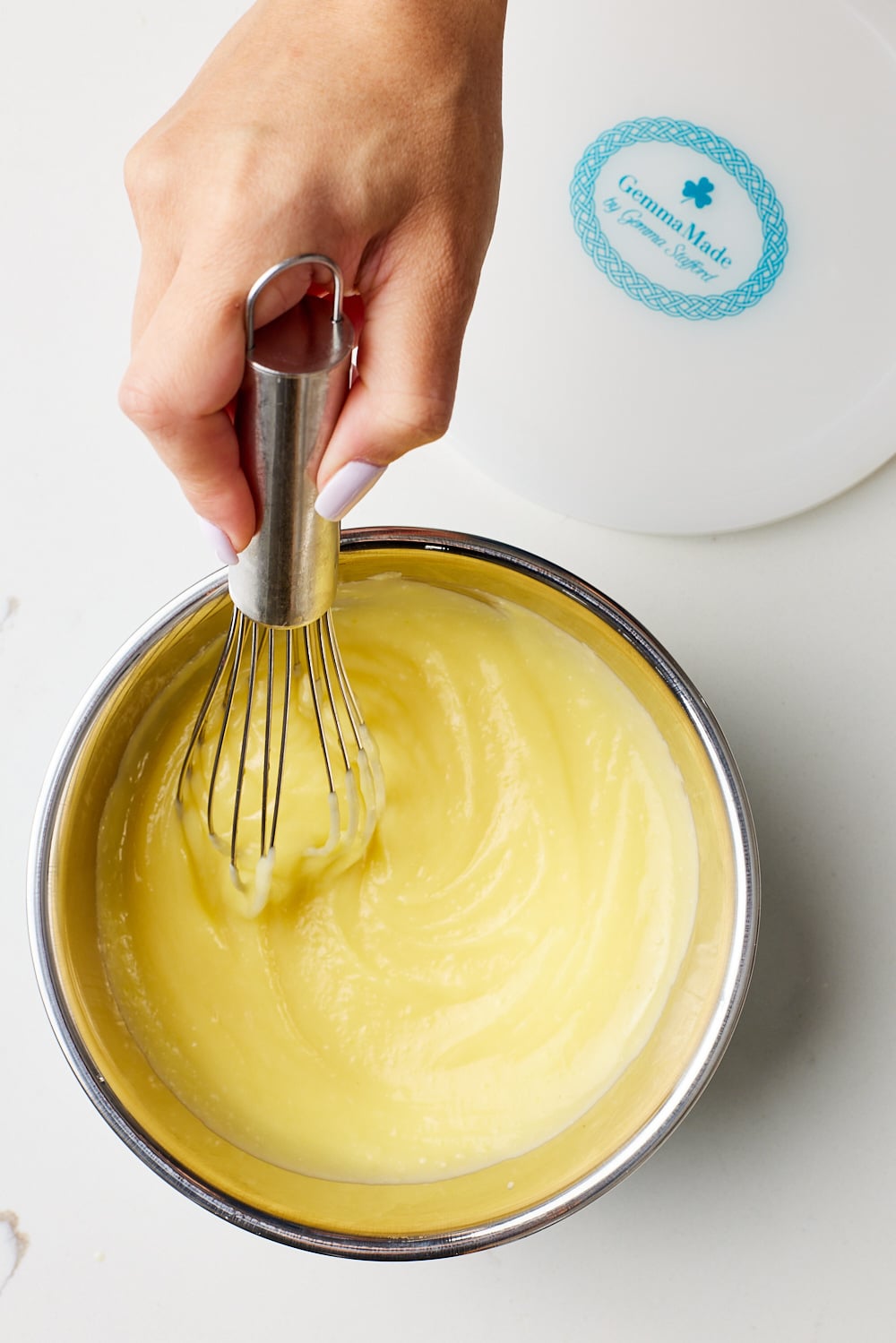
- Chill curd: Press cling wrap directly onto the surface and cool for 1 hour, then refrigerate until fully chilled and set, about 2 hours.
Cookie Dough
- Prepare pan: Line a 13 x 18 inch (33 x 46 cm) baking sheet with parchment paper and set aside.
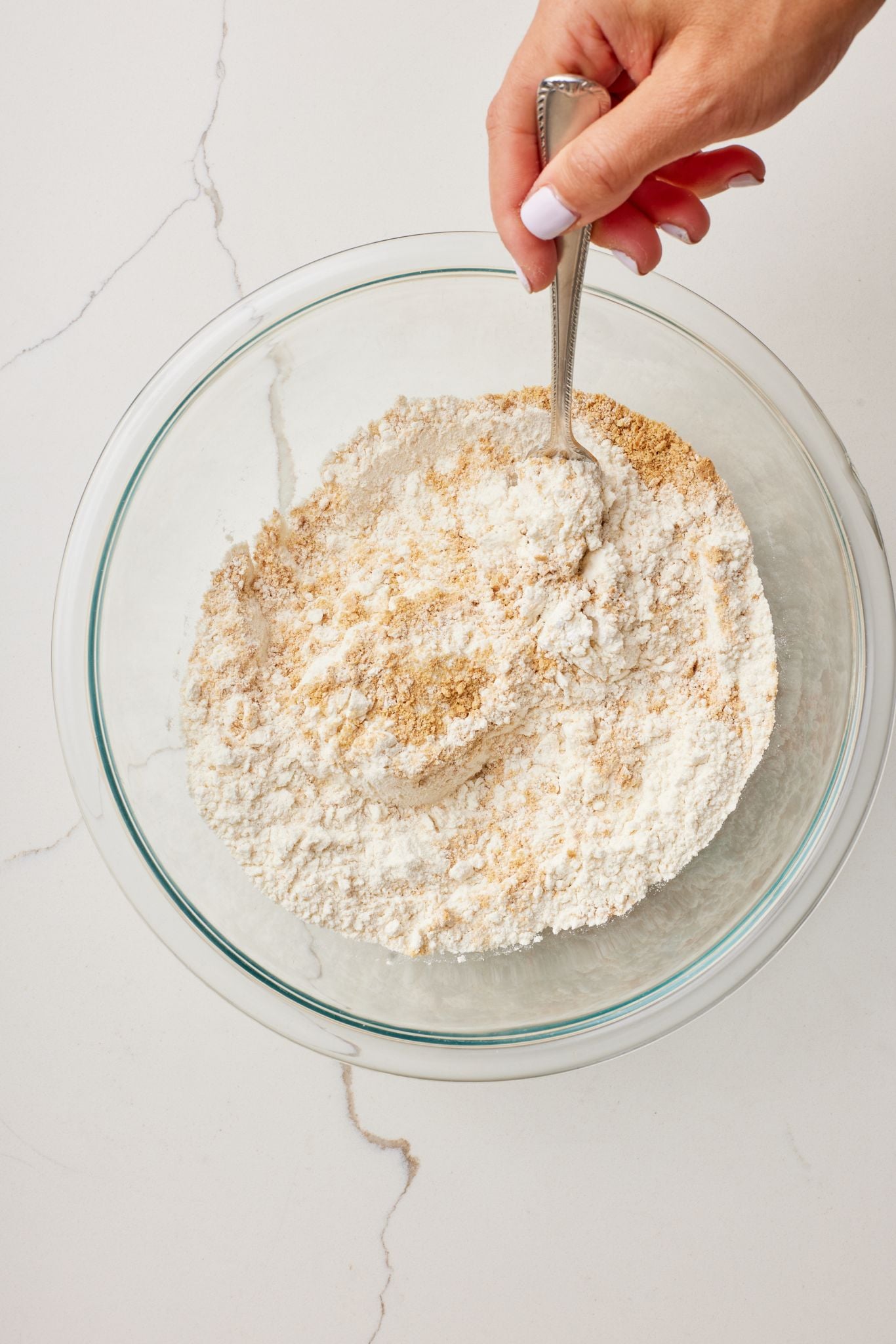
- Mix the dry ingredients: In a medium bowl, combine the flour, 1 cup (3 ½ oz / 99 g) Graham cracker crumbs, baking powder, and baking soda. Set aside.
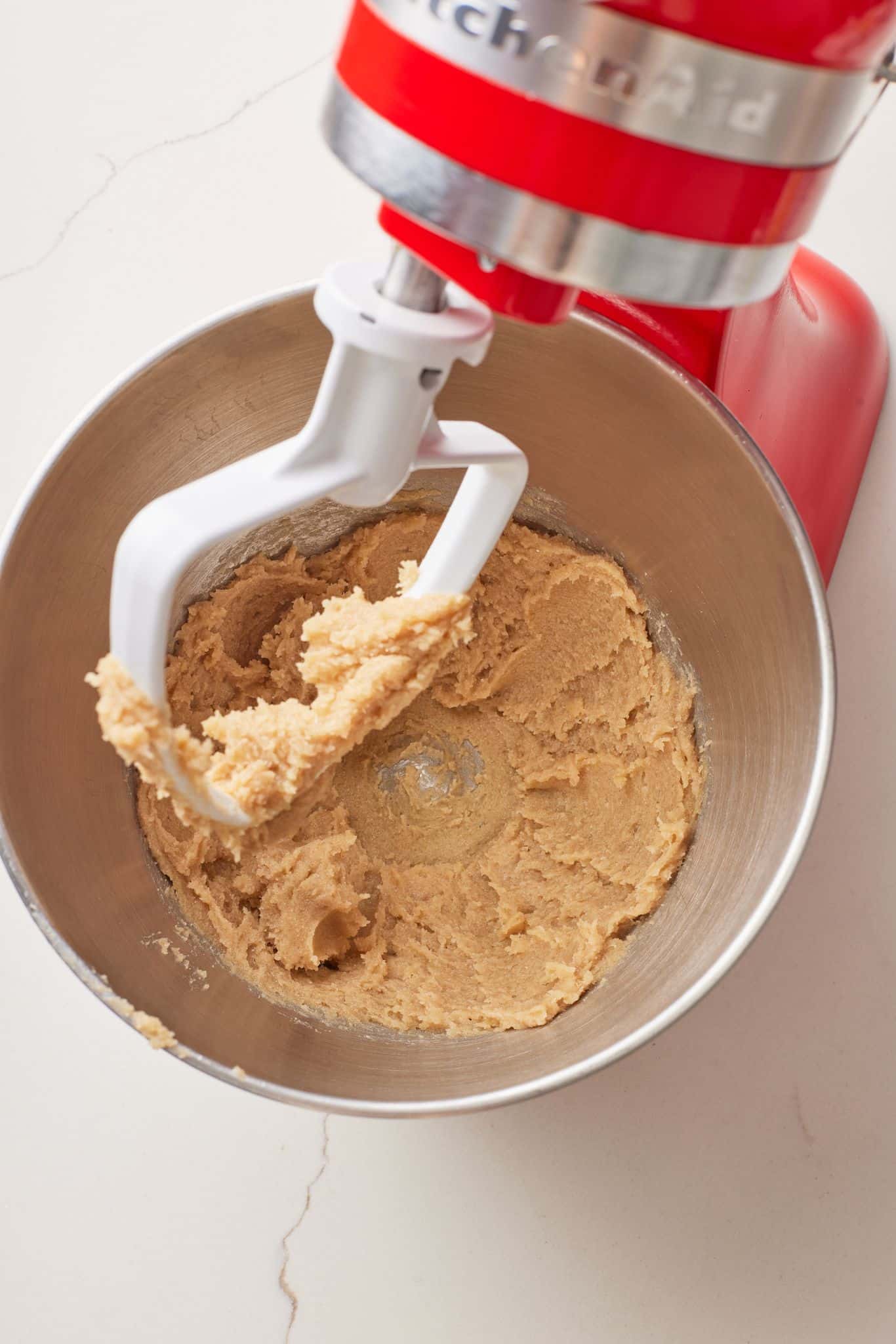
- Mix the butter and sugars: In the bowl of a stand mixer fitted with a paddle attachment (or with a handheld mixer and a large bowl), cream the butter, granulated sugar, dark brown sugar, and salt on medium-high speed for 3 minutes, until pale and fluffy.
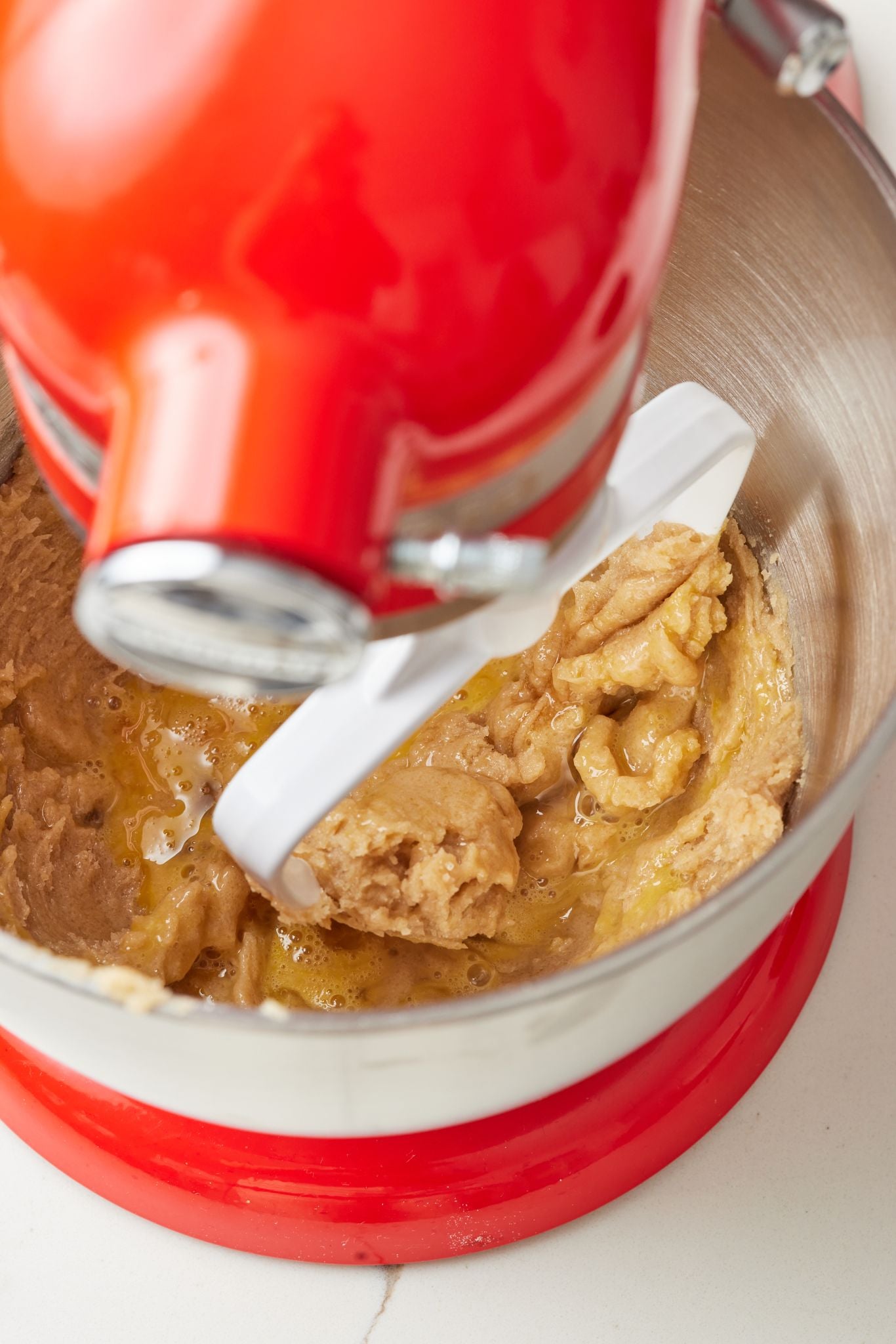
- Add egg and vanilla extract: Turn the speed to medium-low and add in the egg and vanilla extract.
- Add flour: Reduce speed to low and stir in the flour mixture just until combined.
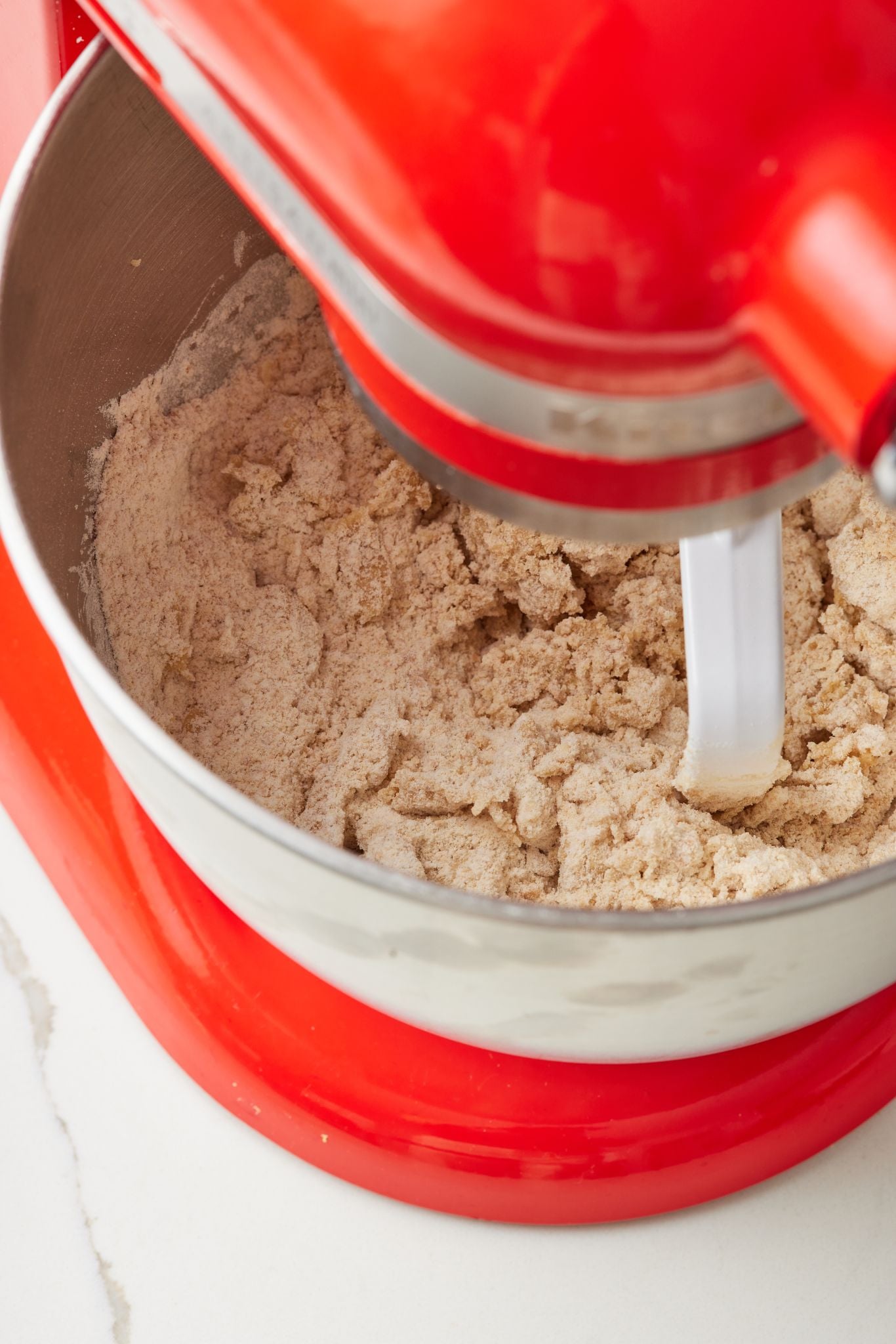
- Form dough into balls: Divide and roll the dough into 12 equal balls (about 3 tablespoons / 45 g each).
- Coat with Graham crumbs: Roll each ball in the remaining ⅓ cup (1 oz / 28 g) Graham cracker crumbs.
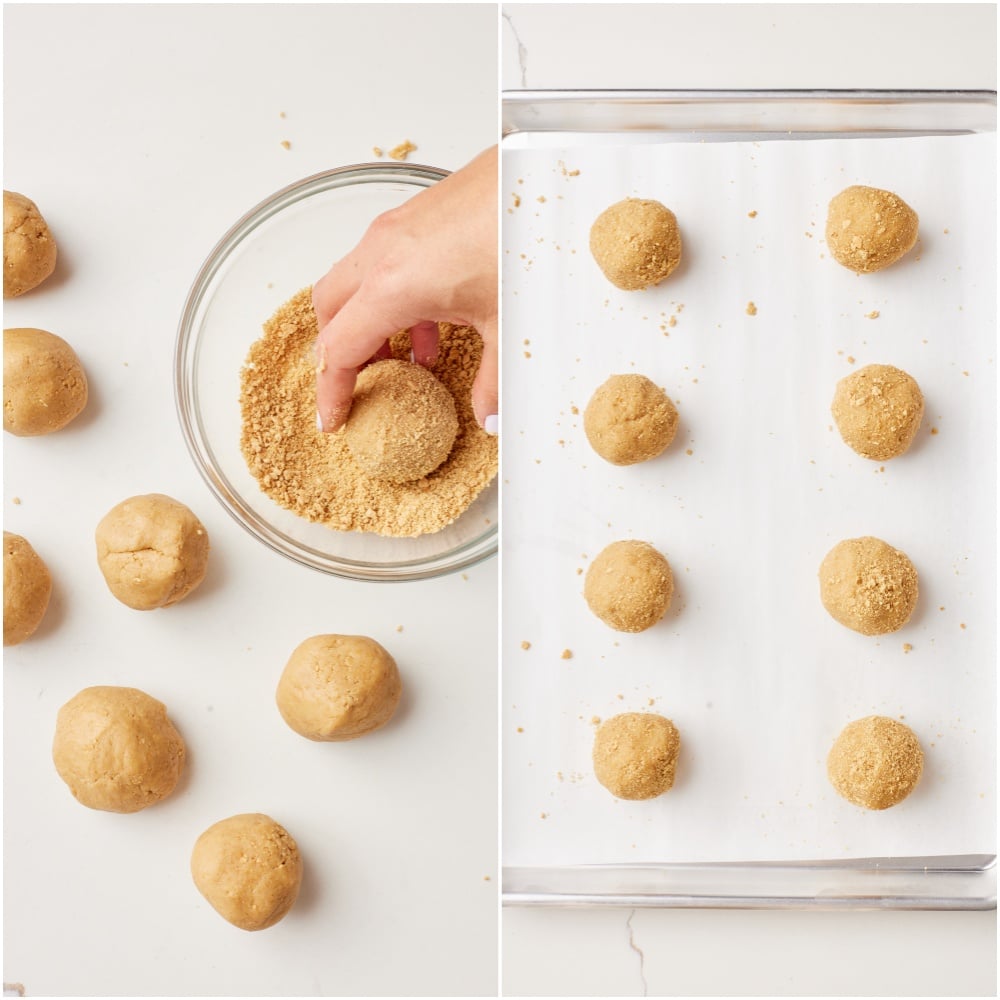
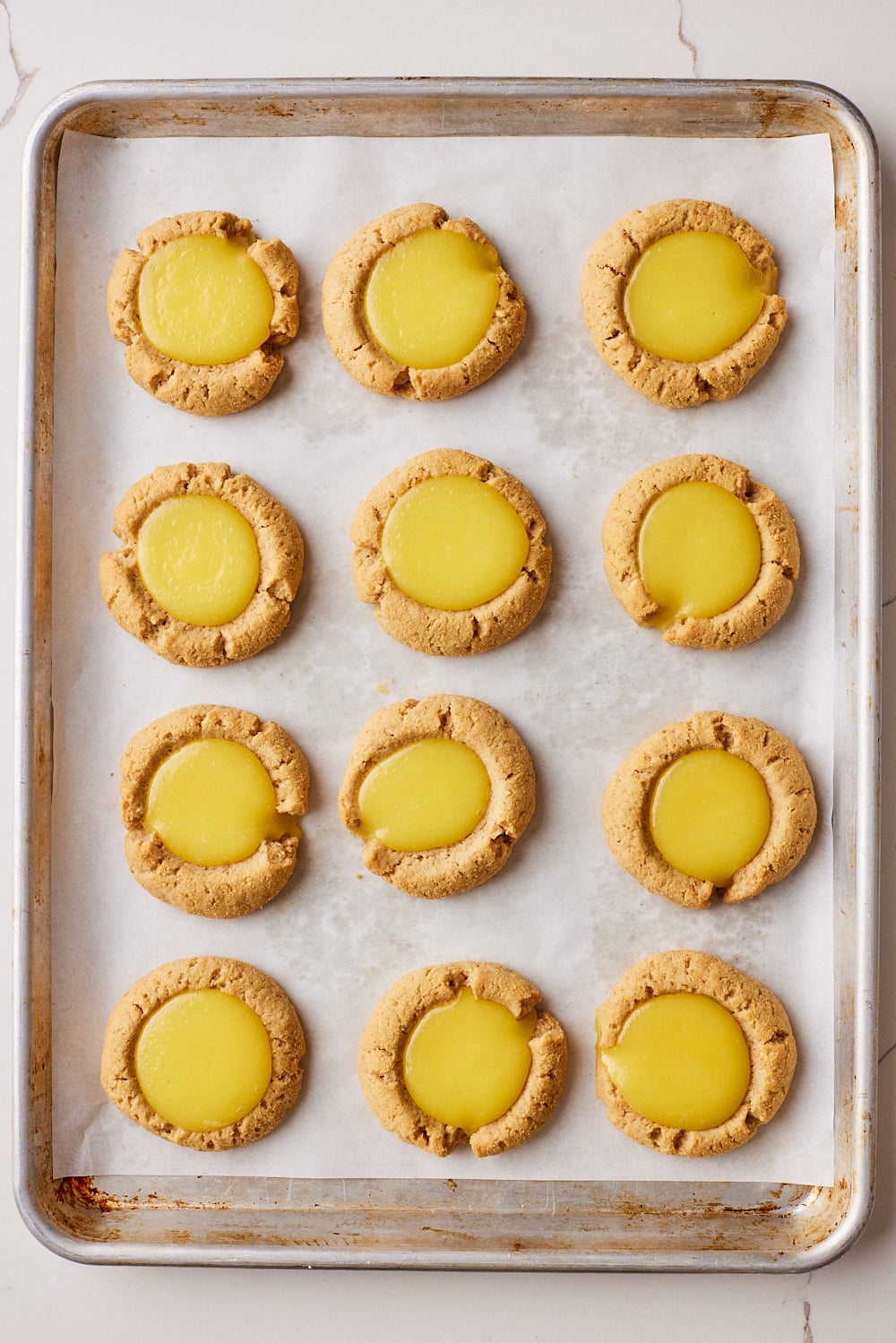
- Shape and place on pan: Use a tablespoon to press deep indentations into the centers, then arrange in 4 rows of 3 cookies each on the prepared baking sheet.
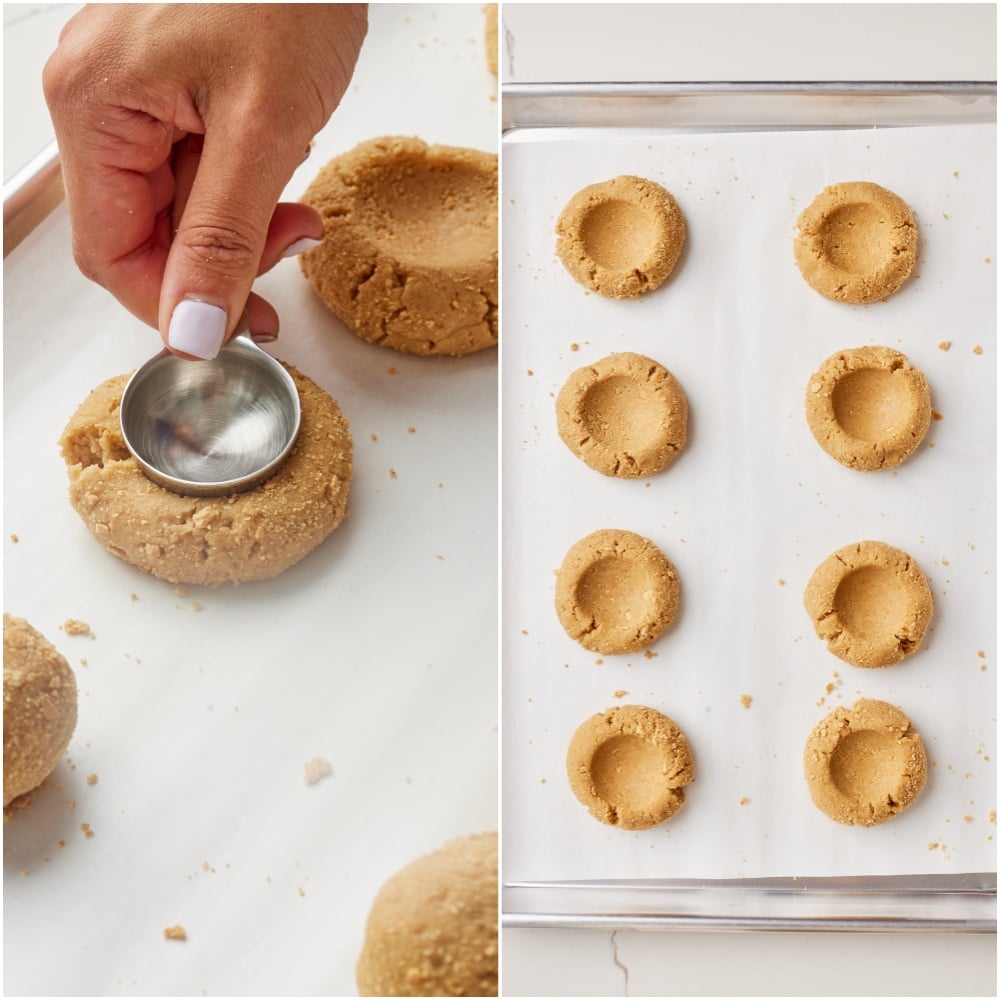
- Chill dough: Press cling wrap directly onto the surface and cool for 1 hour, then refrigerate until fully chilled and set, about 2 hours.
To Bake and Fill the Cookies
- Prepare to bake: Preheat the oven to 350°F (180°C).
- Bake cookies: Bake for 10 minutes, until the edges are lightly golden, but the centers are not quite set.
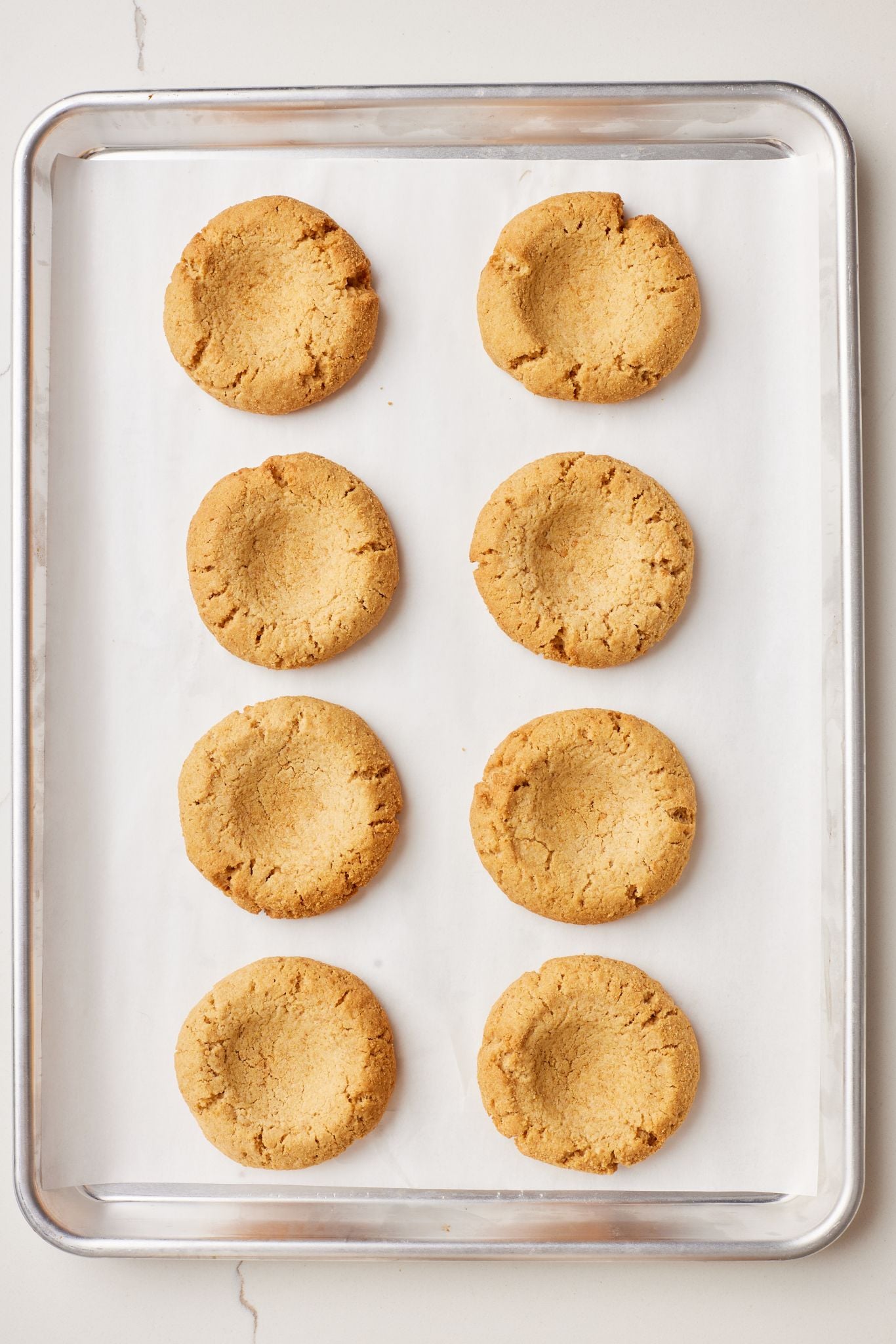
- Add lemon curd: Remove from the oven and re-form the indentations if needed, then fill each cookie with about 1 tablespoon of lemon curd.
- Bake until set: Bake for an additional 3–5 minutes, until the edges are golden brown and the filling is just set.
Meringue Topping
- Combine ingredients: In a heatproof bowl set over simmering water, combine the egg whites, granulated sugar, and cream of tartar.
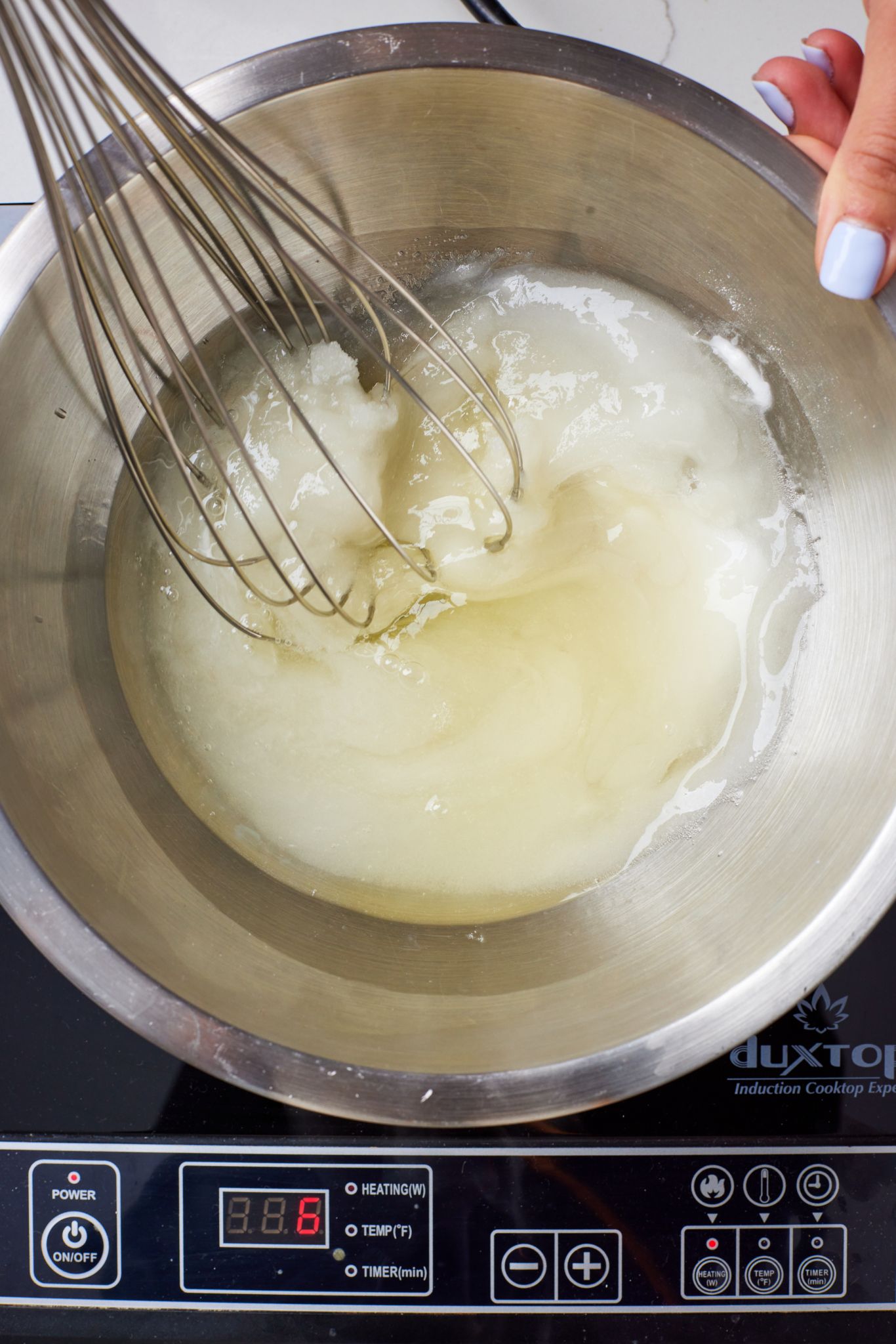
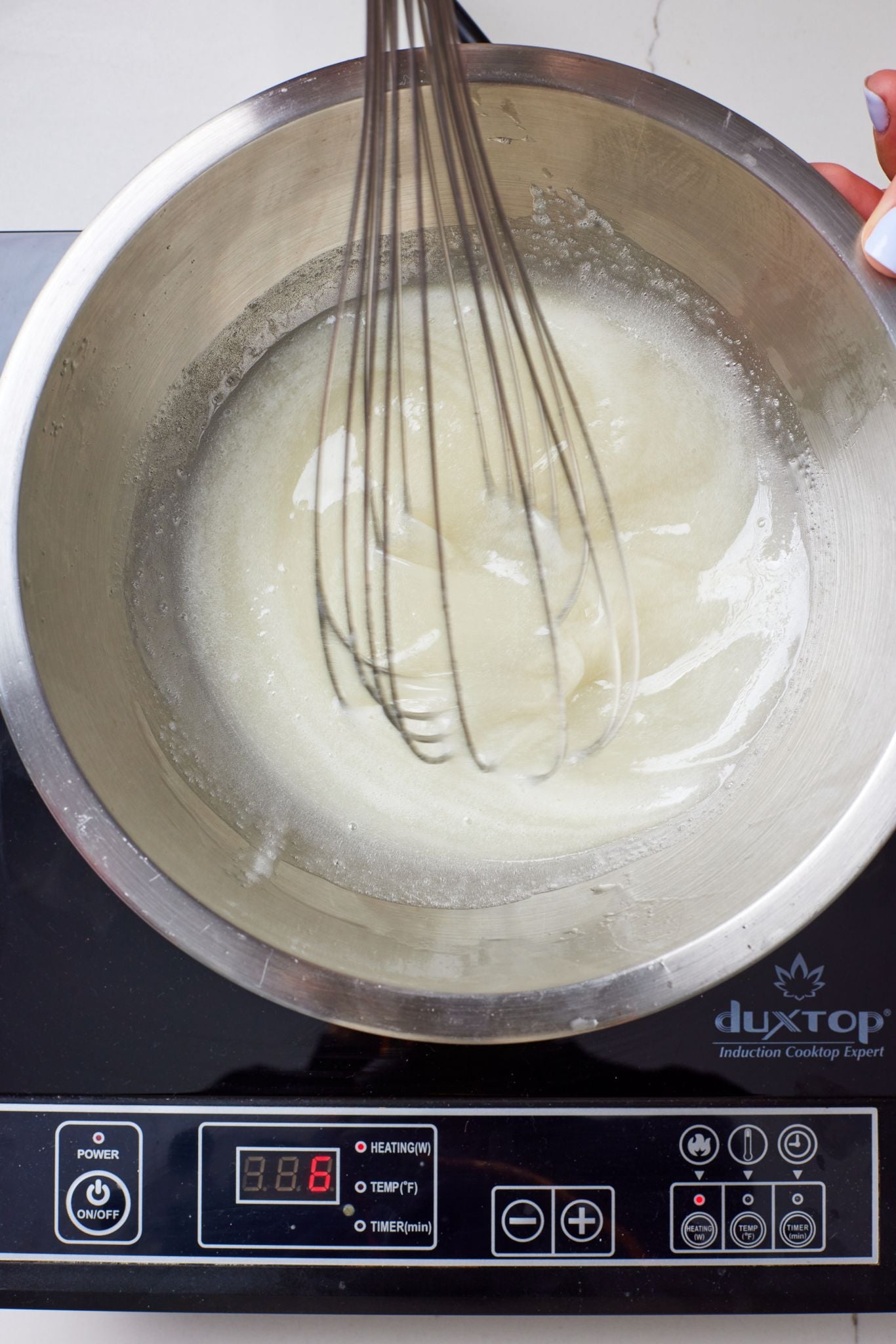
- Heat until sugar is dissolved: Cook, whisking constantly, until the sugar is fully dissolved and the mixture feels smooth when rubbed between your fingers.
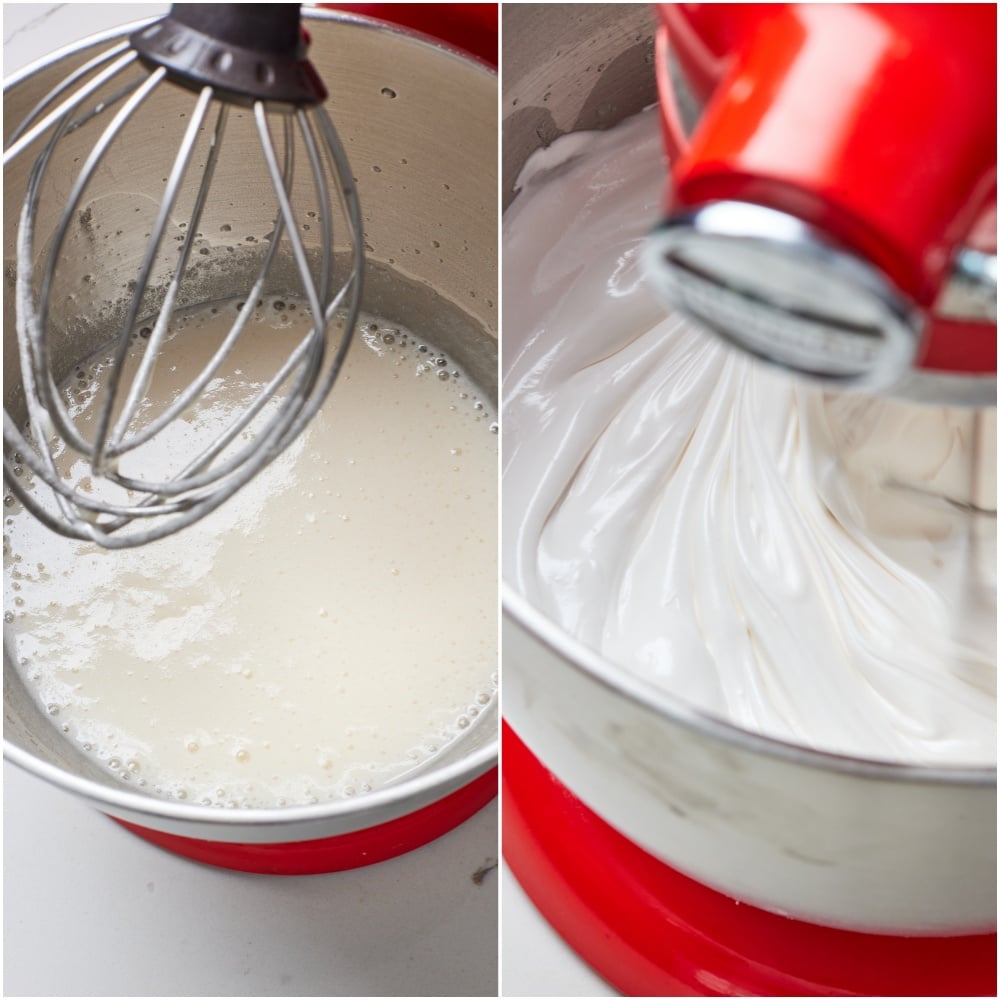
- Whip mixture: Transfer to the bowl of a stand mixer fitted with a whisk attachment (or use a handheld electric mixer) and whip on high speed for 5–8 minutes, until stiff, glossy peaks form.
Assemble the Lemon Meringue Pie Cookies
- Top cookies with meringue: Pipe the meringue onto the cooled cookies using a piping bag fitted with a large petal tip.

- Finish cookies: Toast the meringue with a kitchen torch until lightly golden.

FULL (PRINTABLE) RECIPE BELOW!
Gemma’s Pro Chef Tips
- Plan ahead for the curd since it needs time to chill and set fully. Making the curd a few hours ahead and up to two weeks (stored in the fridge) before will make assembly much easier.
- Use high-quality store-bought lemon curd if you prefer.
- If your curd is too thick to strain, return it to very low heat and whisk while adding 1 teaspoon of warm lemon juice or water. Strain as soon as the curd loosens.
- Cool the filled cookies completely before adding meringue.
- If you don’t want to pipe the meringue, spoon it on top of the cookies and swirl it a bit with an offset spatula or the back of a spoon. Wet the spatula or spoon to make swirling easier.
- To make sure your eggs are whipped to stiff peaks, check that the whites hold their shape when the mixer is removed from the bowl. See How Long Do You Whip Egg Whites? for more tips.
- Reshape the cookies while hot to re-form the divots: The cookie dough will puff slightly during the first bake. Re-pressing the centers while they are hot ensures adequate space for the curd and prevents overflow.
- Don’t overbake: After the first round of baking, the cookies need to be slightly underbaked so you can re-form the divots and add the curd.
- Make sure the egg whites are properly cooked by rubbing a drop of uncooked meringue between your fingers. The sugar should be fully dissolved and feel completely smooth before whipping.
- If you don’t have cream of tartar, substitute 1 teaspoon white vinegar or lemon juice to help stabilize the egg whites.
- Torch carefully, keeping the flame moving as you toast the meringue. This will prevent scorching and create an even color.
- If you don’t have a kitchen torch, you can place the piped cookies briefly under the oven’s broiler. Watch carefully so they don’t burn.
- Use my Homemade Raspberry Curd instead of lemon curd for a fruity, bright-pink cookie.

Make-Ahead and Storage Instructions
Make-Ahead Tips
- The lemon curd can be made, placed in an airtight container, and refrigerated for up to two weeks.
- You can make the cookie dough balls and store in an airtight container in the fridge for up to 24 hours.
- The cookies are best the day they’re made, but you can make them up to two days in advance.
- Store cookies in a single layer, loosely cover with plastic wrap, and refrigerate.
- Be sure to leave off the meringue topping until just before serving.
How to Store Leftovers
- Store leftovers in a single layer, loosely covered with plastic wrap, in the fridge for up to one day.
FAQs
Can I make these lemon pie cookies gluten-free?
- Yes, you can make these lemon pie cookies gluten-free.
- In place of the regular all-purpose flour, use the same amount of a 1:1 gluten-free baking mix, such as my Easy Almond Flour Baking Mix or another gluten-free flour.
- Instead of using regular Graham crackers, use store-bought certified gluten-free Graham crackers, or make my homemade Graham crackers with gluten-free flour instead of regular flour.
- Be sure the other ingredients you use are certified gluten-free.
How do I make these lemon cookies without eggs?
- To make these lemon cookies without egg, use my Vegan Lemon Curd recipe for the filling.
- In place of the egg in the cookie base, use a flax egg: mix 1 tablespoon of ground flax seeds with tablespoons of water and let sit for 5 minutes before using.
- In the meringue, use a commercial egg replacer or aquafaba instead of egg whites.
- Check out my Complete Guide To Aquafaba, A Surprising Vegan Egg Substitute for details.
Could I use another filling in these cookies?
- Yes, you can use another filling in these cookies.
- Store-bought lemon or lime curd works well.
- Use my Homemade Raspberry Curd for a vibrant pink alternative.
- If you love this recipe, check out my Key Lime Pie Cookies.
More Lemon Recipes
Lemon Meringue Pie Cookies


Ingredients
Lemon Curd Filling
- 2 large eggs , at room temperature
- ⅔ cup (5 oz / 142 g) granulated sugar
- ¼ cup (2 fl oz / 60 ml) freshly squeezed lemon juice
- 1 teaspoon lemon zest
- ¼ cup (2 oz / 57 g) butter , softened
Lemon Meringue Pie Cookie Dough
- 1 ⅓ cups (6 ½ oz / 185 g) all-purpose flour
- 1 cup (3 ½ oz / 99 g) plus ⅓ cup (1 oz / 28 g) Graham cracker crumbs (from about 8 crackers)
- ½ teaspoon baking powder
- ¼ teaspoon baking soda
- ½ cup (4 oz / 115 g) butter , softened
- ⅓ cup (2 ½ oz / 71 g) granulated sugar
- ¼ cup (1 ½ oz / 43 g) dark brown sugar
- ¼ teaspoon salt
- 1 large egg , at room temperature
- 1 teaspoon vanilla extract
Meringue Topping
- 4 large egg whites , at room temperature
- ⅔ cup (5 oz / 142 g) granulated sugar
- ¼ teaspoon cream of tartar
Instructions
To Make the Lemon Curd Filling
- Place a fine-mesh sieve over a medium heatproof bowl and set aside.
- In a separate medium heatproof bowl, whisk together the eggs and granulated sugar until smooth.
- Bring the lemon juice and lemon zest to a simmer in a small saucepan over medium heat.
- Slowly pour the lemon juice into the egg mixture while whisking constantly.
- Return to the saucepan and cook over low heat, stirring constantly, until thick enough to coat the back of a spoon, about 5 minutes.
- Strain through the sieve, then whisk in the butter until melted and smooth.
- Press cling wrap directly onto the surface and cool for 1 hour, then refrigerate until fully chilled and set, about 2 hours.
To Make the Lemon Meringue Pie Cookie Dough
- Line a 13 x 18 inch (33 x 46 cm) baking sheet with parchment paper and set aside.
- In a medium bowl, combine the flour, 1 cup (3 ½ oz / 99 g) Graham cracker crumbs, baking powder and baking soda. Set aside
- In the bowl of a stand mixer fitted with a paddle attachment (or with a handheld mixer and a large bowl), cream the butter, granulated sugar, dark brown sugar and salt on medium-high speed for 3 minutes, until pale and fluffy.
- Turn the speed to medium-low and add in the egg and vanilla extract.
- Reduce speed to low and stir in the flour mixture just until combined.
- Divide and roll the dough into 12 equal balls (about 3 tablespoons / 45 g each).
- Roll each ball in the remaining ⅓ cup (1 oz / 28 g) Graham cracker crumbs.
- Use a tablespoon to press deep indentations into the centers, then arrange in 4 rows of 3 cookies each on the prepared baking sheet.
- Cover with cling wrap and refrigerate for 1 hour, until firm.
To Bake and Fill Lemon Meringue Pie Cookies
- Preheat the oven to 350°F (180°C).
- Bake for 10 minutes, until the edges are lightly golden but the centers are not quite set.
- Remove from the oven and re-form the indentations if needed, then fill each cookie with about 1 tablespoon of lemon curd.
- Bake for an additional 3–5 minutes, until the edges are golden brown and the filling is just set.
- Allow the cookies to cool on the baking sheet for 5 minutes, then transfer to a wire rack to cool completely.
To Make the Meringue Topping
- In a heatproof bowl set over simmering water, combine the egg whites, granulated sugar and cream of tartar.
- Cook, whisking constantly, until the sugar is fully dissolved and the mixture feels smooth when rubbed between your fingers.
- Transfer to the bowl of a stand mixer fitted with a whisk attachment (or use a handheld electric mixer) and whip on high speed for 5–8 minutes, until stiff, glossy peaks form.
To Assemble and Serve the Lemon Meringue Pie Cookies
- Pipe the meringue onto the cooled cookies using a piping bag fitted with a large petal tip.
- Toast the meringue with a kitchen torch until lightly golden.
- Serve immediately with coffee or tea. Store leftovers in a single layer, loosely covered with cling wrap, in the refrigerator for up to 1 day.
Recipe Notes
- Plan ahead for the curd since it needs time to chill and set fully. Making the curd a few hours ahead and up to two weeks (stored in the fridge) before will make assembly much easier.
- Use high-quality store-bought lemon curd if you prefer.
- If your curd is too thick to strain, return it to very low heat and whisk while adding 1 teaspoon of warm lemon juice or water. Strain as soon as the curd loosens.
- Cool the filled cookies completely before adding meringue.
- If you don't want to pipe the meringue, spoon it on top of the cookies and swirl it a bit with an offset spatula or the back of a spoon. Wet the spatula or spoon to make swirling easier.
- To make sure your eggs are whipped to stiff peaks, check that the whites hold their shape when the mixer is removed from the bowl. See How Long Do You Whip Egg Whites? for more tips.
- Reshape the cookies while hot to re-form the divots: The cookie dough will puff slightly during the first bake. Re-pressing the centers while they are hot ensures adequate space for the curd and prevents overflow.
- Don't overbake: After the first round of baking, the cookies need to be slightly underbaked so you can re-form the divots and add the curd.
- Make sure the egg whites are properly cooked by rubbing a drop of uncooked meringue between your fingers. The sugar should be fully dissolved and feel completely smooth before whipping.
- If you don’t have cream of tartar, substitute 1 teaspoon white vinegar or lemon juice to help stabilize the egg whites.
- Torch carefully, keeping the flame moving as you toast the meringue. This will prevent scorching and create an even color.
- If you don’t have a kitchen torch, you can place the piped cookies briefly under the oven's broiler. Watch carefully so they don’t burn.
- Use my Homemade Raspberry Curd instead of lemon curd for a fruity, bright-pink cookie.









Could these be made in a mini muffin pan…if yes, any changes?
Is it okay to use store bought lemon curd?
Please help me clarify, this lemon curd calls for 1/2 cup of lemon juice but has (2 fl/ oz or 60 ml) which is 1/4 cup. So……… which amount is correct?
Can you freeze these after they Are finished and if so how?
I had about 1/2 cup crumbs left that could not be formed into balls.I bear room temperature butter with sugars for the instructions.
What could I have done with the crumbs?
Should I have added another egg or more butter?
I’m 86 and have been baking forever so I can’t imagine what went wrong.
Suggestions?
The lemon curd was fantastic, so zesty and smooth. But the best part was the graham cracker cookie base. Oh my gosh, it was sooo good. I’m going to just bake the cookies and fill them with some of Gemma’s no bake cheese cake! Can’t wait to try that.
I am dying to try these as I love anything lemony. Unfortunately I’m just over surgery for a broken hip and as a result have developed duodenalitis, so, for now I’m on a bland boring diet, but once healed I will definitely be trying these. Thanks.