This post may contain affiliate links. Please see my full disclosure for details.
Hi Bold Bakers!
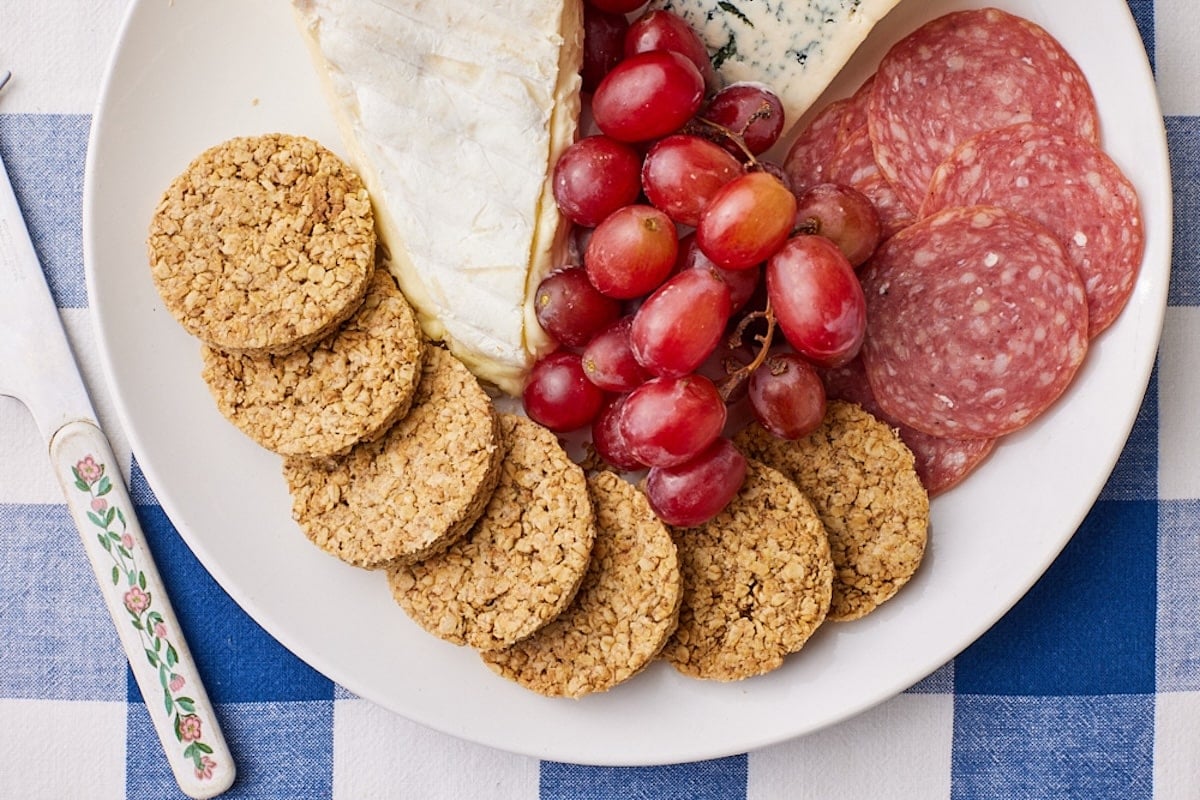
WHY YOU’LL LOVE THIS RECIPE: My traditional Scottish Oatcakes are the all-purpose oat crackers you’ll want in your regular baking rotation! Crisp, buttery, and wonderfully nutty, these wholesome crackers are equally delicious on their own or paired with cheese, fruits, or your favorite spreads.
- Just 5 simple ingredients: Unlike most crackers, these are made almost entirely from oats.
- Craveable, nutty flavor: These baked treats have an oaty, comforting taste.
- Perfectly crisp and crumbly: This cracker’s delicately crisp texture is ideal for topping or enjoying as-is.
- No mixer needed: Just make the dough by hand, roll it out, and bake.
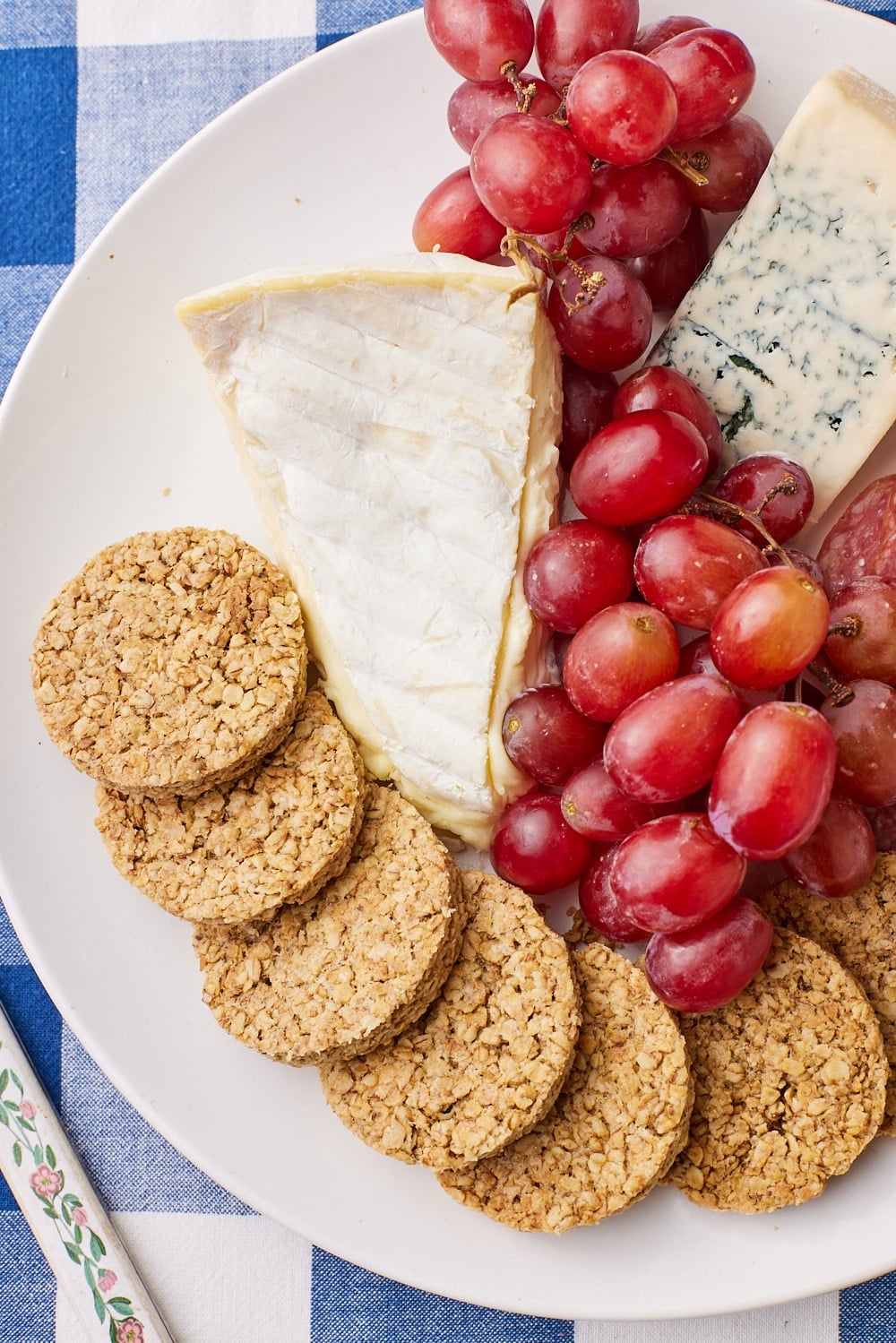
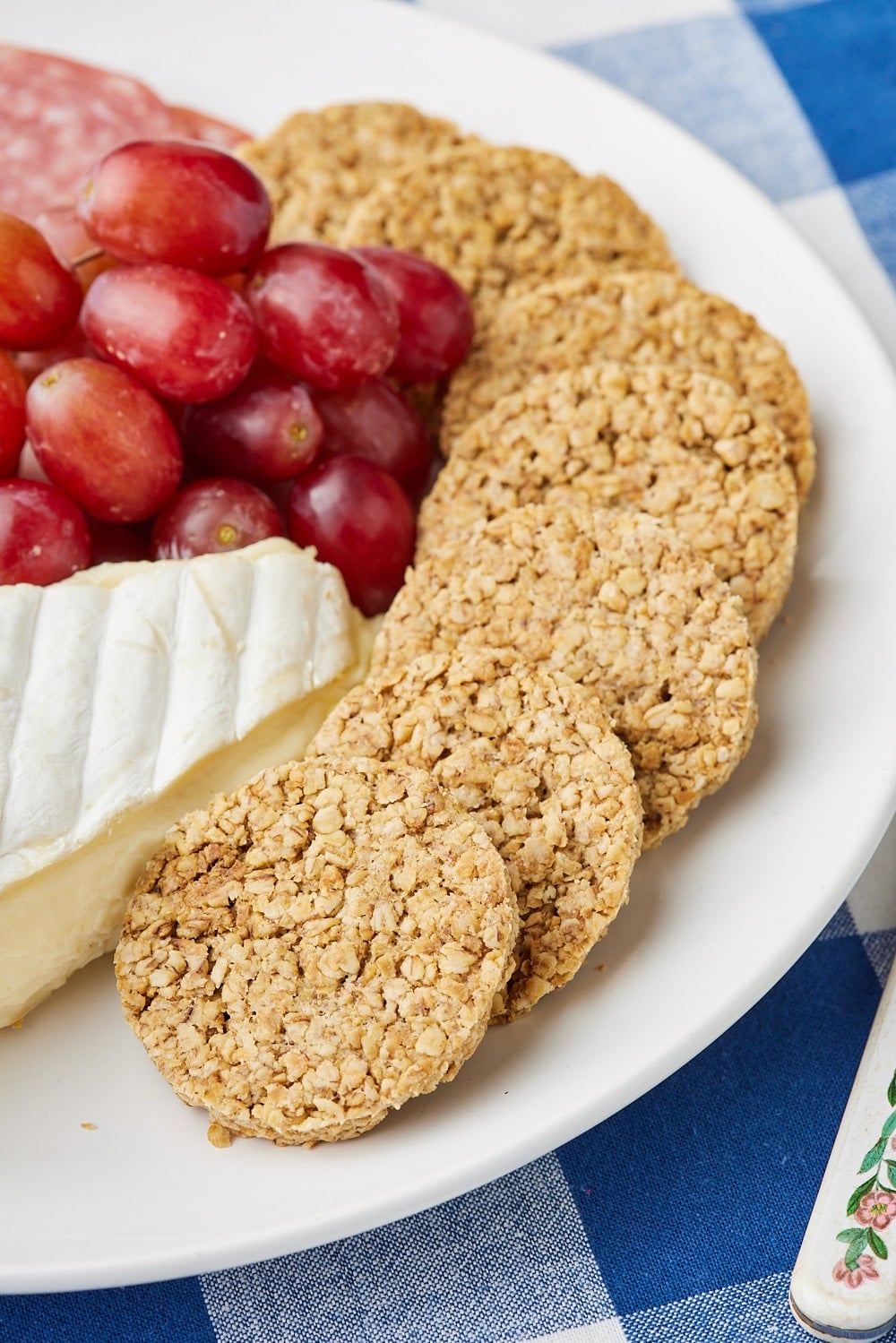
- Incredibly versatile: Delicious with cheddar, paté, smoked salmon, honey, butter, and marmalade or jam, soups, broths, or charcuterie boards/cheese boards.
It’s easy to think the most impressive recipes are the most complicated, but as a professional chef, I know it’s the simple, everyday bakes that bring the most flavor and joy to our daily lives. That’s why I’m so excited to share this Scottish Oatcakes recipe. These humble-looking crackers have the most irresistible, shortbread-like crumb, and a wonderfully nutty flavor from the toasted oats. If you like Effie’s Oatcakes or Walkers Oat Crackers, you’ll love my homemade version. Whether they’re the star of a hors d’oeveres spread or enjoyed with a cup of tea, I know you’ll find yourself making them again and again.
My most important tip for this recipe is to roll the dough to the correct thickness—you want to create crisp, evenly baked crackers. Roll the dough to 1/8 inch, about the thickness of two stacked quarters. For more go-to homemade cracker recipes, be sure to try my Homemade Ritz Crackers, Seed Crackers, and Sourdough Discard Crackers.
Table of Contents
- What are Scottish Oatcakes?
- Tools You Need
- Key Ingredients and Substitutes
- How to Make Scottish Oatcakes
- Gemma’s Pro Chef Tips
- Make-Ahead and Storage Instructions
- FAQs
- More Oat Recipes
What are Scottish Oatcakes?
Scottish Oatcakes are crisp, savory oat crackers made with oats, butter, and hot water. They have been a staple of Scottish cooking for centuries, dating back to a time when oats grew much better than wheat in Scotland’s climate. While they’re an everyday food throughout Scotland, and sold alongside crackers and biscuits in nearly every grocery store, they’re much less common in the U.S., making homemade oatcakes a wonderful way to experience a beloved Scottish tradition.
Tools You Need
- Mixing bowls
- Measuring spoons
- Measuring cups
- Glass measuring jug
- Kitchen scale (optional)
- Whisk
- Spoon
- Parchment paper
- Rolling pin
- Large baking sheet
- 2 1/2-inch (6-cm) round cutter (optional)
Key Ingredients and Substitutes
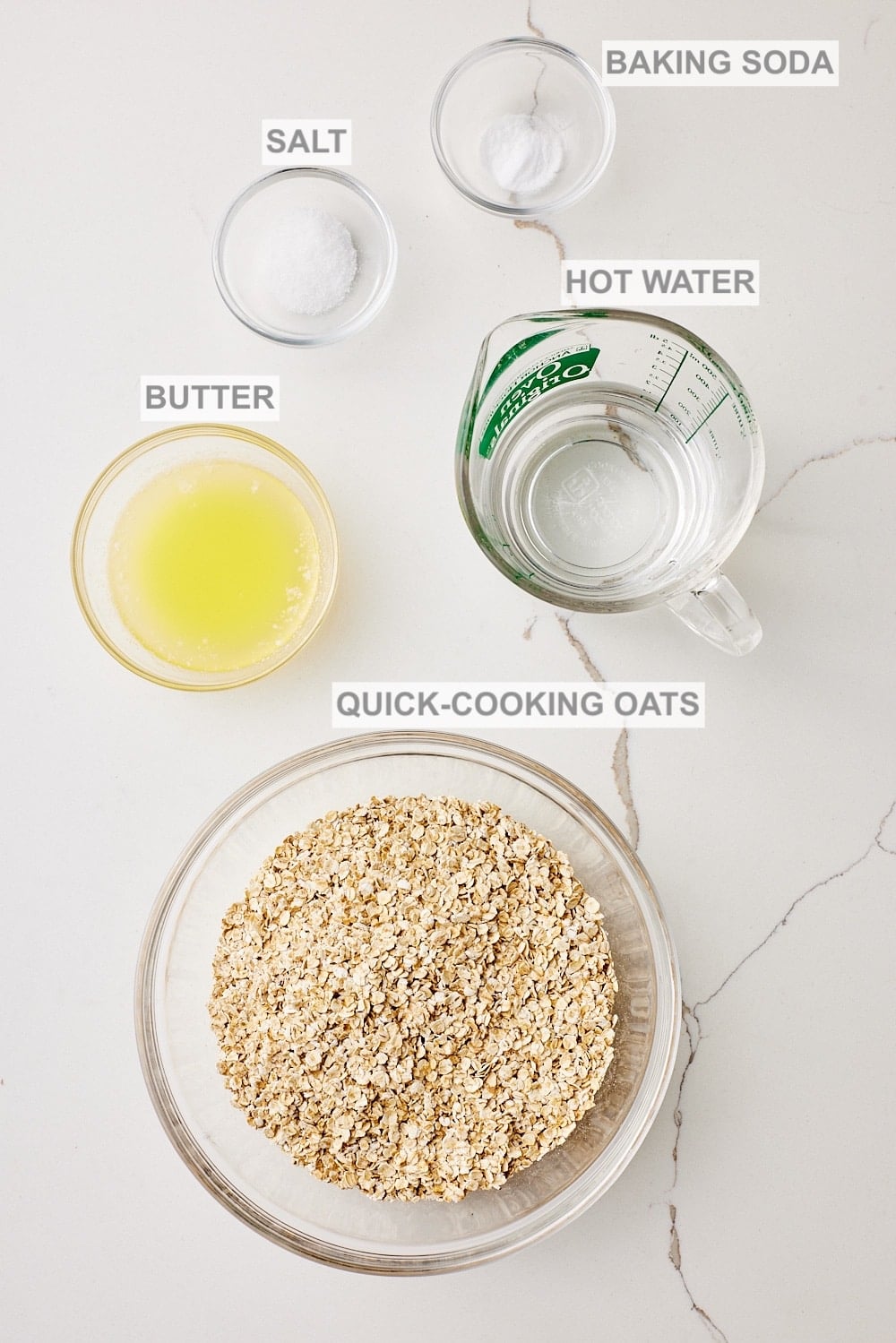
Quick-cooking oats
- Quick-cooking oats give the oatcakes their signature nutty flavor and delicate, crumbly texture.
- It’s important to use quick-cooking oats here because they absorb hot water quickly and easily, helping the dough hold together without much flour.
- To make these oatcakes gluten-free, use certified gluten-free quick-cooking oats.
- Note that instant oats won’t work in this recipe.
- Substitute: If you only have old-fashioned rolled oats, pulse them a few times in a food processor until they’re about the size of quick-cooking oats.
Salt
- Salt enhances the flavors in this oatcakes recipe, and keeps these crackers from being bland.
Baking soda
- Baking soda helps the crackers bake up light.
- Additionally, baking soda contributes to browning.
Butter
- Melted butter coats the oats, so they bake up crisp and toasty.
- Additionally, butter gives these Scottish crackers a rich flavor.
- Substitute: For a different flavor in this oat cake recipe, you can use the same amount of clarified butter or browned butter.
- If you want to make vegan oatcakes, you can use an equal amount of a mild, light olive oil here, but note that they won’t have the same traditional buttery flavor.
- Note that a full-bodied olive oil will not work here—the flavor will be too strong.
- Please do not use vegetable oil or canola oil as a substitute for butter—it will yield crackers with a bitter taste.
- If you want to make vegan oatcakes, you can use an equal amount of a mild, light olive oil here, but note that they won’t have the same traditional buttery flavor.
Hot water
- Hot water hydrates and softens the oats, making the dough come together and easier to roll out.
- Use hot—but not boiling—water.
How to Make Scottish Oatcakes
- Combine dry ingredients mixture. In a large bowl, combine the oats, salt, and baking soda.
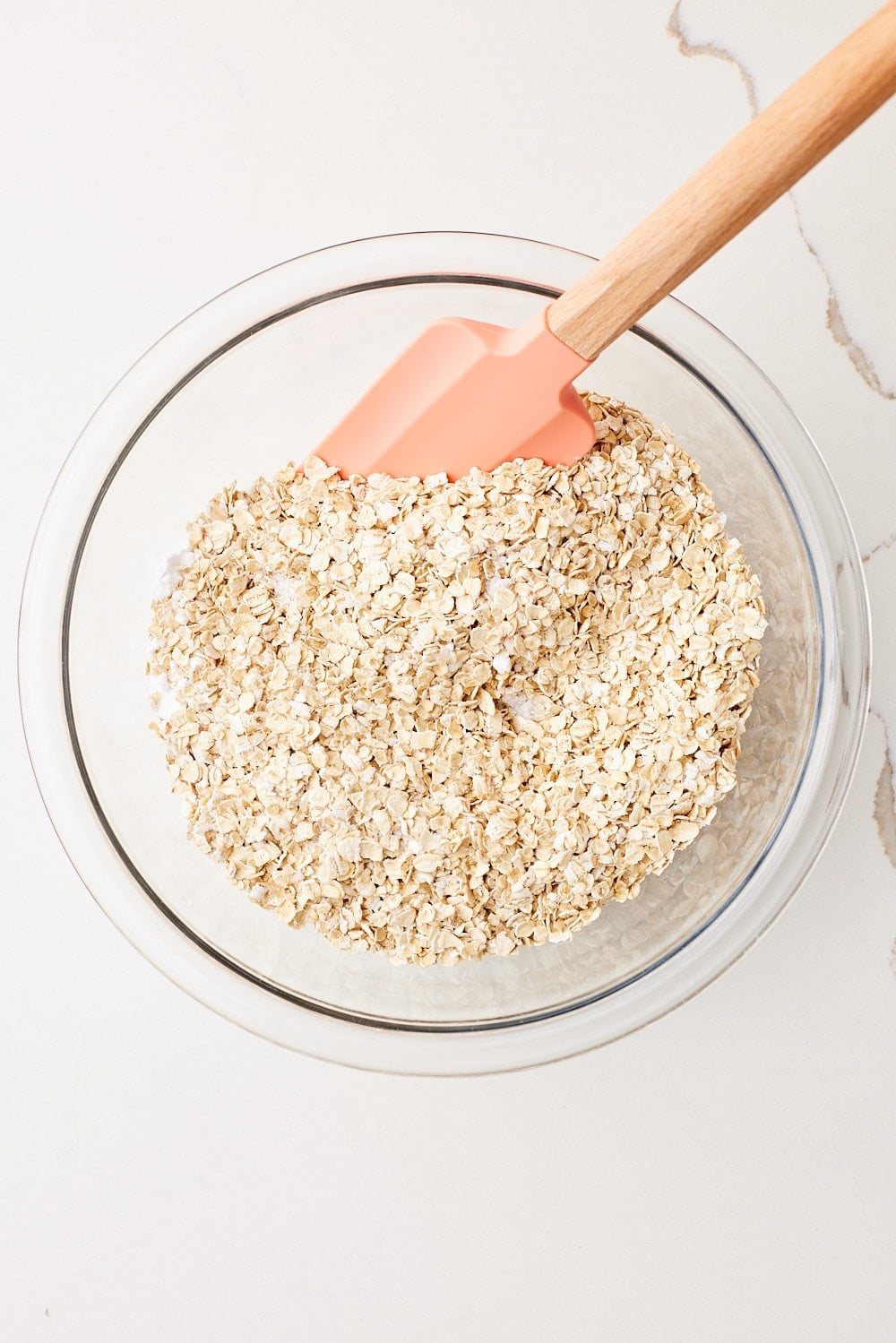
- Mix in butter. Stir in the butter until the oats are evenly coated.
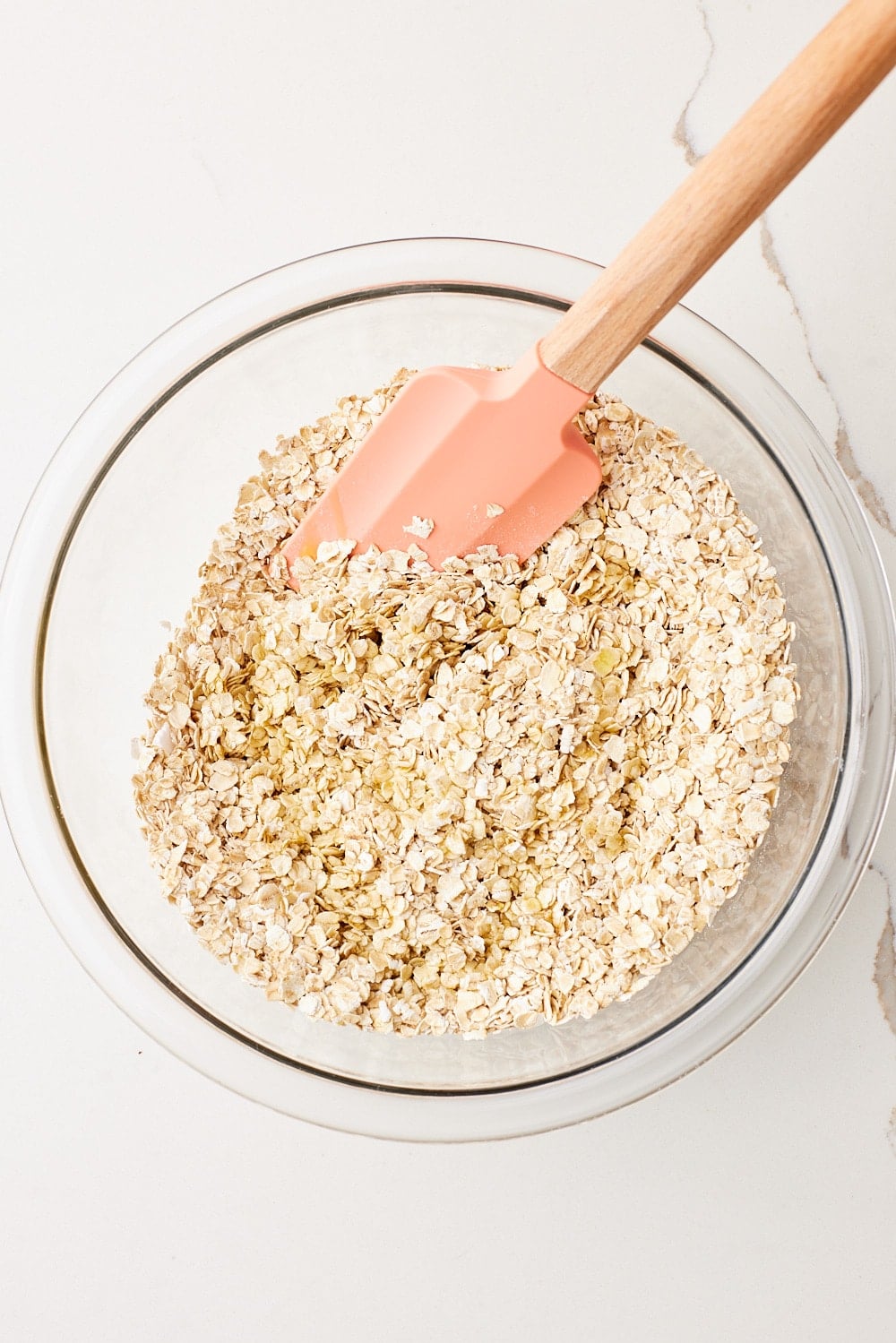
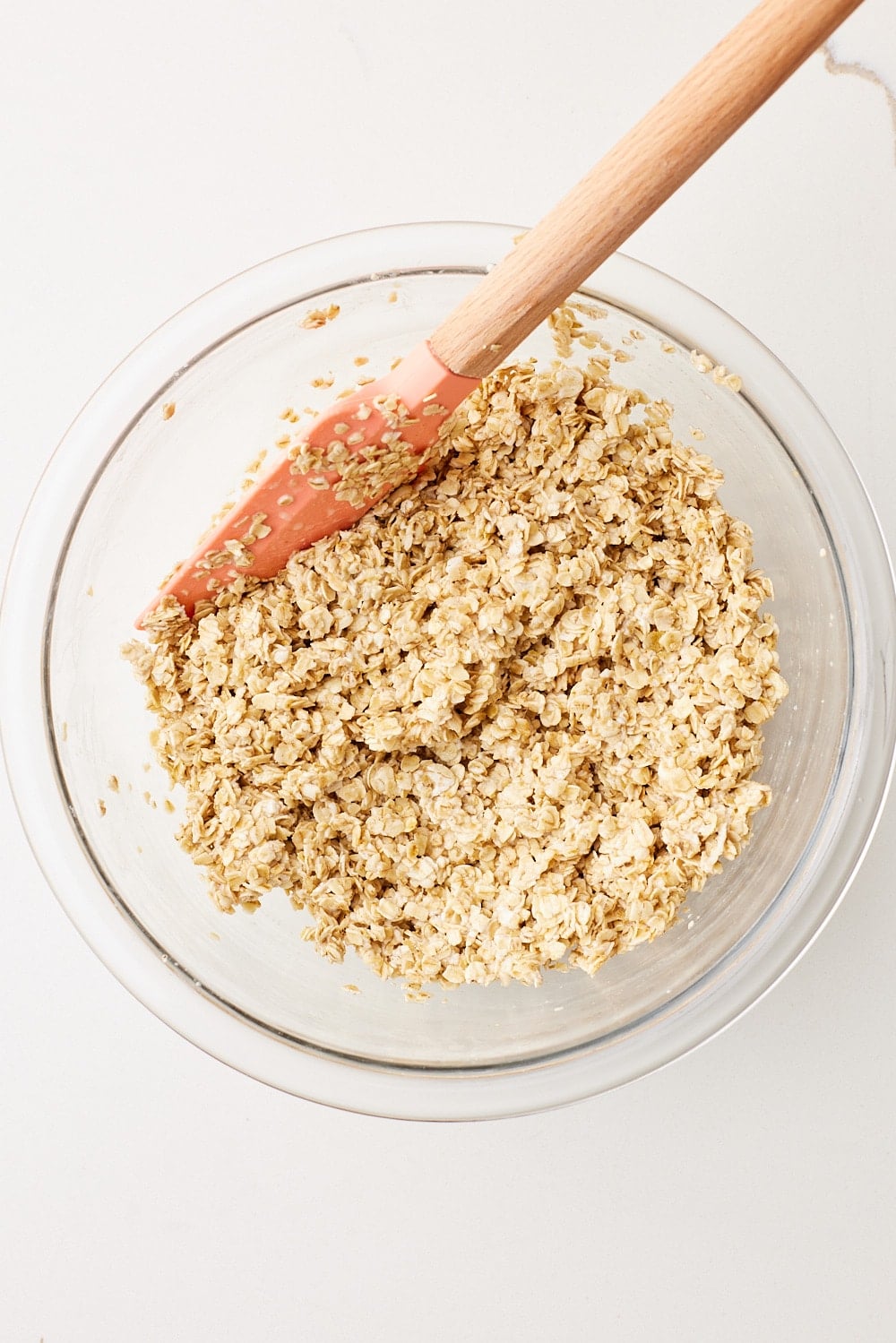
- Add hot water, mix, and let sit. Add the hot water and mix until a soft and slightly sticky dough forms. Cover and let rest for 10 minutes, until thickened.
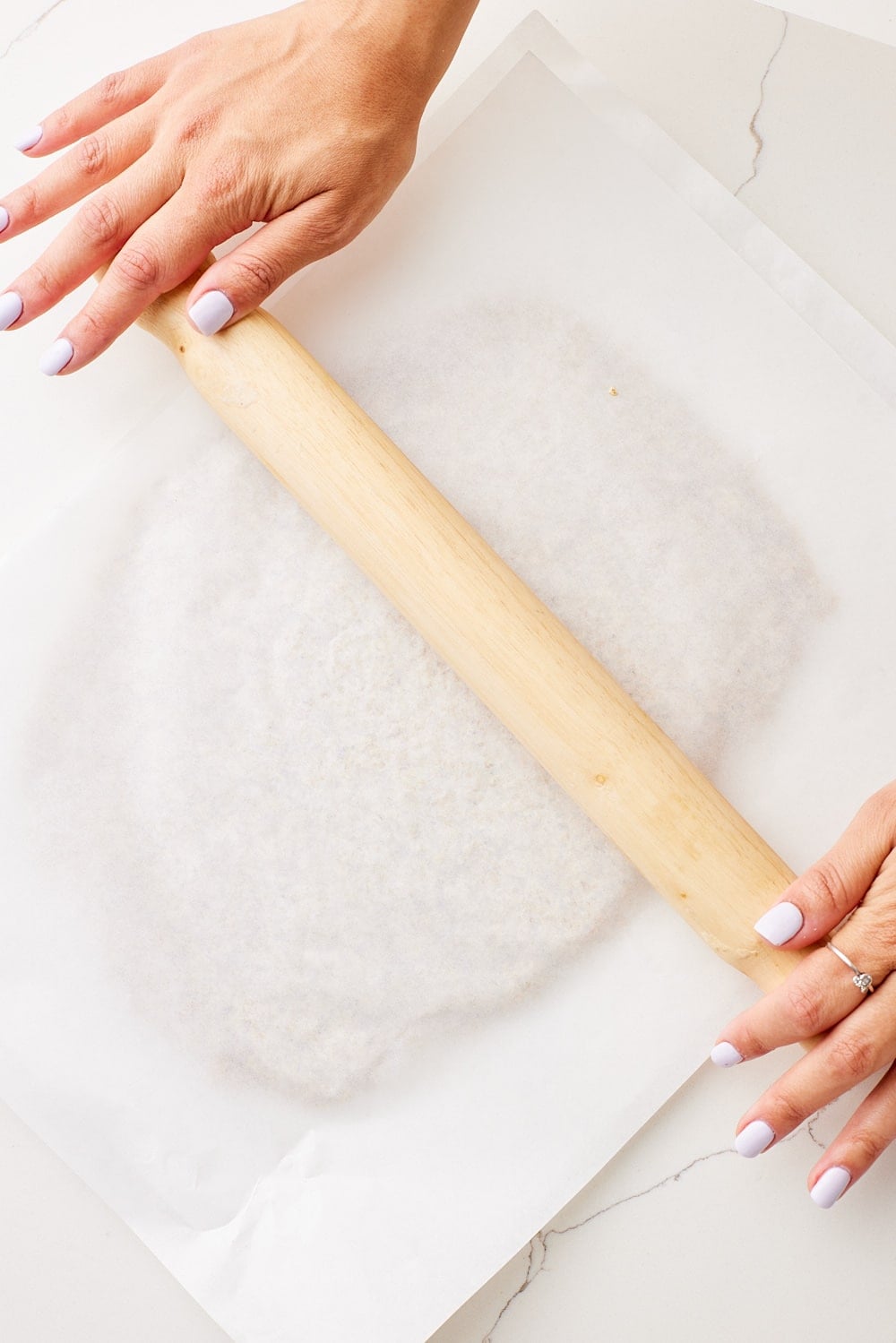
- Roll out dough. Roll the dough between two sheets of parchment paper to ⅛-inch (3 mm) thickness.
- Chill dough. Refrigerate for at least 30 minutes, until firm.
- Prepare to bake. In the meantime, preheat the oven to 350°F (180°C) and line a large baking sheet with parchment paper.
- Cut out out takes. Remove the top sheet of parchment from the dough and use a biscuit or cookie cutter to cut out 2½-inch (6 cm) rounds. Gather and re-roll the scraps to make more cakes.
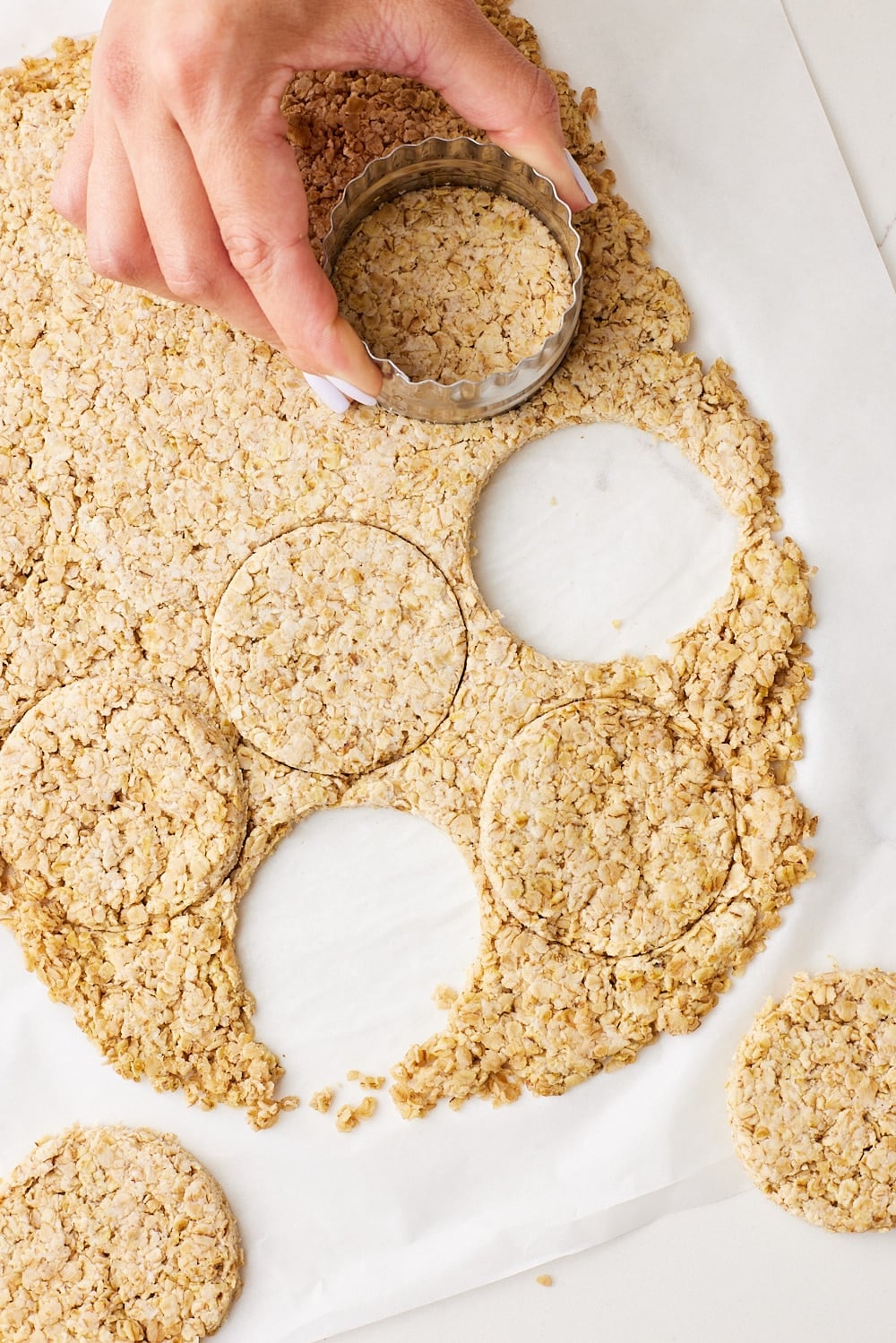
- Add cut oatcakes to the sheet. Place on the prepared baking sheet, spacing about 1 inch (2 ½ cm) apart.
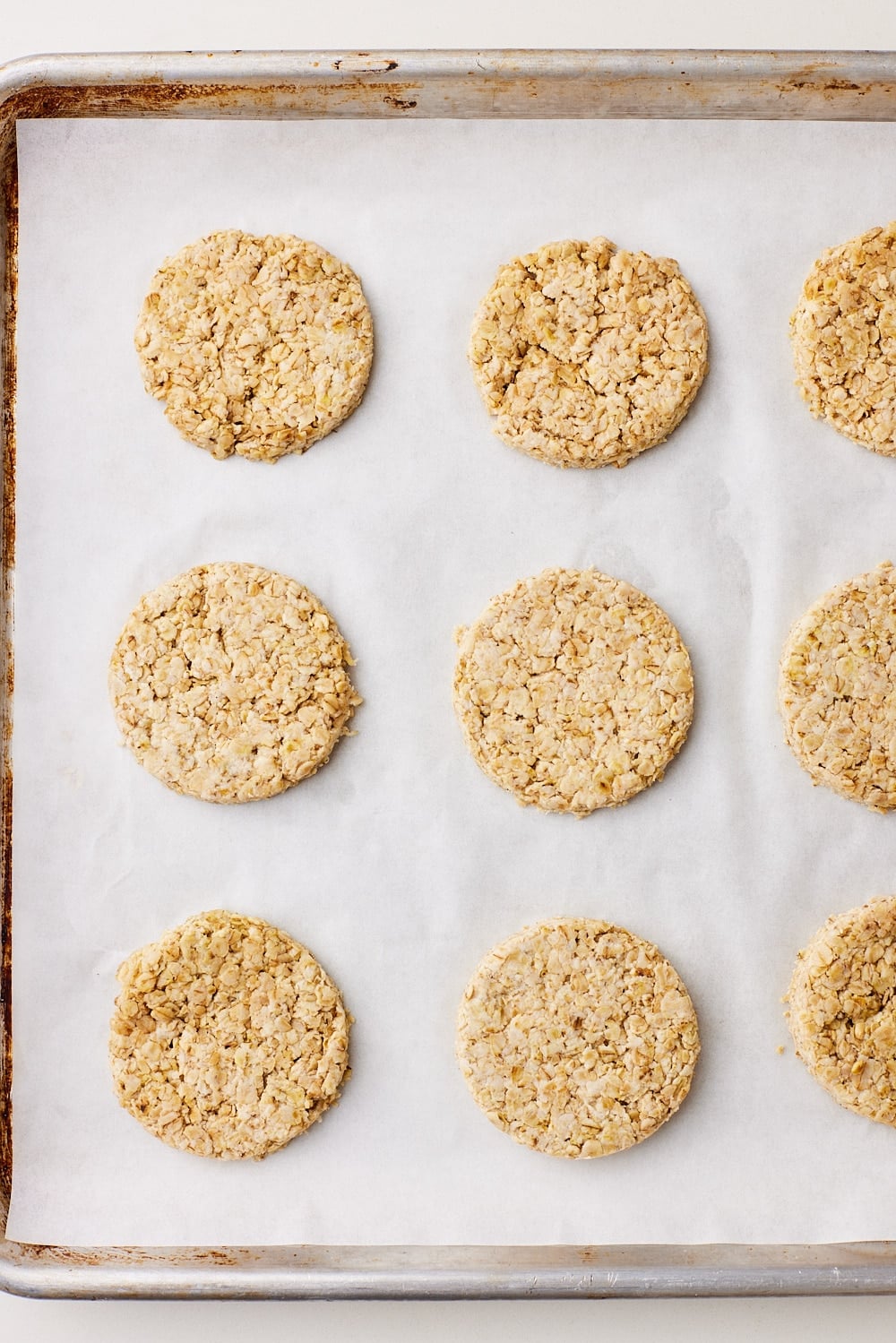
- Bake oatcakes. Bake for 20 minutes, then flip and continue baking for another 20 minutes, or until lightly golden and crisp.
- Cool. Let cool completely on the baking sheet.
FULL (PRINTABLE) RECIPE BELOW!
Gemma’s Pro Chef Tips
- Quick-cooking oats must be used here. This is important because quick-cooking oats absorb liquid quickly and form a workable dough. Old-fashioned rolled oats won’t work in this recipe.
- You can replace the butter with clarified butter, browned butter, or olive oil. The flavor will vary depending on the fat used, but all will yield delicious results.
- Add another flavor note. You can add 1-2 teaspoons of a dried spice, such as crushed fennel or caraway seeds, or cracked black pepper.
- You can also stir 1 tablespoon of finely chopped soft herbs like fresh thyme, dill, or chives (or 1 teaspoon of dried herbs) into the dry ingredients.
- Make a cheese version. Mix 1/2 cup (1 1/2 oz/43 g) finely grated sharp cheddar into the dry ingredients.
- At least 10 minutes of chilling time is crucial. This rest in the fridge is important for the dough to thicken up, but if you let it rest overnight in the refrigerator, the dough will be even easier to handle.
- If the dough cracks while rolling or cutting, press it back together. Oat dough is naturally crumbly.
- Don’t roll the dough thinner than ⅛ inch (3 mm). The oatcakes will be too delicate once baked.
- Keep the chilled dough on the parchment paper when rolling and cutting. This will prevent sticking.
- You can use a knife or pizza cutter to cut oatcake squares or triangles. This is absolutely fine if you don’t want to bother with a biscuit cutter.
- Let the oatcakes cool completely on the baking sheet. They will continue to crisp and be less prone to crumbling.
- You’ll love these with cream cheese. These oatcakes pair well with our Garlic and Chive Cream Cheese or Sun-Dried Tomato Whipped Cream Cheese.
Make-Ahead and Storage Instructions
Make-ahead tips
- These crackers will keep in an airtight container at room temperature for up to five days.
How to store leftovers
- Once completely cool, keep them in an airtight container at room temperature for up to five days.
- If they lose a little crispiness, you can refresh them in a 300°F (150°C) oven for 3–5 minutes.
- Cool completely before serving.
- For longer storage, you can completely cool the oatcakes, then place them in an airtight freezer-safe container (place parchment paper between layers so they won’t stick).
- Freeze for up to two months.
- Thaw the frozen oatcakes at room temperature for about 30 minutes.
- To refresh their crispness, warm them in a 300°F (150°C) oven for 3–5 minutes, then cool completely before serving.
FAQs
Why are quick-cooking oats called for in this recipe?
- Quick-cooking oats, which are simply rolled oats that have been cut into smaller pieces, absorb water more quickly. This creates a dough that’s easy to roll and bakes into crisp, tender oatcakes.
- Traditional Scottish recipes often use medium oatmeal (stone-ground oats), but it’s difficult to find outside the UK. Quick-cooking oats are the best substitute.
- If you only have old-fashioned rolled oats on hand, you can pulse them a few times in a food processor until they’re about the size of quick-cooking oats.
Can I make these oatcakes vegan?
- Yes, you can make these oatcakes vegan.
- In place of the butter, use the same amount of olive oil.
What should I do if my dough is too crumbly?
- Oatcake dough is naturally delicate and crumbly, but if your dough is too crumbly and does not hold together, it likely needs a little more moisture.
- Different brands of oats absorb water differently, so if needed, add hot water 1 teaspoon at a time until the dough holds together when pressed.
- Be sure to let the dough rest for 10 minutes before rolling so the oats have time to fully hydrate.
How can I make my oatcakes extra crispy?
- To ensure crispy oatcakes, roll the dough to an even ⅛-inch (3 mm) thickness so they bake uniformly.
- Additionally, let the oatcakes cool completely on the baking sheet, where they’ll continue to dry as they cool.
- If you prefer especially crisp oatcakes, bake them for an extra 2–3 minutes—just watch them carefully to prevent over-browning.
More Oat Recipes
Try These Recipes!




Scottish Oatcakes

Ingredients
- 2 ⅔ cups (8 oz/225 g) quick-cooking oats
- ½ teaspoon salt
- ¼ teaspoon baking soda
- 6 tablespoons (3 oz/85 g) butter , melted
- 1 cup (8 fl oz/240 ml) water , hot
Instructions
To Make the Scottish Oatcake Dough
- In a large bowl, combine the oats, salt, and baking soda.
- Stir in the butter until the oats are evenly coated.
- Add the hot water and mix until a soft and slightly sticky dough forms. Cover and let rest for 10 minutes, until thickened.
- Roll the dough between two sheets of parchment paper to ⅛ - inch (3 mm) thickness.
- Refrigerate for at least 30 minutes, until firm.
- In the meantime, preheat the oven to 350°F (180°C) and line a large baking sheet with parchment paper.
To Cut the Scottish Oatcakes
- Remove the top sheet of parchment from the dough and cut out 2 ½ - inch (6 cm) rounds. Gather and re-roll the scraps to make more cakes.
- Place on the prepared baking sheet, spacing about 1 inch (2 ½ cm) apart.
To Bake the Scottish Oatcakes
- Bake for 20 minutes, then flip and continue baking for another 20 minutes, or until lightly golden and crisp.
- Let cool completely on the baking sheet.
To Serve and Store the Scottish Oatcakes
- Enjoy with your favorite cheese! Store leftovers in an airtight container at room temperature for up to 5 days.
Recipe Notes
- Quick-cooking oats must be used here. This is important because quick-cooking oats absorb liquid quickly and form a workable dough. Old-fashioned rolled oats won’t work in this recipe.
- You can replace the butter with clarified butter, browned butter, or olive oil. The flavor will vary depending on the fat used, but all will yield delicious results.
- Add another flavor note. You can add 1-2 teaspoons of a dried spice, such as crushed fennel or caraway seeds, or cracked black pepper.
- You can also stir 1 tablespoon of finely chopped soft herbs like fresh thyme, dill, or chives (or 1 teaspoon of dried herbs) into the dry ingredients.
- Make a cheese version. Mix 1/2 cup (1 1/2 oz/43 g) finely grated sharp cheddar into the dry ingredients.
- At least 10 minutes of chilling time is crucial. This rest in the fridge is important for the dough to thicken up, but if you let it rest overnight in the refrigerator, the dough will be even easier to handle.
- If the dough cracks while rolling or cutting, press it back together. Oat dough is naturally crumbly.
- Don’t roll the dough thinner than ⅛ inch (3 mm). The oatcakes will be too delicate once baked.
- Keep the chilled dough on the parchment paper when rolling and cutting. This will prevent sticking.
- You can use a knife or pizza cutter to cut oatcake squares or triangles. This is absolutely fine if you don’t want to bother with a biscuit cutter.
- Let the oatcakes cool completely on the baking sheet. They will continue to crisp and be less prone to crumbling.
- You'll love these with cream cheese. These oatcakes pair well with our Garlic and Chive Cream Cheese or Sun-Dried Tomato Whipped Cream Cheese.








I followed Gemma’s directions, adding some cracked pepper to the first two batches. The cutting worked better if refrigerated for longer or even popping in freezer for about 5 minutes. I used Everything Bagel on the rest, which were great! This recipe made 48 crackers using a 6mm (2.5”) biscuit cutter.
Hi Gemma, this recipe looks very like Effie’s except the oats are not blitzed. Would it work if I put the oats in a food processor before proceeding with the rest of your recipe? Thanks a million : )
To make a slightly sweet version, how much sugar could be added? Thank you.