This post may contain affiliate links. Please see my full disclosure for details.
Hi Bold Bakers!
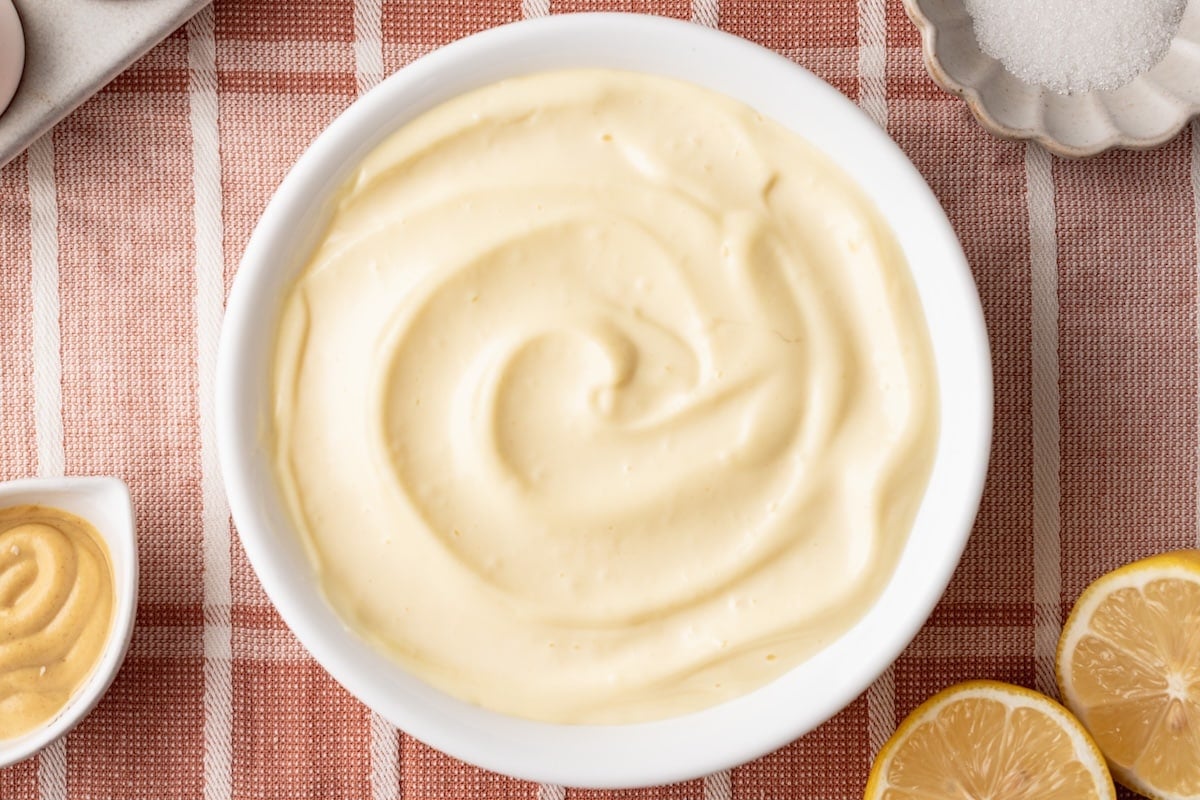
WHY YOU’LL LOVE THIS RECIPE: My simple Homemade Mayonnaise Recipe (4 Ways) will elevate sandwiches, salads, sauces, dips, and dressings with its rich, creamy texture and fresh flavor. Learn how easy it is to make silky, homemade mayonnaise in 5 minutes!
- Super creamy: Smooth, velvety, and far better than store-bought mayo.
- Fresh, tangy flavor: You won’t believe how good this homemade mayo tastes and how it will improve everything you make with it.
- Gourmet results from simple ingredients: There are no preservatives or stabilizers here, and you only need six kitchen staples.
- Four foolproof methods: For this easy mayonnaise recipe, you choose the preparation technique you like best—immersion blender, food processor, hand mixer, or whisk.
- Endlessly customizable! Enjoy the basic mayonnaise recipe as-is, or add herbs, spices, roasted garlic, or even make a vegan version.
Open my fridge, and you’re sure to find a jar of mayonnaise! This everyday condiment does it all, from being the perfect finishing touch on your favorite sandwich to serving as a secret ingredient that makes cakes incredibly moist (have you tried my Chocolate Mayonnaise Cake?). Once you taste my Homemade Mayonnaise Recipe, you might never go back to store-bought. My DIY mayo recipe is so easy to make and delivers superior taste that’s truly a game-changer.
My best tip here is to add the oil slowly. Rushing this step is the number one reason why mayo breaks. Be patient, especially at the beginning, and drizzle the oil gradually to create the proper thick, smooth, emulsified consistency. For more Bold Baking Basics, be sure to check out Homemade Greek Yogurt, DIY Vanilla Bean Paste, and How to Make Condensed Milk.
Table of Contents
- What is Homemade Mayonnaise?
- Tools You Need
- Key Ingredients and Substitutes
- How to Make Homemade Mayonnaise Recipe (4 Ways)
- Gemma’s Pro Chef Tips
- Make-Ahead and Storage Instructions
- Variations and Substitutions
- Ways to Use Homemade Mayonnaise
- FAQs
- More Bold Baking Basics Recipes
What is Homemade Mayonnaise Recipe (4 Ways)?
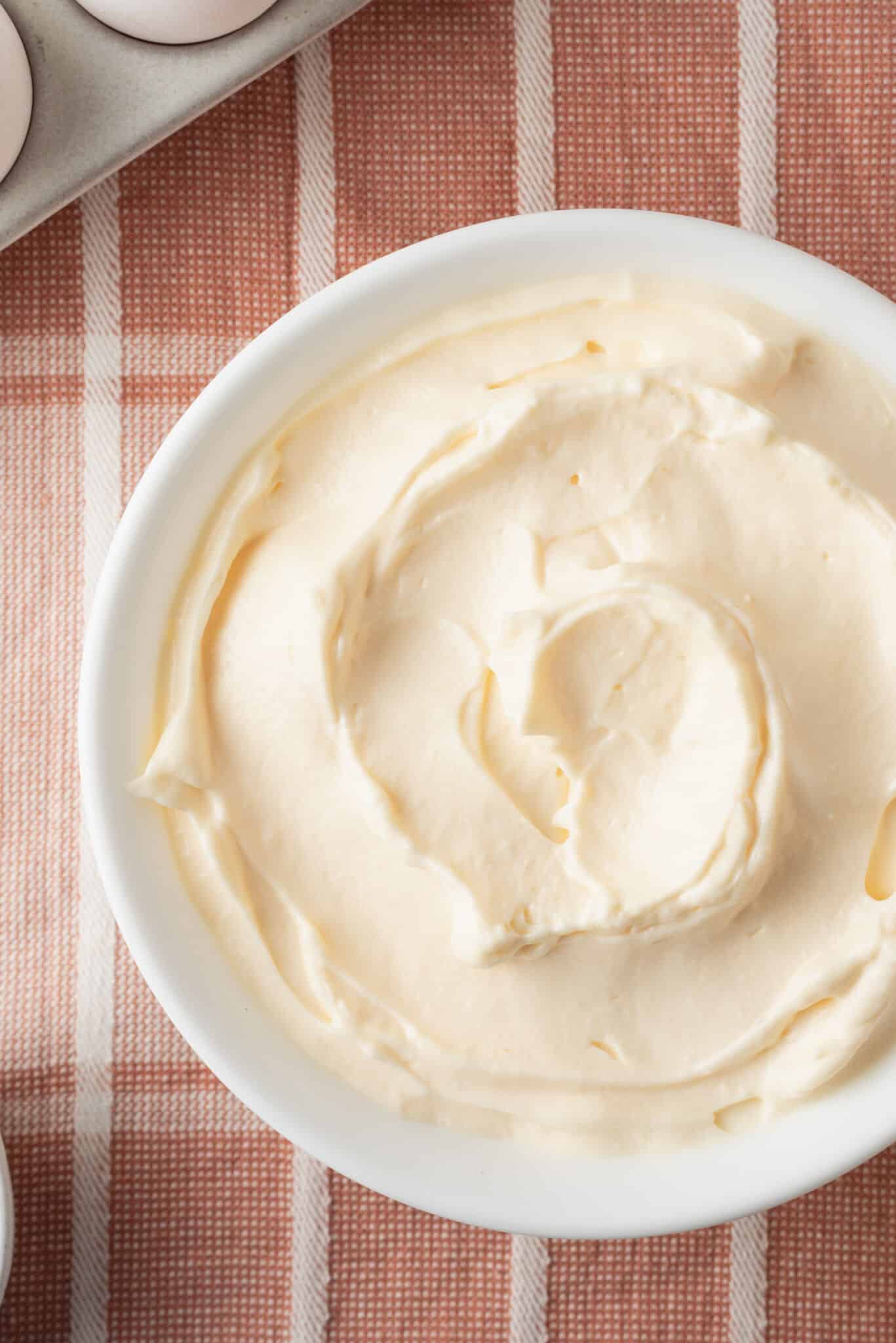
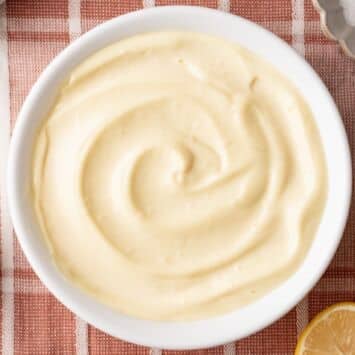
Homemade Mayonnaise Recipe (4 Ways) is an easy recipe for rich, creamy homemade mayonnaise made by emulsifying oil with an egg, mustard, white wine vinegar, lemon juice, and salt until it’s smooth and silky. This simple recipe can be made with a food processor, immersion blender, electric mixer, or a whisk in just minutes. Mayonnaise is believed to have originated in France in the 1700s. Today, it’s the most popular condiment in the United States, with more than twice the sales as ketchup!
Tools You Need
- Mixing bowl
- Measuring spoons
- Measuring cups
- Glass measuring jug
- Silicone spatula
- Tall, narrow jar (for immersion blender method)
- Airtight container
You’ll also need ONE of the following:
Key Ingredients and Substitutes
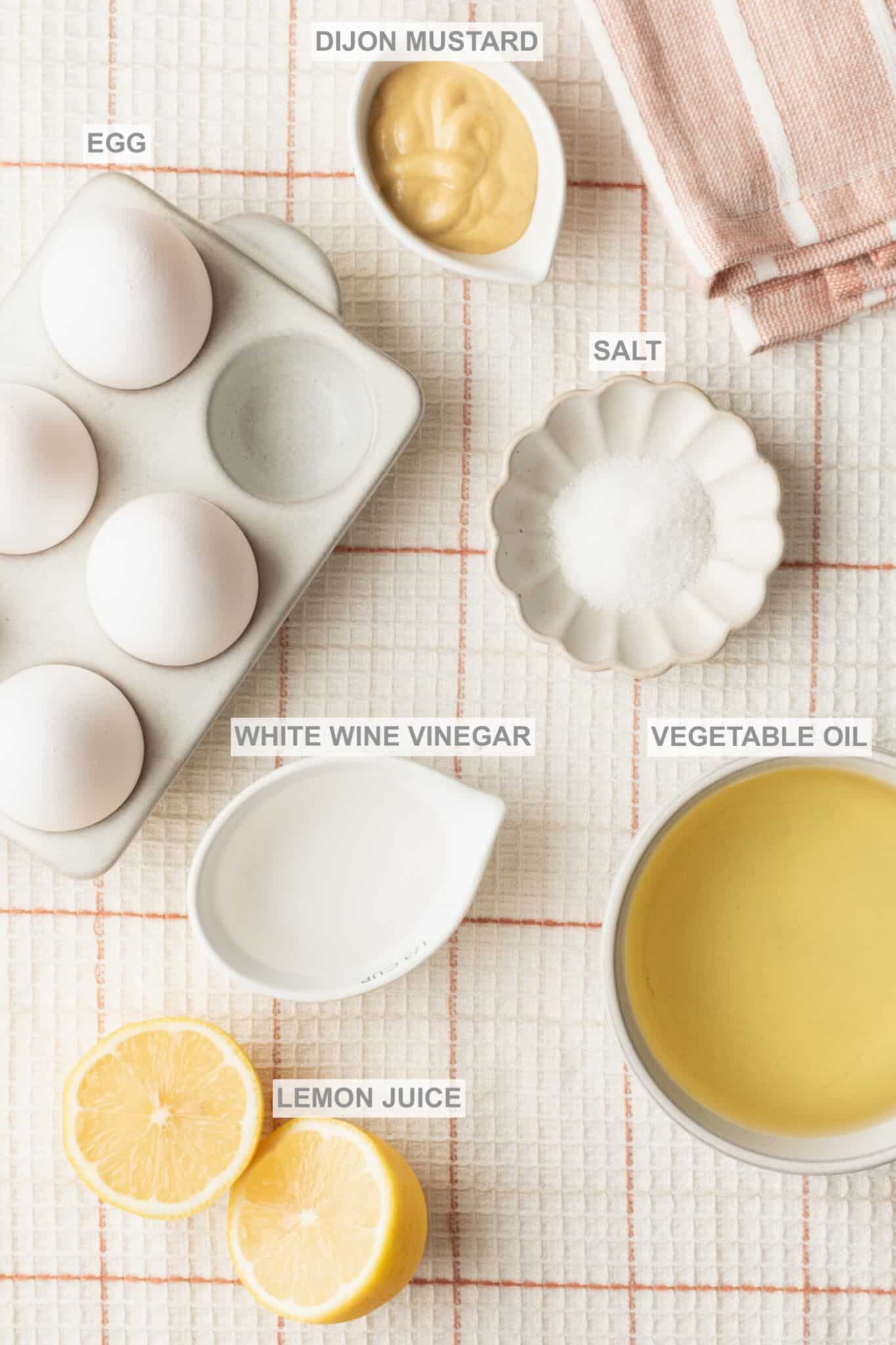
Whole egg
- A whole egg is the base of mayonnaise.
- Importantly, egg contains lecithin, which is a natural emulsifier that binds the oil and liquid together into a smooth, unified sauce.
- While just the yolk was used in traditional mayonnaise recipes, using the whole egg makes it less likely the mayo will split, and it also eliminates waste.
- Your egg must be at room temperature for proper blending. Here’s how to get eggs to room temperature.
- Substitute: To make vegan mayonnaise, use 3 tablespoons (1.5 fl oz/45 ml) of aquafabba (chickpea liquid).
Dijon mustard
- Dijon mustard adds subtle tanginess in my homemade mayo recipe, while helping stabilize the emulsion so the mayonnaise comes together more easily.
- Note that you must use room-temperature mustard. Using cold ingredients could cause the mayonnaise to separate.
- Substitute: For a different flavor, use the same amount of whole grain Dijon mustard.
White wine vinegar
- White wine vinegar brightens the mustard’s flavor.
- Importantly, the vinegar helps balance the richness of the oil.
- Substitutes: You can change up the flavor by using the same amount of apple cider vinegar, Champagne vinegar, or unseasoned rice vinegar.
Lemon juice
- Lemon juice contributes fresh citrus flavor and extra acidity, which creates a brighter, lighter mayonnaise.
- Be sure your lemon juice is at room temperature before using.
- Please use fresh-squeezed lemon juice for the best flavor.
Salt
- Salt enhances all of the flavors.
Vegetable oil
- Vegetable oil creates the rich, creamy mayonnaise texture.
- Using a neutral-flavored oil lets the other flavors shine.
- Substitutes: You can use the same amount of sunflower oil, grapeseed oil, canola oil, avocado oil.
- You can use half vegetable oil and half light olive oil (do not use extra virgin olive oil—it will make the mayo bitter).
How to Make Homemade Mayonnaise Recipe
How to Make Homemade Mayonnaise with an Immersion Blender
- Put ingredients in jar. Add the egg, mustard, vinegar, lemon juice, and salt to a tall, narrow jar.
- Blend ingredients. Place the immersion blender head firmly against the bottom of the jar, completely covering the egg mixture, and blend on high for 30 seconds to combine.
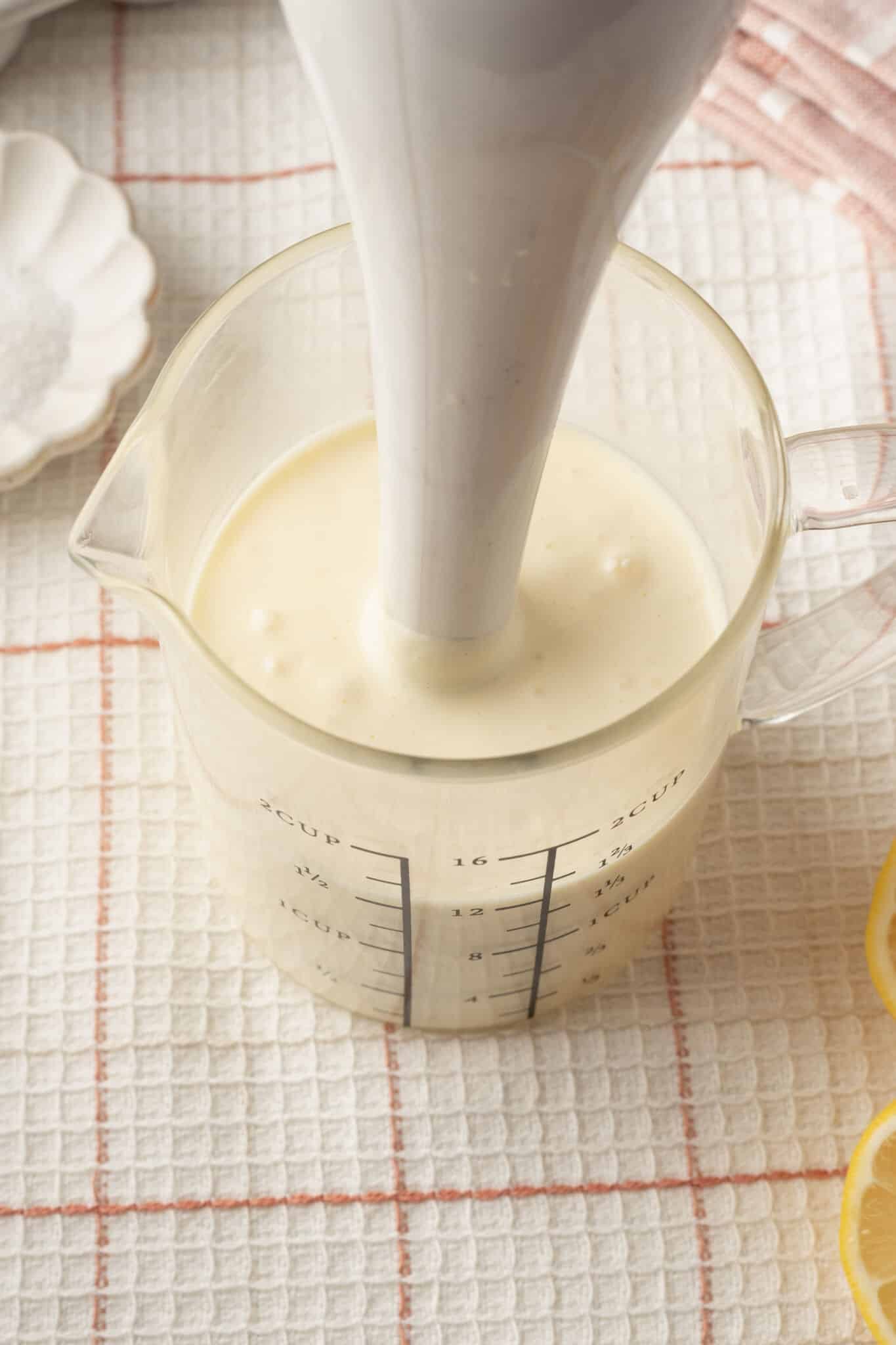
- Add oil. Slowly start to pour the oil into the jar in a steady stream without moving the blender from the bottom of the jar, until a thick emulsion forms at the bottom without moving the blender, about 1 – 2 minutes.
- Finish mayonnaise. Once most of the oil has been added, slowly lift and lower the blender until all the oil has been incorporated and the mayonnaise is smooth and creamy.
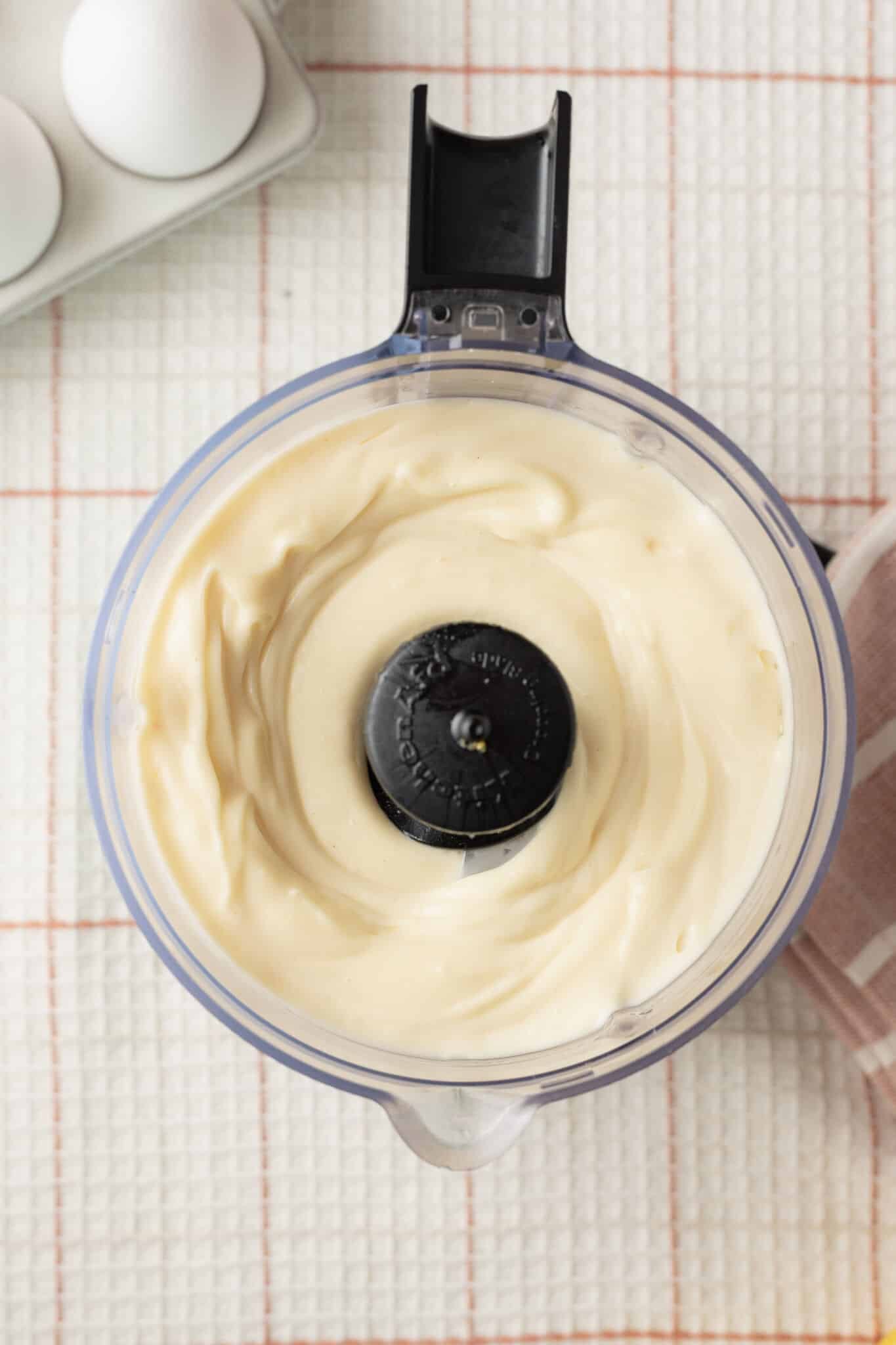
Make Homemade Mayo with a Food Processor
- Begin mixing. Using the small bowl attachment for your food processor, add the egg, mustard, vinegar, lemon juice, and salt and process for 20 seconds.
- Add the oil very slowly. With the processor running, very slowly pour in a thin, steady stream until all the oil has been incorporated, and you have thick mayonnaise.
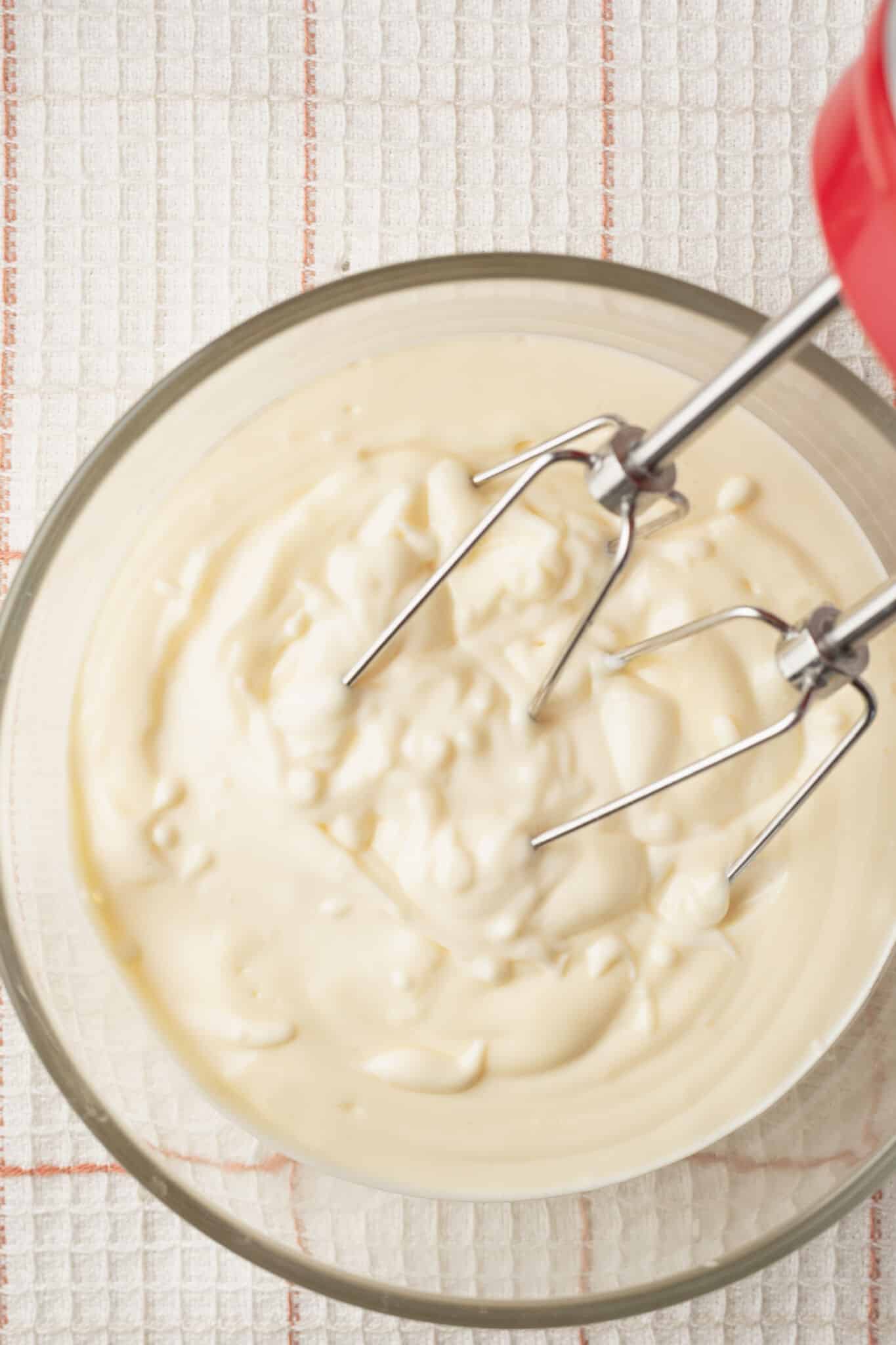
Homemade Mayonnaise with a Handheld Electric Mixer
- Begin mixing. In a medium bowl, beat the egg, mustard, vinegar, lemon juice and salt on medium speed for 20 seconds.
- Add the oil very slowly. With the mixer running, very slowly add the oil, a few drops at a time until about one-quarter of the oil has been incorporated. (This step is essential for creating a stable emulsion.)
- Finish blending. Once the mixture begins to thicken, continue whisking in the remaining oil, one teaspoon at a time.
Serve or Store Mayonnaise
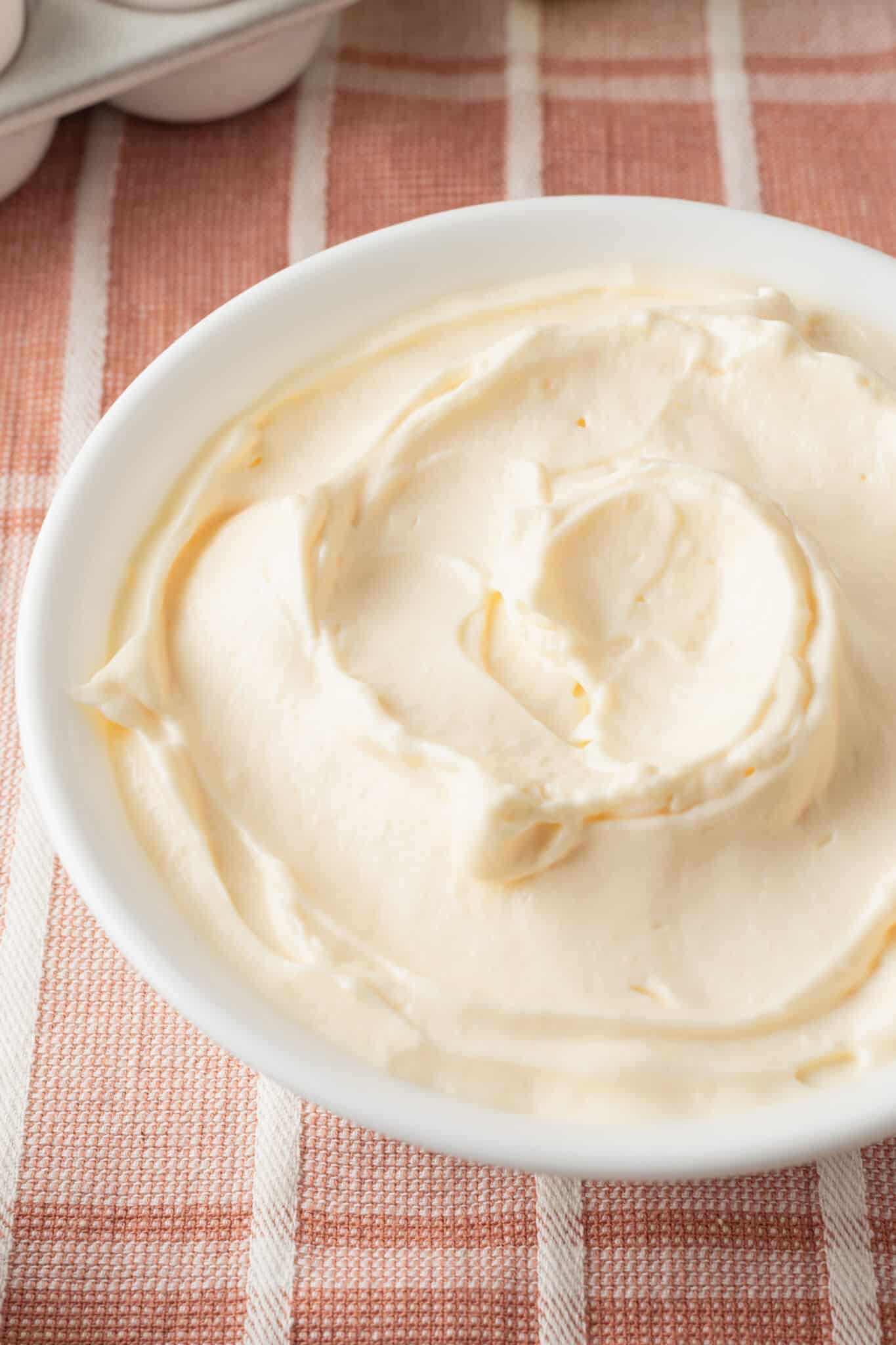
- Serve immediately as a sandwich spread, dressing base, or for any recipe that requires mayonnaise. Store in an airtight container in the refrigerator for up to two weeks.
FULL (PRINTABLE) RECIPE BELOW!
Gemma’s Pro Chef Tips
- Pick the method that works best for you. The immersion blender is the easiest and most foolproof, and the food processor or handheld mixer methods also produce excellent results. Choose the method you’re most comfortable with for the best chance of success.
- Be sure your ingredients are at room temperature. A room-temperature egg, mustard, and lemon juice blend together more easily and will emulsify into a stable, smooth mixture.
- Use fresh, high-quality eggs. Since the egg isn’t cooked, use the freshest eggs you can find. If you’re concerned about using a raw egg, choose a pasteurized egg instead.
- Drizzle the oil slowly. This is the secret to a thick, creamy mayonnaise. Adding the oil gradually gives the emulsion time to form and helps prevent the mixture from separating.
- Taste before serving. Once the mayonnaise is fully blended, adjust the seasoning with a little more salt, lemon juice, or mustard until it’s just the way you like it.
- If the mayo breaks, use a fresh egg yolk. In a clean bowl, whisk or blend a fresh egg yolk, then slowly add the broken mayonnaise a little at a time until it becomes smooth and creamy again.
- A recipe for both mayo fans and mayo skeptics! If you’ve never been a mayonnaise lover, my recipe is still worth trying. Homemade mayo is remarkably fresh and silky, with perfectly balanced flavors. It’s so much better than the mayo from the grocery store!
Make-Ahead and Storage Instructions
Make-ahead tips
- You can make the mayo up to two weeks ahead. Place in an airtight jar and store in the fridge.
How to store leftovers
- Store leftover Homemade Mayonnaise in an airtight jar.
- Refrigerate leftovers for up to two weeks.
- I don’t recommend freezing this Homemade Mayonnaise as it will most likely separate when thawed.
Variations and Substitutions
- Spicy Mayo: Stir hot sauce to taste.
- Herb Mayo: Fold in 1- 2 tablespoons of fresh chopped herbs like dill, basil, or chives.
- Garlic Aioli: Mix in a clove of minced or grated garlic.
- Smoky Mayo: Mix in 1/2 to 1 teaspoon of smoked paprika.
- Honey-Mustard Mayo: Stir in a little honey to taste and an extra 1-2 teaspoons of Dijon mustard.
- Truffle Mayo: Add a few drops of truffle oil before using.
- Use avocado oil instead of vegetable oil for a slightly different flavor and richer color.
- Vegan Mayonnaise: Replace the egg with 3 tablespoons aquafaba (the liquid from a can of chickpeas) and follow the same method in the recipe.
Ways to Use Homemade Mayonnaise
- My Homemade Mayonnaise is the perfect spread for any sandwich.
- Use this mayo to make egg salad, potato salad, broccoli salad, chicken salad, ham salad, or tuna salad.
- My mayo is the perfect base for salad dressings, like ranch dressing, creamy Italian dressing, or creamy dill dressing.
- Use this homemade mayo in my Chocolate Mayonnaise Cake.
- Mix it with fresh herbs, garlic, or citrus zest for a quick spread or dipping sauce for vegetables, seafood, or fries.
- Add a dollop to mashed potatoes or deviled eggs for extra richness and creaminess.
FAQs
Which DIY mayonnaise method is easier for beginners?
- When making homemade mayonnaise, the immersion blender method is the easiest and most foolproof.
- You simply add the ingredients to a jar and blend, without moving the immersion blender, until the mixture is thick and emulsified.
- This method is quick and consistently produces a thick, creamy mayonnaise.
Can I make this homemade mayo by hand?
- Yes, you can make this homemade mayo by hand, but it will take more time and effort.
- In a large bowl, add the egg, mustard, vinegar, lemon juice, and salt.
- With a hand whisk, whisk swiftly as you slowly pour a steady stream of oil into the egg mixture.
- Continue whisking until all the oil has been incorporated and the mayonnaise is smooth and creamy.
- Note that making mayo by hand will take 10–15 minutes of vigorous whisking.
Why did my mayonnaise break?
- Mayonnaise is an emulsion—a mixture of two liquids that don’t normally combine (like oil and water).
- In mayonnaise, the egg and mustard help bind the oil with the vinegar and lemon juice, creating a smooth, thick, and creamy sauce instead of a separated mixture.
- The most common reason mayonnaise breaks is because the oil is added too quickly before the emulsion has a chance to form.
- Other reasons homemade mayo breaks are that one or more of the ingredients are cold, or the immersion blender was moved too soon, which can also cause it to separate.
- If your mayonnaise breaks, don’t throw it away!
- Instead, in a clean bowl, whisk together 1 fresh egg (or 1 tablespoon aquafaba for a vegan version), and then slowly whisk the broken mayonnaise into it until it becomes smooth and creamy again.
Why did my mayonnaise come out thin?
- Thin mayonnaise is usually caused by adding the oil too quickly or not blending long enough for the emulsion to form fully.
- Continue blending the mixture for another 30–60 seconds to see if it thickens.
- If it’s still thin, slowly blend in some additional oil, a little at a time, until it reaches your desired consistency.
- Note that the machine methods will create thicker mayonnaise, and making it by hand will result in thinner mayonnaise.
Can I make a vegan version of this homemade mayo recipe?
- Yes, you can make a vegan version of this homemade mayo recipe.
- In place of the egg, use 3 tablespoons (1.5 fl oz/45 ml) of aquafabba (chickpea liquid).
Is this mayo made with raw eggs?
- Yes, this recipe uses a raw egg.
- For most healthy people, homemade mayonnaise made with a fresh raw egg is considered low risk, but if you are uncomfortable with using a raw egg, look for pasteurized eggs still in the shell at your grocery store.
Can I use olive oil instead of vegetable oil?
- I would advise only replacing half of the vegetable oil with light or mild olive oil.
- Replacing more than half of the vegetable oil, or using extra-virgin olive oil can make mayonnaise taste bitter or overly peppery, especially when blended at high speed.
More Bold Baking Basics Recipes
Try These Recipes!
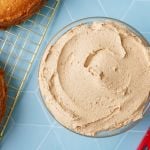


Watch The Recipe Video!
How to Make Mayonnaise

Ingredients
- 1 large egg , at room temperature
- 1 teaspoon Dijon mustard
- 1 tablespoon white wine vinegar
- 2 teaspoons freshly squeezed lemon juice
- ¼ teaspoon salt
- 1 cup (8 fl oz/240 ml) vegetable oil
Instructions
To Make Homemade Mayonnaise with an Immersion Blender
- Add the egg, mustard, vinegar, lemon juice, and salt to a tall, narrow jar.
- Place the immersion blender head firmly against the bottom of the jar, completely covering the egg mixture and blend on high for 30 seconds to combine.
- Slowly start to pour the oil into the jar in a steady stream without moving the blender from the bottom of the jar, until a thick emulsion forms at the bottom without moving the blender, about 1 - 2 minutes
- Once most of the oil has been added, slowly lift and lower the blender until all the oil has been incorporated and the mayonnaise is smooth and creamy.
To Make Homemade Mayonnaise with a Food Processor
- Using the small bowl attachment for your food processor, add the egg, mustard, vinegar, lemon juice, and salt and process for 20 seconds.
- With the processor running, very slowly pour in a thin steady stream until all the oil has been incorporated and you have thick mayonnaise.
Serve and Store Homemade Mayonnaise
- Serve as a sandwich spread, dressing base or for any recipe that requires mayonnaise. Store in an airtight container in the refrigerator for up to 2 weeks.
Recipe Notes
- This recipe uses a raw egg. If you are uncomfortable with this, look for pasteurized eggs still in the shell at your grocery store.
- If using the electric mixer method, the oil must be incorporated very slowly or the mixture will not emulsify.
- If the mayonnaise breaks, start with 1 fresh egg yolk and ½ teaspoon vinegar or freshly squeezed lemon juice, then slowly blend in the broken mayonnaise.
- If the mayonnaise is too thin, slowly blend in additional oil.
- If it is too thick, blend in 1 to 2 teaspoons cold water until the desired consistency is reached.
- You can make this recipe by hand with a wire whisk. Use the same method as with the electric mixer.









Gemma…I never leave comments, but your recipe for this mayonnaise turned out delicious. I was totally shocked, how this all came together. It was fun to make and great tasting! I have used many of your recipes and they are all the Best! Thank you so much.
I made this recipe for the first time using avocado oil and a stick blender and it turned out great. So happy with it!
In the video, you state this can be used for Ranch Dressing. Do you have the recipe for this variation or will this be a future addition to the website. My wife wants me to start making home Ranch for her.
Hi Gemma, I usually make mayo but we have been living in France for 22 years and hubby really misses Salad Cream (Never seen it for sale in France), have you by any chance a recipe for making that please.
cant get mustard where I am, any substitute?
This worked exactly as written, thanks!
Hello Gemma I’ m french and not that young anymore I think french mamans and grand mères, of my generation and before, cooking for their family, would pride themselves on their mayonnaise I loved to prepare it as a child, helping my grandma, and I was so proud ! At the time you would use a bowl, same as the one used for morning café au lait, and ……a teaspoon! An egg yolk, a scant teaspoon of Amora mustard, a steady wrist and peanut oil flowing in a trickle And when almost done some salt, white pepper and lemon juice… Read more »
Gemma
I am so glad to see a recipe for mayonnaise. I have family who prefer Hellman’s over Miracle Whip.
I prefer the flavor of Miracle whip.
How do you make it taste more like Miracle Whip instead of Hellman’s ?
Thank you
Kathy
PLEase WOULD YOU GIVE AN OPTION FOR MAKING YOUR WONDERFUL RECIPES for one person.
I would love to make mayonnaise, but 2 cups in 2weeks is too much mayo. Or for this recipe perhaps something else for ½ the egg.
thank you
Great recipe. Store bought mayo is so expensive, and scary ingredients I can’t even pronounce. Thank you for sharing. Love all your videos. I’m a fan