
This post may contain affiliate links. Please see my full disclosure for details.
Hi Bold Bakers!
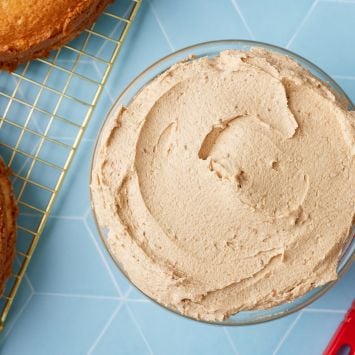
WHY YOU’LL LOVE THIS RECIPE: Addictive Biscoff Buttercream (Cookie Butter Frosting) is my easy recipe for foolproof, fluffy buttercream infused with the dreamy brown sugar-cinnamon flavor of Biscoff Cookie Butter. Perfect for all kinds of cakes (and also for sampling right out of the bowl!).
- Out-of-this-world flavor: Buttercream is fantastic, but whip in luscious cookie butter, and it’s beyond mouthwatering.
- One bowl: Always a bonus when it’s time to do the dishes!
- Only 7 ingredients: You probably have most of what you need on hand.
- Silky, not greasy: My time-tested tips guarantee the fluffy, smooth, light buttercream.
- Ready in 20 minutes: No need to wait for this delightful treat!
Biscoff, also called speculoos, is uniquely delicious. I love it because it has all the warm-spice vibes that make it instantly nostalgic, but the Biscoff butter in the frosting is unexpected and adds a delicious, mouthwatering, rich complexity. Delicious Biscoff flavor is also amazing in other desserts. After you’ve enjoyed Biscoff Buttercream, be sure to try Homemade Biscoff Cookies, No-Bake Cookie Butter Cheesecake, Biscoff Blondies, and Microwave Cookie Butter Fudge.
I’ve spent decades perfecting my buttercream, and it consistently delivers a creamy texture and irresistible, lick-the-spoon deliciousness. It’s trusted by millions of Bold Bakers around the world—and for good reason. One of the most common issues I hear is, “My buttercream just tastes like butter!” No one wants that. But here’s the fix: I’ve been making buttercream since I was a child (over 35 years ago!), and the same tips I used back then still work today—start with softened butter, triple-sift your powdered sugar, and at the end, whip the daylights out of it for a few final minutes. That’s the secret to light, fluffy, perfectly balanced buttercream—without the greasy butter taste.
Table of Contents
- What is Biscoff Buttercream (Cookie Butter Frosting)?
- Tools You Need
- Key Ingredients and Substitutes
- How to Make Biscoff Buttercream (Cookie Butter Frosting)
- Gemma’s Pro Chef Tips
- Make Ahead and Storage Instructions
- FAQs
- More Frosting Recipes
What is Biscoff Buttercream (Cookie Butter Frosting)?
- Biscoff Buttercream (also known as Cookie Butter Frosting) is an American-style buttercream, made by whipping butter and powdered sugar, with the addition of Biscoff Cookie Butter spread.
- Biscoff Cookie Butter is made from Biscoff Cookie crumbs combined with oil and sugar to create a thick, flavorful spread.
- Cinnamon and vanilla extract add additional flavor.
- Biscoff Cookies, made by Belgium’s Lotus Bakery, are speculoos cookies (traditional Belgian spiced cookies). They were traditionally served at Christmas, but Biscoff biscuits are now popular year-round and are famed for their crisp texture and distinctive spices, including cinnamon, nutmeg, and ginger.
- American buttercream is a creamy frosting that’s a streamlined version of European buttercream (often made with meringue). Versatile and quick, American buttercream is perfect for cupcakes and cakes, and is excellent for both simple frosting for cake layers as well as piping decorations.
Tools You Need
- Mixing bowl
- Measuring spoons
- Measuring cups
- Glass measuring jug
- Kitchen scale (optional)
- Stand mixer (optional) or a large bowl with an electric hand mixer
Key Ingredients and Substitutes
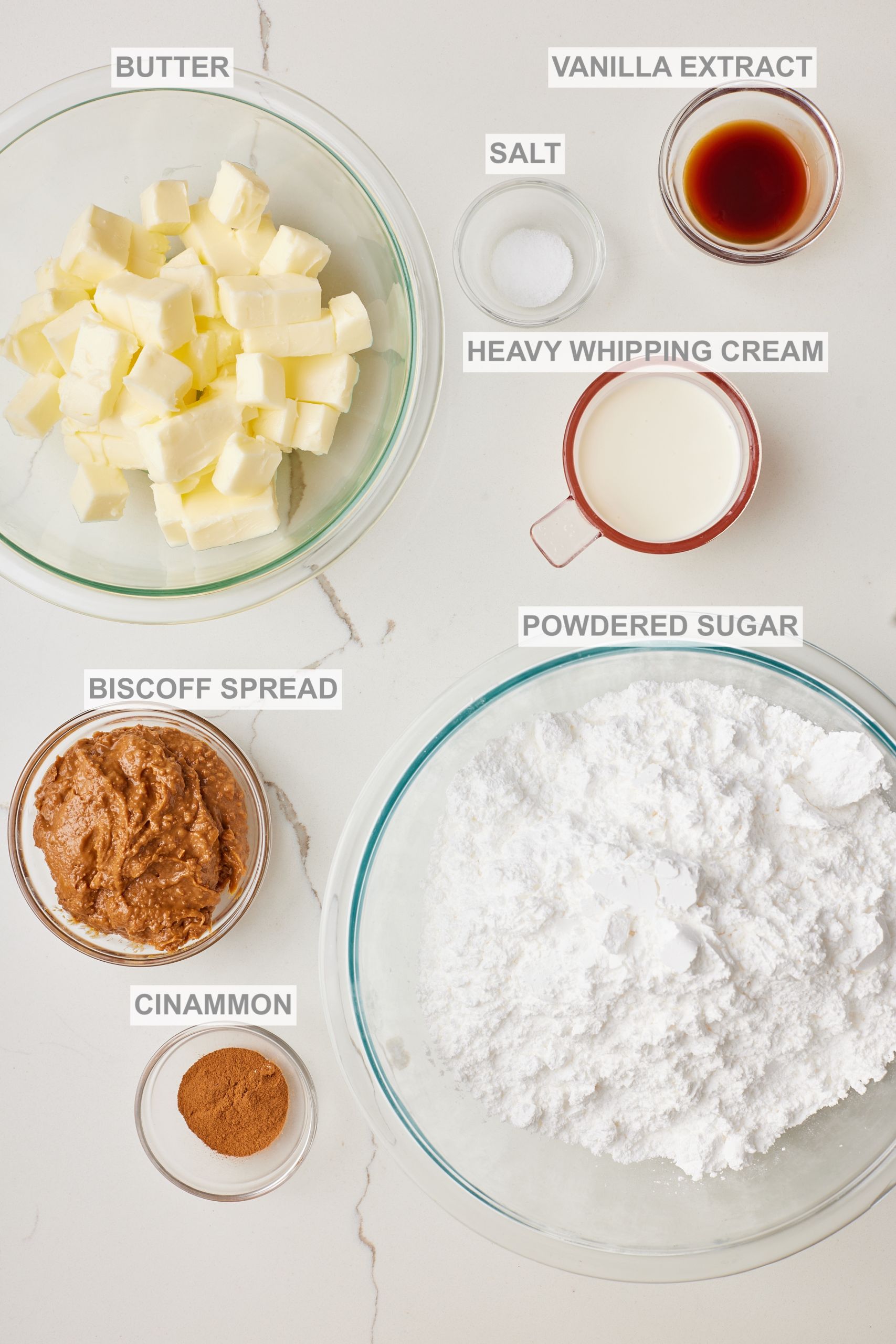
Butter
- Butter is what gives this Biscoff frosting its structure, creamy texture, and rich flavor base.
- Using softened (room temperature) butter is essential to achieve the correct frosting consistency. To check if it’s at the right temperature, press the butter with a finger. You want your finger to be able to make an indent, but not to squish right through. Here are the best ways to soften butter that’s cold from the fridge.
Biscoff Cookie Butter
- Using Biscoff Cookie Butter, a creamy, thick spread with a peanut butter-like texture and a sweetly spicy, caramelized flavor, gives this Biscoff buttercream frosting its uniquely delicious taste.
- Additionally, the Lotus Biscoff cookie butter gives the frosting smoothness.
- If you have leftover cookie butter after making this recipe, enjoy it spread on sliced apples, crackers, or bread, on ice cream, or as a filling for my Reese’s Peanut Butter Cups or in Cookie Butter Mug Cake.
Powdered sugar
- Powdered sugar (also known as confectioners’ sugar or icing sugar) sweetens the Biscoff icing.
- Importantly, powdered sugar stiffens the frosting, holding it together and making it pipable.
- It’s crucial to sift powdered sugar before whipping. I recommend sifting your confectioners’ sugar three times. Not only does it remove every lump, but it also aerates and lightens the sugar, making it whip up fluffier.
- Don’t worry if you’re out of powdered sugar. You can make your own with my simple recipe.
Heavy whipping cream
- Heavy whipping cream (fresh cream with a fat content of around 36%) lightens the cookie butter buttercream to the right consistency, so it’s more spreadable.
- The heavy cream also adds rich dairy flavor.
Vanilla extract
- Vanilla extract enhances and deepens the other flavors and adds its own delicately sweet note,
- Substitute: You can use an equal amount of Vanilla Bean Paste.
Cinnamon
- Cinnamon’s warm sweetness boosts the flavors of the Biscoff butter.
- Substitute: You can use cardamom or nutmeg instead, but use only half the amount.
Salt
- It’s just a quarter-teaspoon, but the salt is crucial to add nuance and balance, keeping the buttercream from tasting cloying.
How to Make Biscoff Buttercream (Cookie Butter Frosting)
- Whip butter and Biscoff spread: Add the butter and Biscoff spread to the bowl of a stand mixer fitted with a whisk attachment (or use a large bowl and an electric mixer) and whip on high speed for 2-3 minutes, until light and airy.
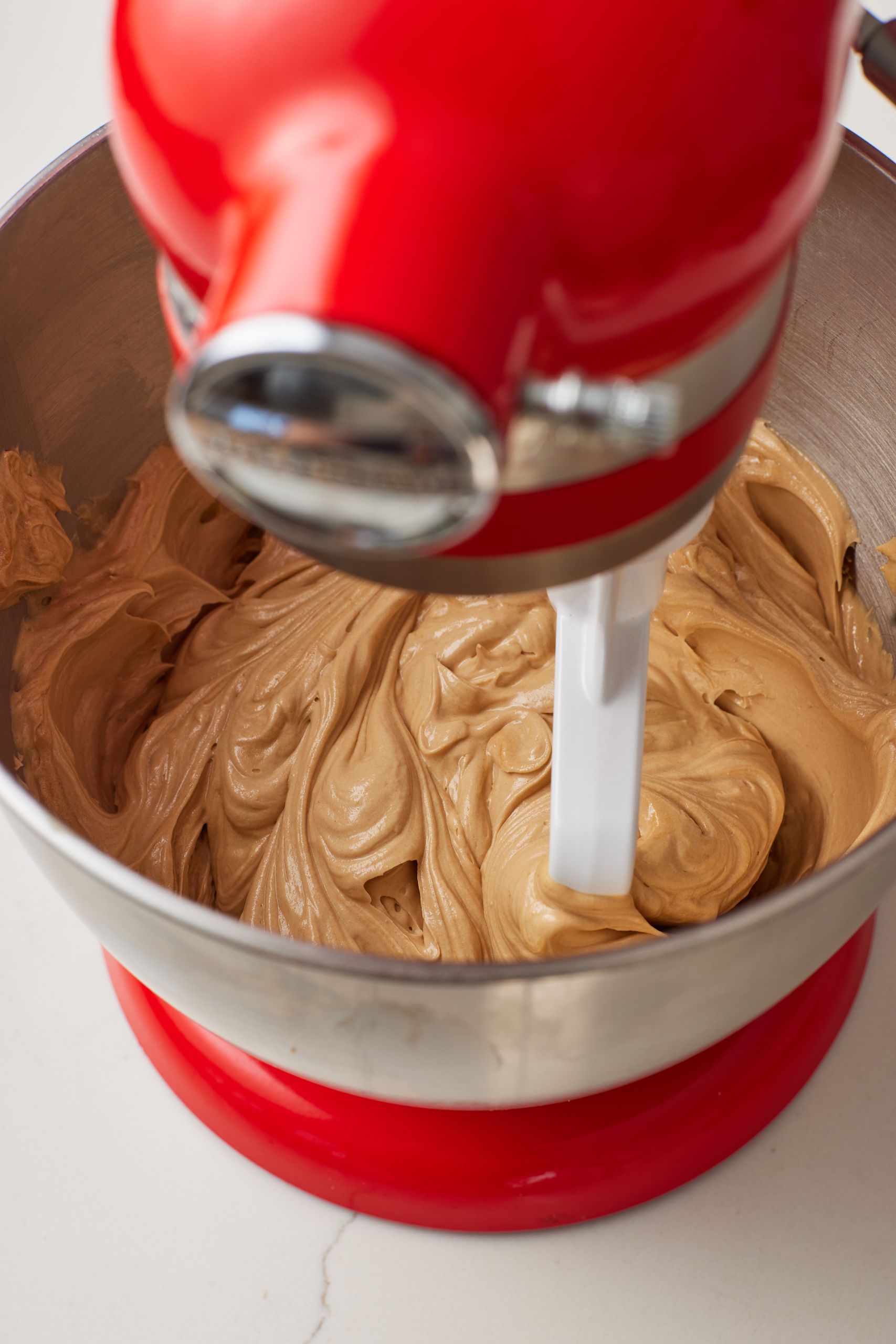
- Add sugar gradually: Turn the speed to medium-low and gradually add the sifted powdered sugar, a tablespoon at a time, until fully incorporated.
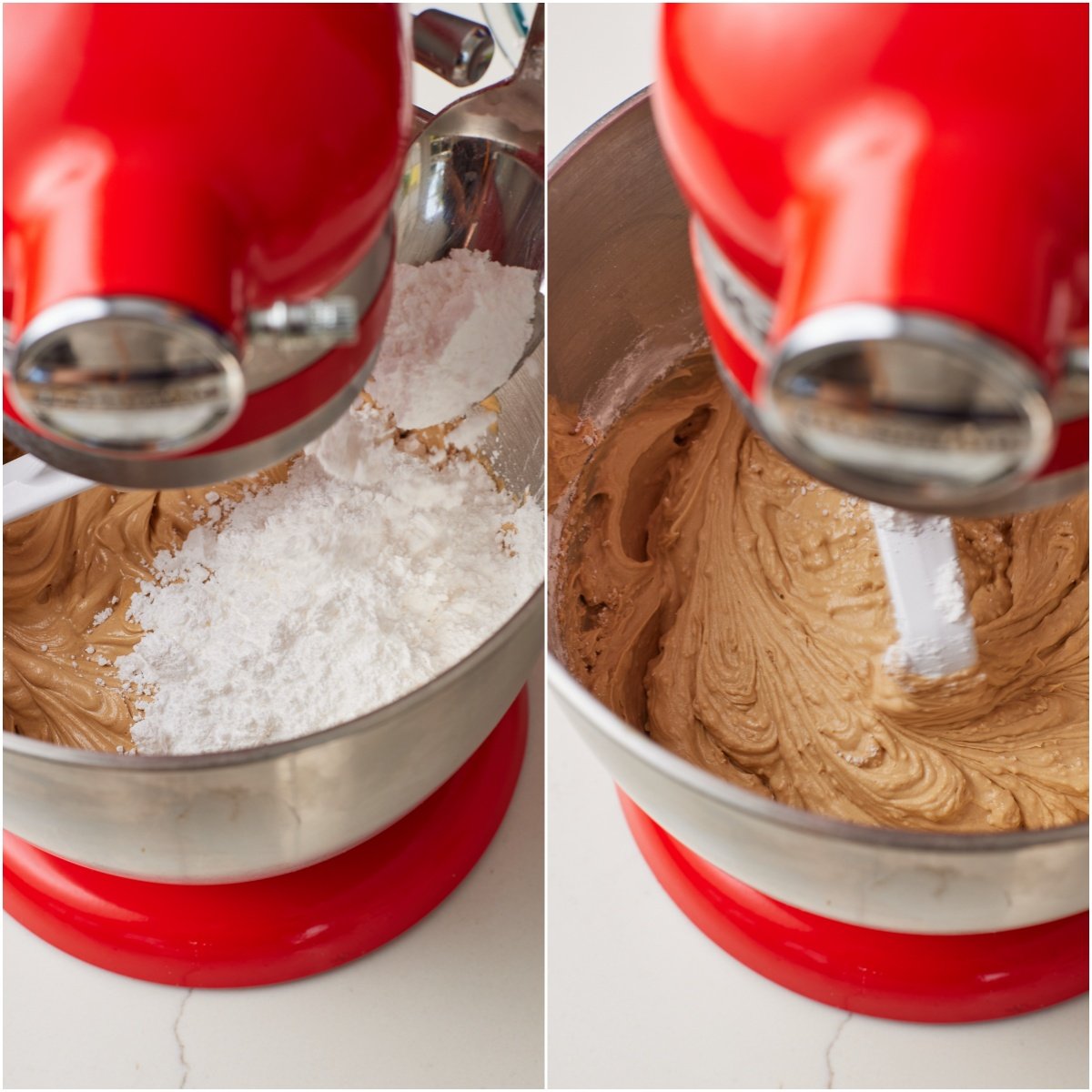
- Mix in additional ingredients: Lastly, mix in the cream, vanilla extract, cinnamon, and salt.
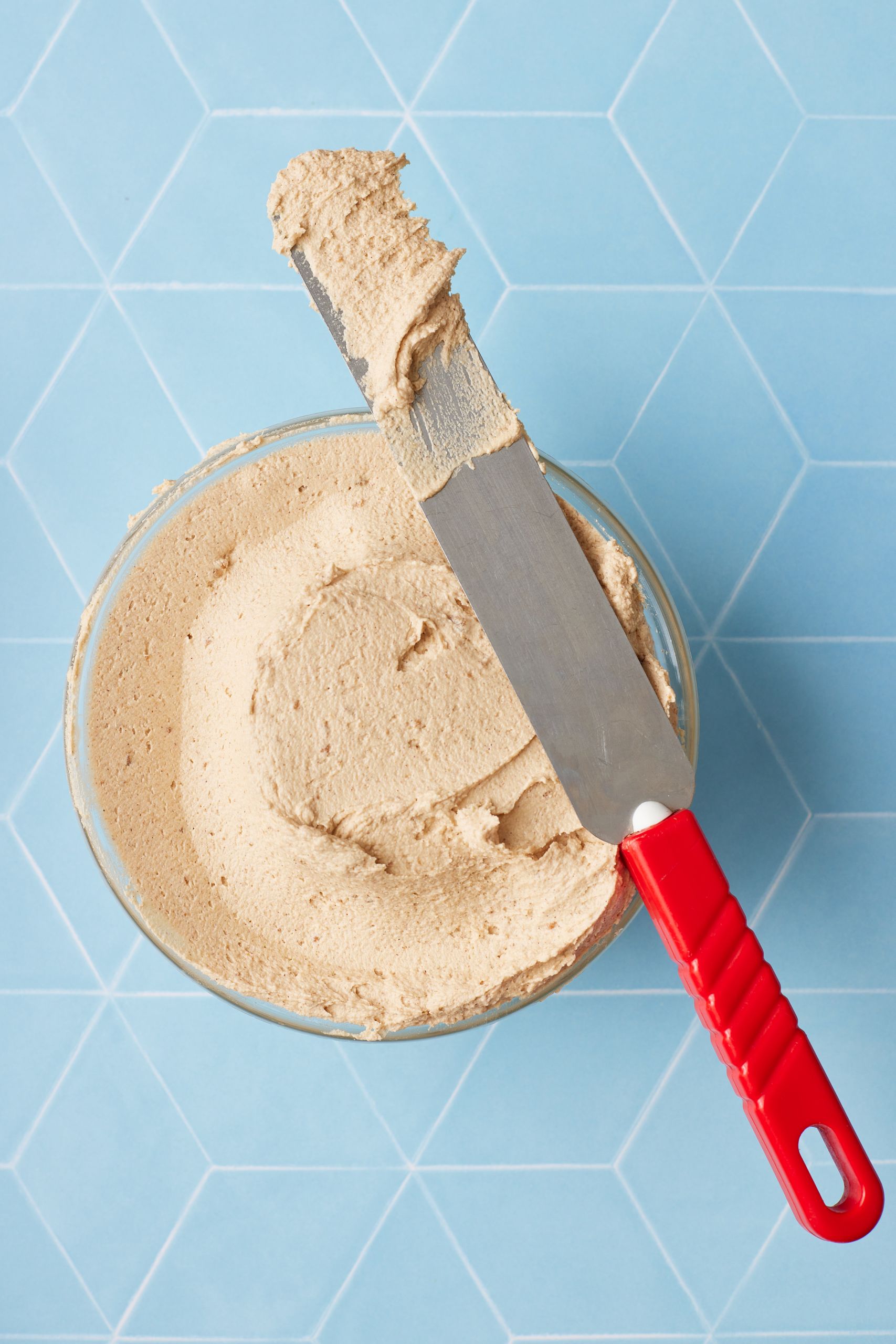
- Whip thoroughly: Turn the speed up to high and whip for 3 – 4 minutes until light and fluffy in texture.
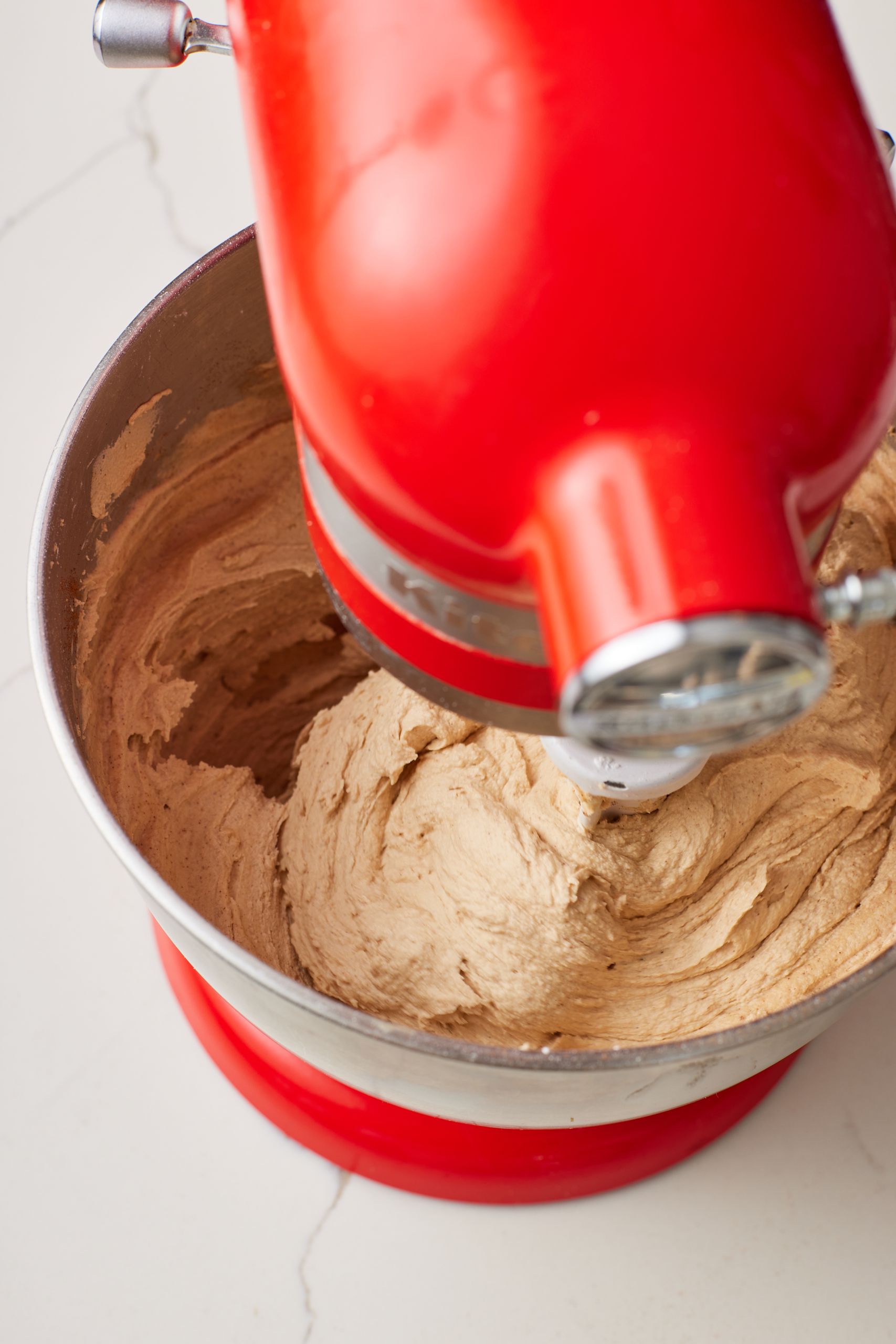
- Enjoy: Use right away to frost or pipe cakes or cupcakes.
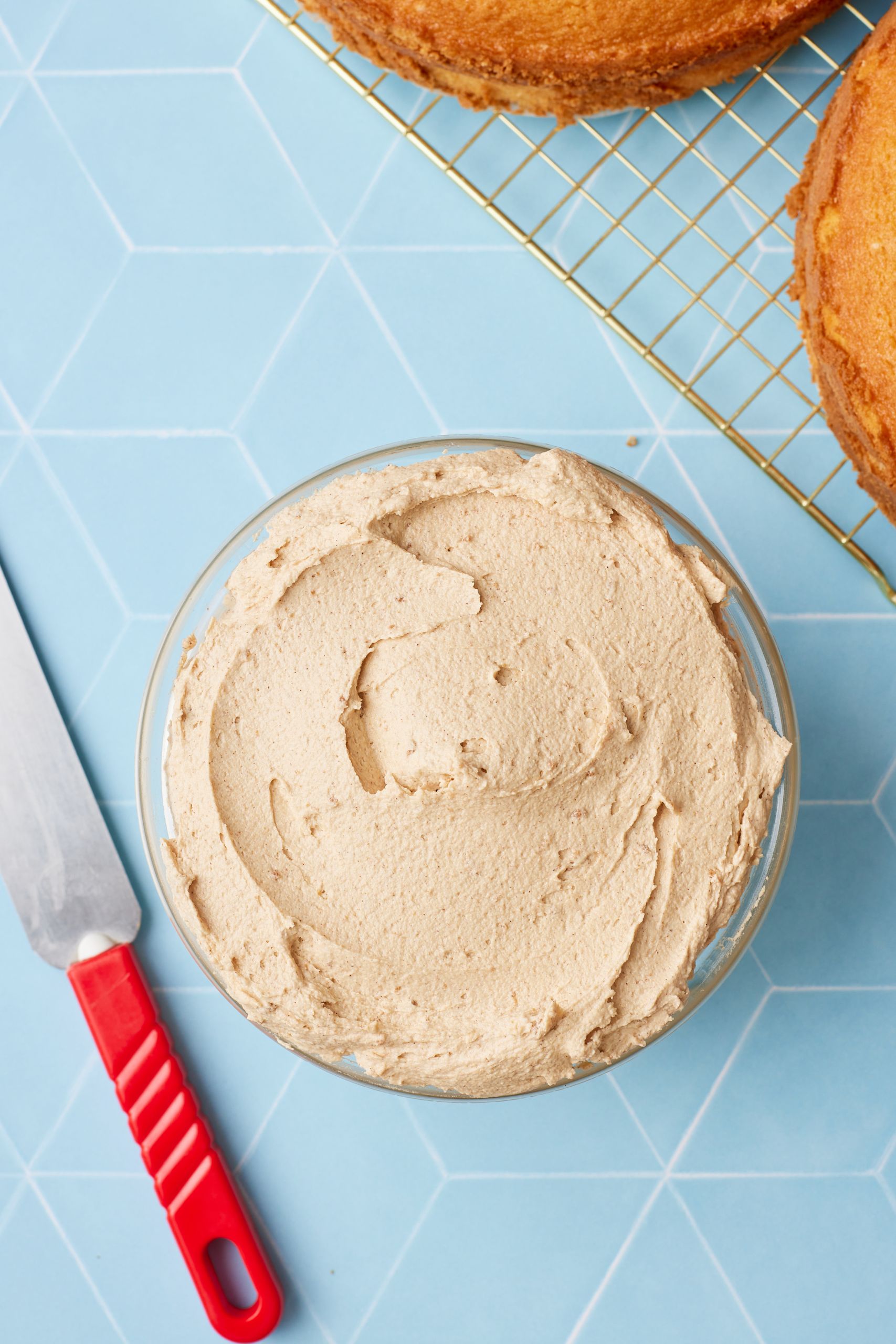
FULL (PRINTABLE) RECIPE BELOW!
Gemma’s Pro Chef Tips
- Be patient: Don’t shorten the whipping times—this is what incorporates air into the buttercream, making it light and fluffy.
- Triple sift: Don’t forget to sift your powdered sugar to remove any lumps that may not dissolve when whipping. I sift 3 times. It makes the buttercream so much lighter.
- Make more! This recipe makes just enough frosting for the Biscoff Cake, but if you like to be very generous with your frosting, we suggest making 1 ½ times this recipe so that you have enough.
- Cupcake option: This is enough frosting to decorate 24 Biscoff cupcakes. Try them on our Best Ever Vanilla or Chocolate Cupcakes!
- DIY! Use my Biscoff cookies recipe to make your own cookie butter. Just use the Biscoff cookies as a replacement for any of the cookies in the cookie butter recipe.
Make Ahead and Storage Instructions
- Make-ahead tips:
- Room temperature: This cookie butter frosting can be made and stored at cool room temperature for two days.
- Fridge: Store in the refrigerator in an airtight container for two weeks.
- Freeze: Place frosting in a freezer-safe container or bag and freeze for two months. Before using cold or frozen frosting, leave it out on the counter overnight, then briefly re-whip.
- How to store leftovers: Put leftover frosting in an airtight container and refrigerate for two weeks or freeze for two months.
FAQs
How do I prevent my buttercream from splitting, becoming grainy, or curdled-looking?
- Use correctly softened butter:
- If the butter is too cold, it won’t whip well and may become lumpy. Butter is softened enough when you can push it and make an indent with your finger, but it doesn’t easily squish right through.
- If the butter is too soft, the frosting mixture could break and get greasy.
- Here’s the correct way to soften butter to room temperature.
- Choose the right sugar: Always use powdered sugar. Granulated sugar will create grainy frosting.
- Add gradually: Adding sugar all at once can result in clumpy frosting. Add 1 tablespoon at a time until you reach your desired consistency.
Is it necessary to sift the sugar?
- In one word, yes! Sifting does some essential things in this recipe, including:
- Removing lumps: Being packed and compressed, or stored in humid conditions, can cause lumps in the sugar. Sifting three times ensures silky-smooth sugar.
- Fluffing: Multiple sifting adds air to the sugar. This aerating creates a lighter texture while whipping.
- Even distribution: Sifted flour blends more easily with the butter.
Can I cut back on the sugar in this recipe?
- The most I would advise cutting back the sugar in this recipe is by one-quarter (so use 3 3/4 cups (15 oz/450 g) of powdered sugar. Reducing it any more will affect the texture of the frosting.
- The presence of sugar in the frosting aerates the mixture, making it fluffy.
- Additionally, the sugar is crucial to the structure of the frosting, as it helps stabilize the butter.
How do I make sure my Biscoff frosting doesn’t have air bubbles?
- To make sure your Biscoff frosting doesn’t have air bubbles, lower your mixer to low speed in the last minute of whipping. This will make the texture smoother.
- Press out any bubbles with a silicone spatula.
More Frosting Recipes
- Best Vanilla Buttercream
- Chocolate Fudge Frosting
- Swiss Meringue Buttercream
- Classic Lemon Ermine Frosting
- Peanut Butter Buttercream
Try These Recipes!


Biscoff Buttercream

Ingredients
- 1 ½ cups (12 oz/340 g) butter, softened
- 1 cup (11 oz/316 g) Biscoff spread (or cookie butter)
- 5 cups (1 lb 4 oz/575 g) powdered sugar, sifted
- ¼ cup (2 fl oz/60 ml) heavy whipping cream
- 1 tablespoon vanilla extract
- 2 teaspoons cinnamon
- ¼ teaspoon salt
Instructions
- Add the butter and Biscoff spread to the bowl of a stand mixer fitted with a whisk attachment (or use a large bowl and a hand mixer) and whip on high speed for 2-3 minutes, until light and airy.
- Turn the speed to medium low and gradually add the sifted powdered sugar, a tablespoon at a time, until fully incorporated.
- Lastly mix in the cream, vanilla extract, cinnamon and salt.
- Turn the speed up to high and whip for 3 - 4 minutes until light and fluffy in texture.
- You can use it right away or store in an airtight container in the refrigerator for up to 1 week. For longer storage freeze for up to two months. Bring up to room temperature on the counter and re-whip briefly before frosting.








Is this an American Buttercream recipe and will it hold up in hot and/or humid temperature?
Looks yummy
Where will I find Biscoff butter excellent
I’m Allergic to Cinnamon what other Spice(s) could I use?
This does sound wonderful! But I’m looking for a spread without palm oil, if anyone has an ideas!
In the instructions you say to use the whisk attachment for the stand mixture but the photos of the recipe show you using the paddle attachment. Which is correct. Looking forward to making this buttercream!
Yum…. cant wait to try this. I have a jar of cookie butter waiting. 🙂
The proper spelling for the biscoff type cookies is “Speculaas” in the Netherlands. It’s the everyday cookie there but especially many forms of it around St. Nicolas’s and Christmas.
Maybe try replicating this recipe by using “speculaas kruiden” ( spices combo)?