This post may contain affiliate links. Please see my full disclosure for details.
Hi Bold Bakers!
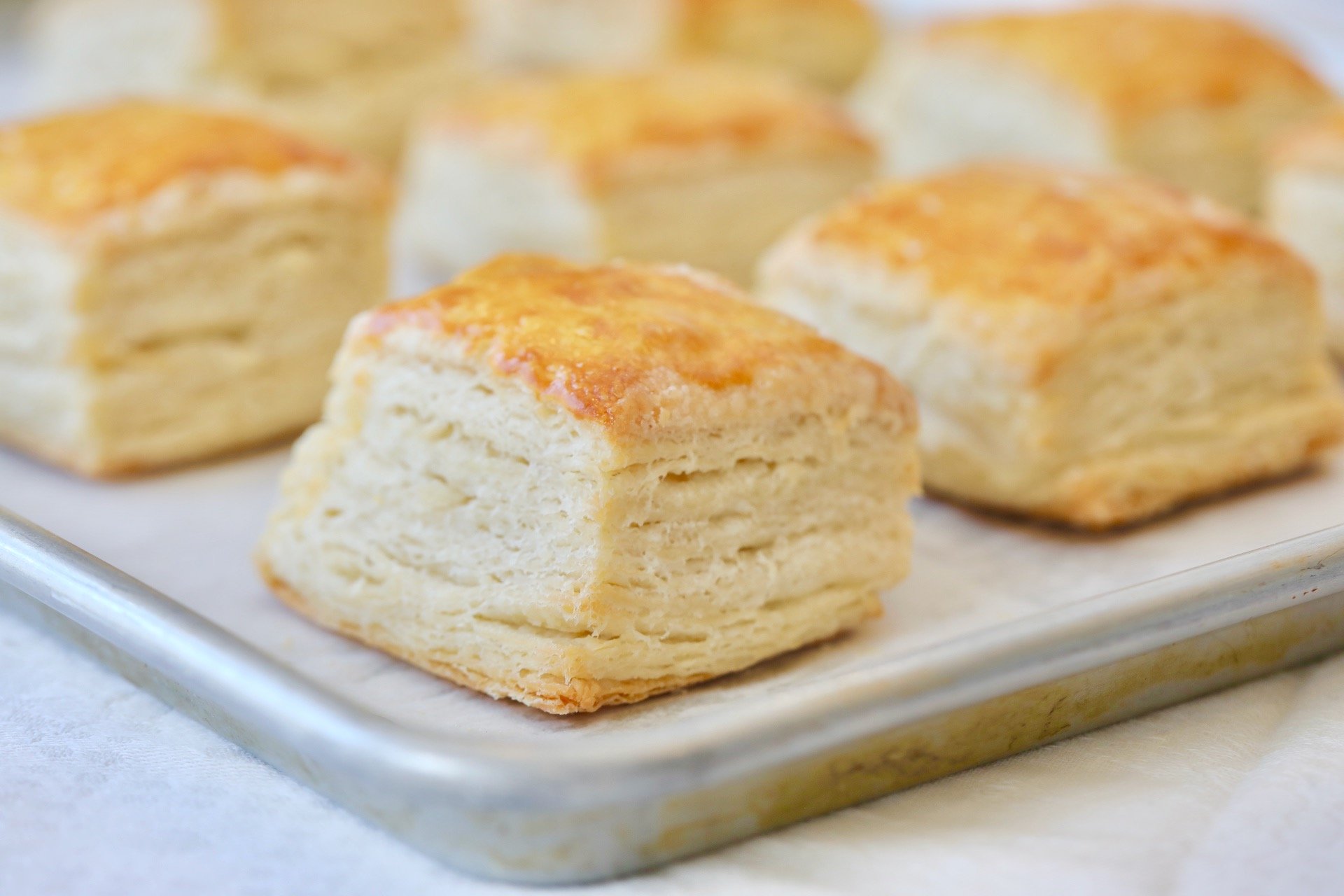
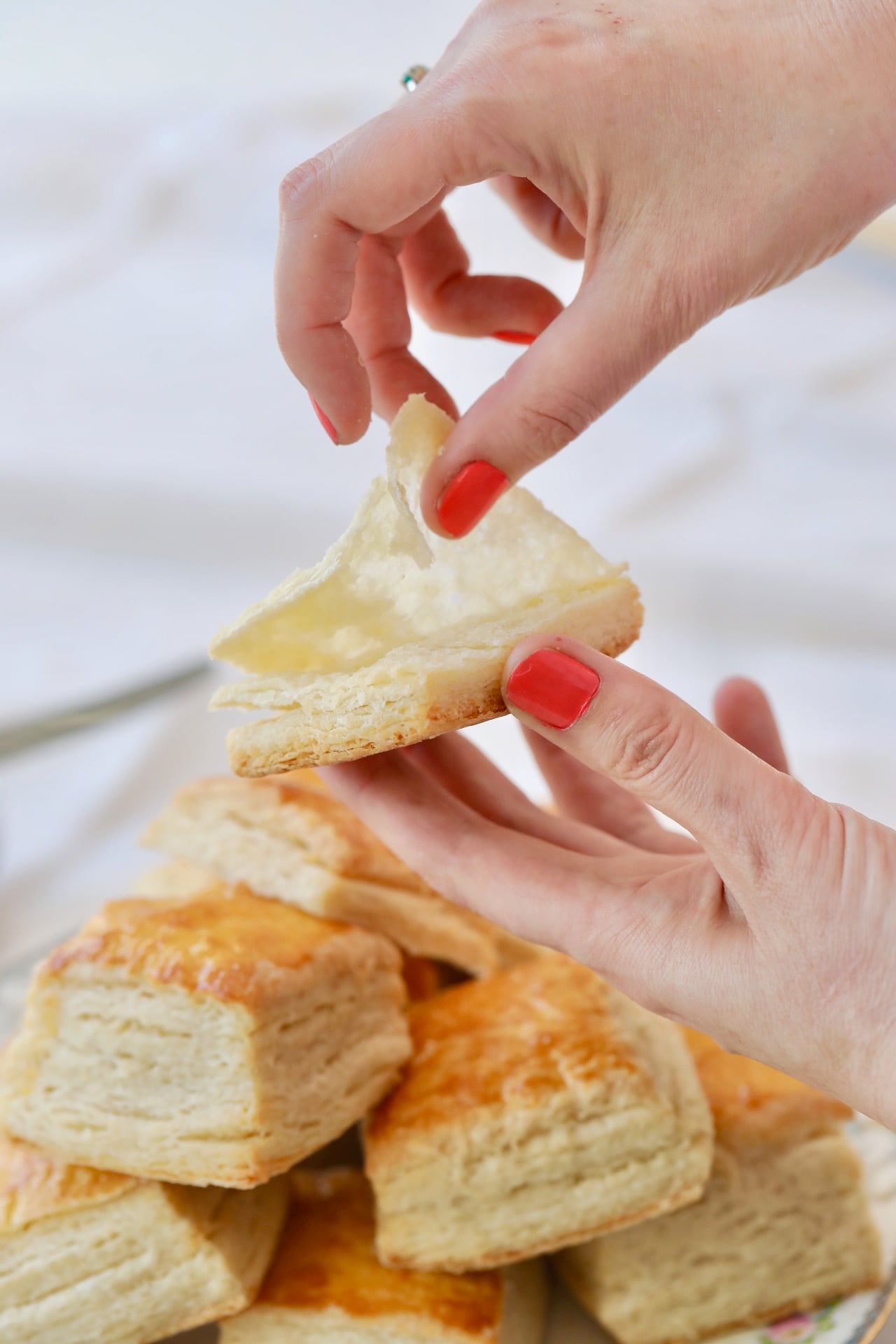
WHY YOU’LL LOVE THIS RECIPE: Game-changing Flakiest Laminated Biscuits are a buttery, layered cross between a croissant and a biscuit! This biscuit recipe uses yeast for leavening and a traditional laminated dough technique. I’ll walk you through the process of making bakery-worthy treats that are a dream to enjoy at breakfast with bacon, as a snack with honey or jam, or at dinner.
- Only a few ingredients: You won’t believe this professional-level delicacy is made from a handful of common ingredients.
- Clever hack for ultimate flakiness: My Flakiest Laminated Biscuits are not the typical baking powder variety. Using a dough with yeast for leavening plus a foolproof folding technique creates countless delicate layers. Don’t be intimidated–if you can fold and roll dough, you’ve got this!
- Elegant and irresistible! In addition to being miraculously flaky, fluffy, soft, and crispy, they look gorgeous, like a buttermilk biscuit’s fancy cousin!
Laminating distributes the butter through the dough, so you get tenderness and rich, irresistible flavor in every bite. Jump in and learn this simple technique, and you’ll be stunned at the results! For more flaky goodness, try my Kouign-Amann, Chocolate Croissant, Buttery Crescent Rolls from Scratch, and Apple Pie Crescent Rolls.
Bakers, let me share a little secret: even experienced bakers can stumble! During my early attempts at this recipe, I faced a few challenges. My butter was too cold, breaking into chunks in the dough. Then, in a rush to proof the biscuits quickly, I placed them in a warm oven, only to watch them melt into a buttery puddle. It was disheartening after all the effort I put in. But every challenge taught me something valuable, and now I’ve created the most simplified, foolproof version of a laminated dough just for you.
Trust me—this recipe is packed with tips and tools to help you succeed. My advice? Trust yourself, embrace the process, and have patience. The result will be worth every step, as you bite into layers of flaky, buttery perfection!
Table of Contents
- What are the Flakiest Laminated Biscuits?
- Tools You Need
- Key Ingredients and Why
- How to Make Laminated Biscuits
- Gemma’s Pro Chef Tips
- Make Ahead and Storage Instructions
- FAQs
- More Biscuit and Scone Recipes
What are the Flakiest Laminated Biscuits?
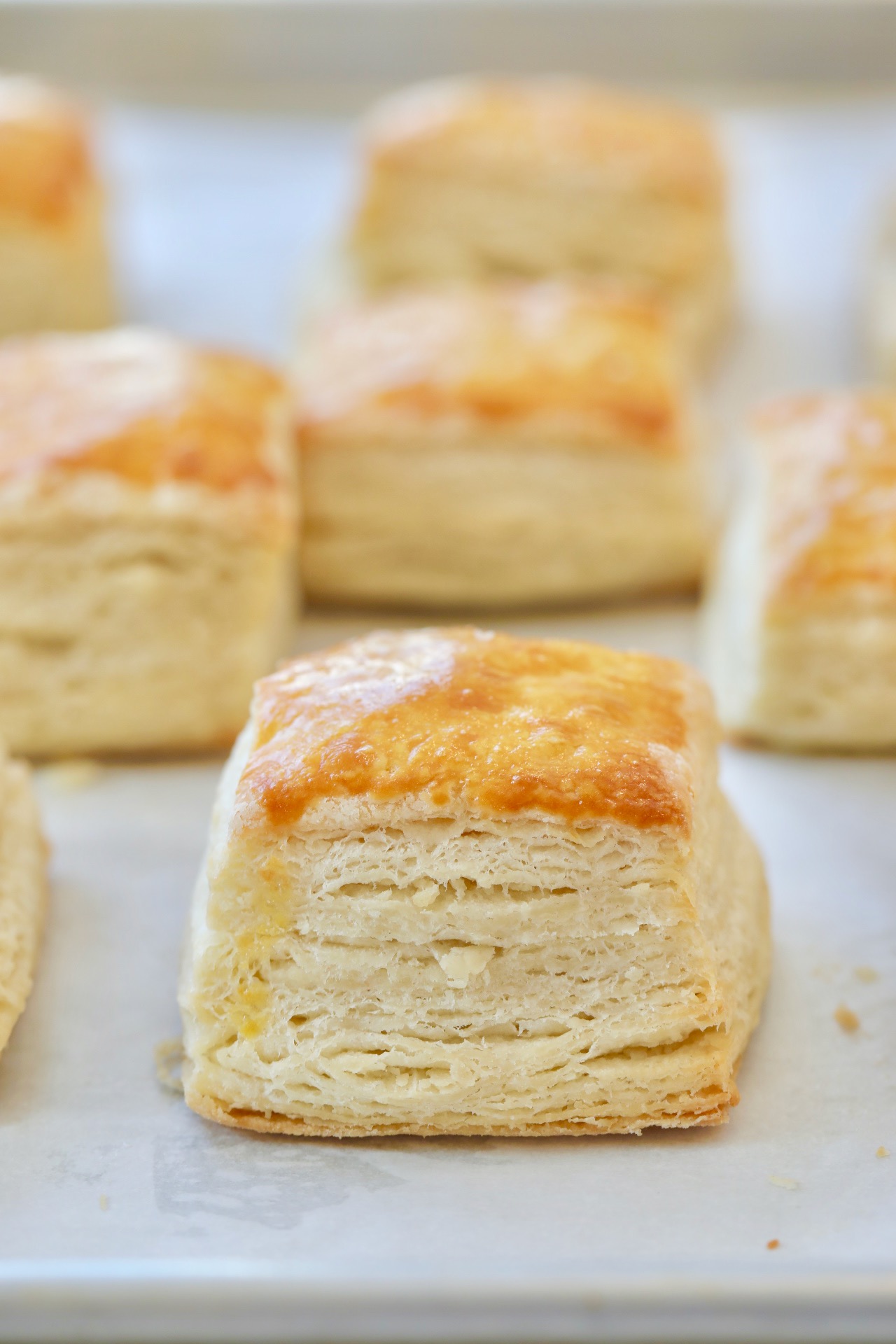
- The Flakiest Laminated Biscuits are made from a yeast dough. They are created using a laminated dough technique, which involves folding and rolling the dough around a butter block. They’re cut with a knife (no need for a biscuit cutter). While baking, the water in the butter evaporates, creating steam that forms pockets that puff up the dough, giving these biscuits their signature flaky layers.
- The Middle Eastern ancestor of laminated dough was phyllo, where very thin layers are brushed with oil or melted butter and baked to produce multi-layered pastry. Legend has it that French apprentice baker Claude Gelée first made puff pastry in the 17th century when he rolled a generous amount of butter into dough. The world of Viennoiserie, including croissants and brioche, is viewed as the category between breads and pâtisserie, like éclairs.
- Biscuits have a long history. The name comes from the Latin “bis coctus,” meaning twice-baked. American-style biscuits (as opposed to the English-style biscuit, which is more like the American cookie) have their roots in the scone. By the mid-19th century, American biscuits were being made in the South with baking soda, buttermilk, lard, and low-protein wheat flour. Today, there are many variations of American biscuits, and crossover recipes, such as the Flakiest Laminated Biscuits.
Tools You Need
- Mixing bowl
- Measuring spoons
- Measuring cups
- Kitchen scale (optional)
- Stand mixer (optional)
- Shower cap
- Pencil
- Parchment paper
- Ruler
- Rolling pin
- Baking sheet
- Plastic wrap
Key Ingredients and Why
All-purpose flour
- All-purpose flour, with a protein content of 9-11%, is perfect for pastries, where bread-like chewiness is not desirable.
Granulated sugar
- Sugar adds both sweetness and moisture to baked goods.
- In yeasted pastry, sugar also helps the dough rise faster and bake up nice and golden brown.
Instant yeast
- All of my recipes use instant yeast, as it is much easier to use. I have found that the results are identical to that of active dry yeast (which needs to be sponged in order to activate it).
- If you only have access to active dry yeast, you can use it, but you will need to use a little more. The ratio is ¾ teaspoon instant yeast to 1 teaspoon active dry yeast (and you can proof it with some of the lukewarm water used in the recipe).
Salt
- Salt is essential to bring out flavor. Without it, the biscuit will taste flat.
Lukewarm water
- When a yeasted dough calls for mixing in lukewarm water, it should be the temperature of your blood.
- To ensure the water is at the right temperature, pour a small amount of water into a cup and dip your finger in it.
- If you can’t feel the water around your finger, then it lukewarm, or blood temperature.
Butter
- Butter gives the biscuits rich flavor.
- The butter is completely incorporated into the dough through the lamination process. As the biscuits cook, the water in the butter evaporates to make steam, which puffs the pastry and creates flaky pockets.
- For butter-heavy pastries like this, always use the very best butter you can find.
- Temperature matters: Although the butter must be cold when you are laminating the dough, it should be softened so that you can easily create your butter block.
- Once the block is created, refrigerate until firm while the dough rises.
Egg wash
- Egg wash gives the biscuits a golden, shiny finish.
- Egg wash is made by whisking a large egg yolk with 2 teaspoons of milk. Brush on top of the biscuits just before baking.
How to Make Laminated Biscuits
Make the dough
- Mix dry ingredients: In the bowl of a stand mixer with a dough hook, mix the flour, sugar, yeast, and salt (alternatively, whisk the ingredients in a large bowl).
- Add fat and liquid: Add 2 tablespoons (1oz/28g) of the butter and the water to the dry ingredients, and stir on medium-low until the flour mixture is moistened, about two minutes (alternatively, stir the mixture by hand).
- Knead: Increase the speed to medium and knead for 6 to 8 minutes until a smooth, soft dough is formed (alternatively, knead by hand for 10 minutes).
- Bulk fermentation: Put the dough in a large, oiled mixing bowl, cover with the shower cap or cling wrap, and let rise until doubled in size, about two hours.

Make the butter block
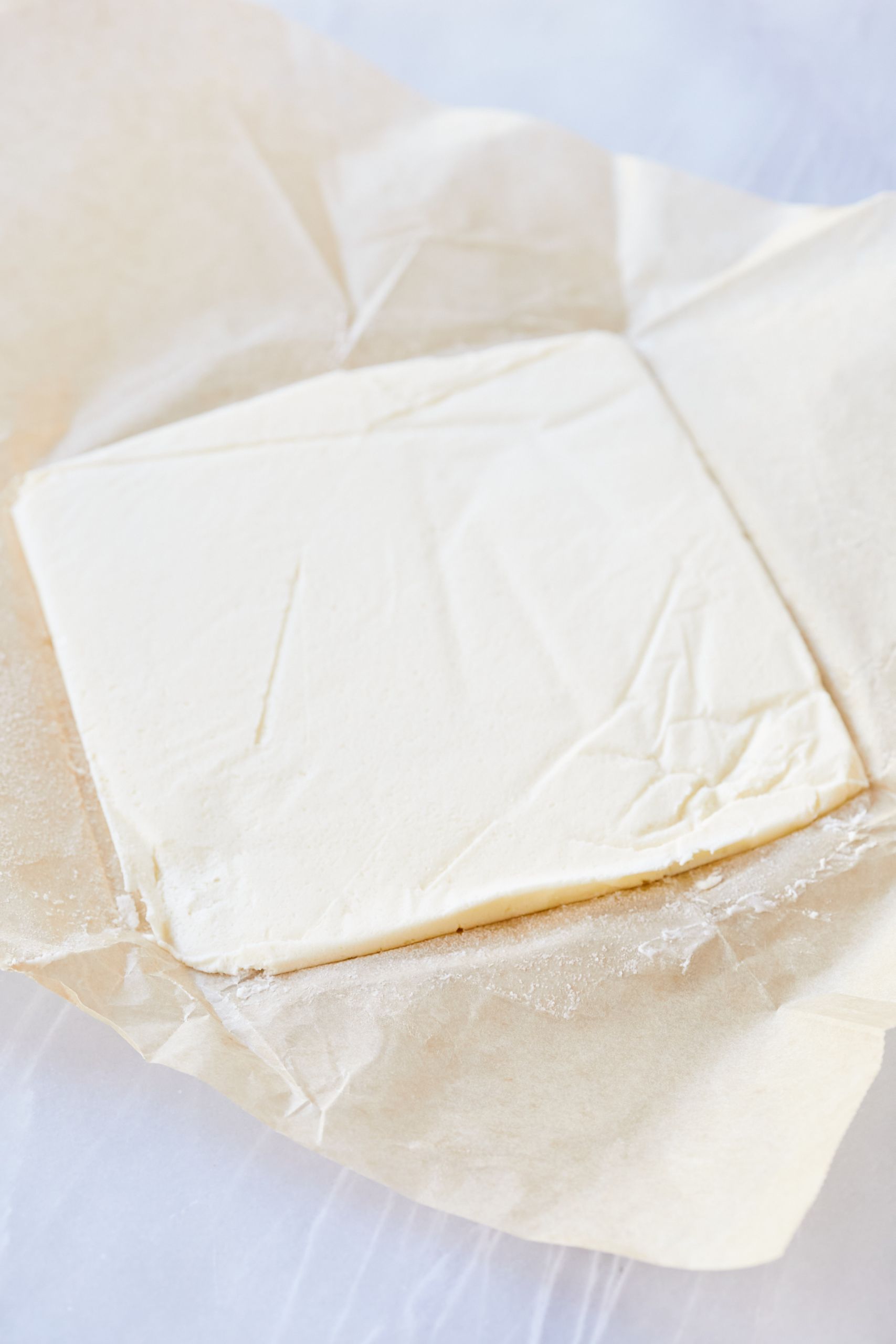
- Use a pencil to draw a 7×7-inch (18×18-cm) square in the center of a large piece of parchment.
- Flip the paper over. Using the outline of the square as a guide, spread out the butter into the shape to form a block of butter.
- Fold the parchment around the butter, and using a rolling pin, flatten the butter into the square shape.
- Store the wrapped butter in the fridge. (Take it out and keep it at room temperature for 10 minutes before using.)
Roll and fold the dough
- When the dough has risen, roll it out on a floured surface into a 14×14-inch (36×36-cm) square.
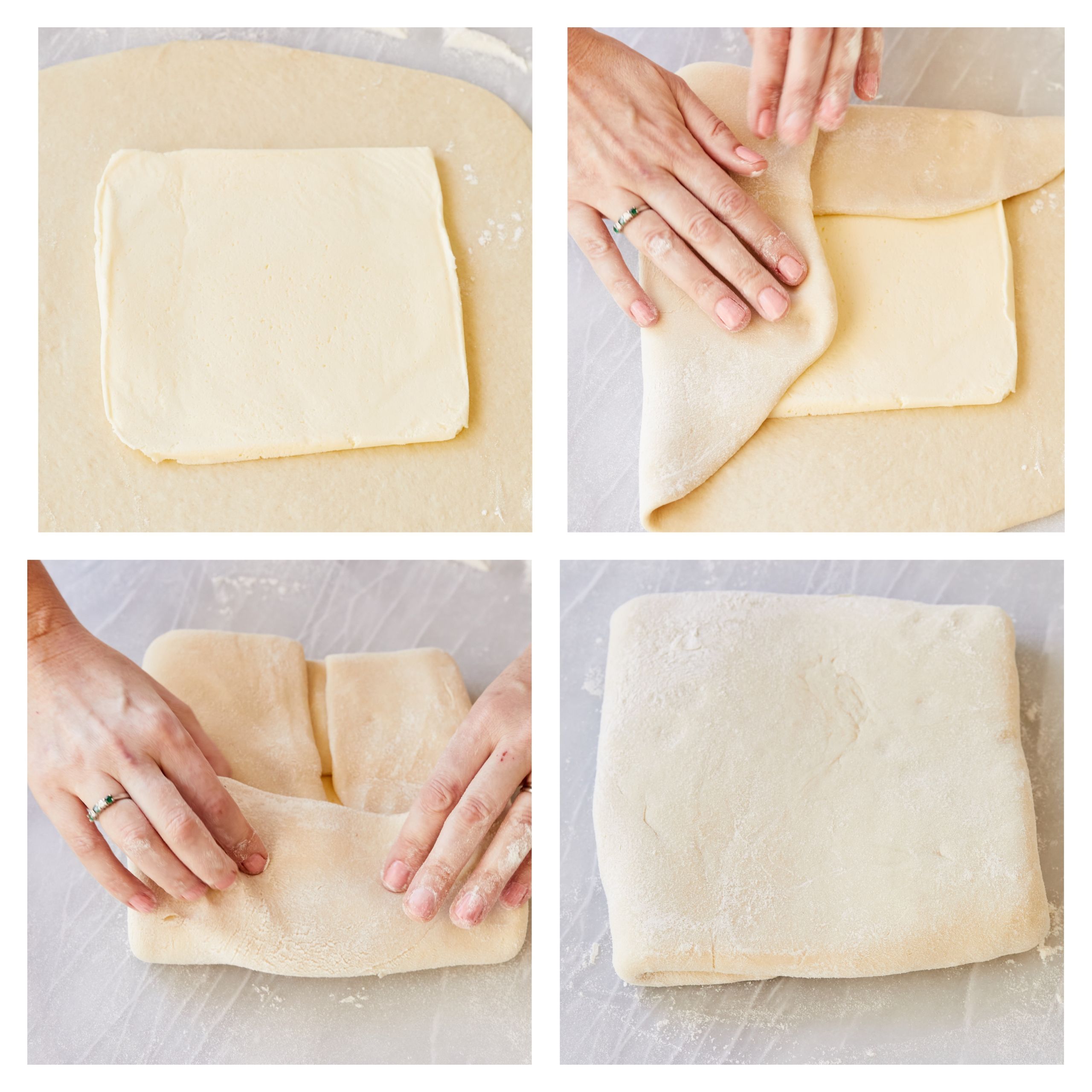
- Place the butter block in the center of the dough square.
- Pull the sides of the dough in and over the butter block, and press the edges of the dough to encase and seal the butter block.
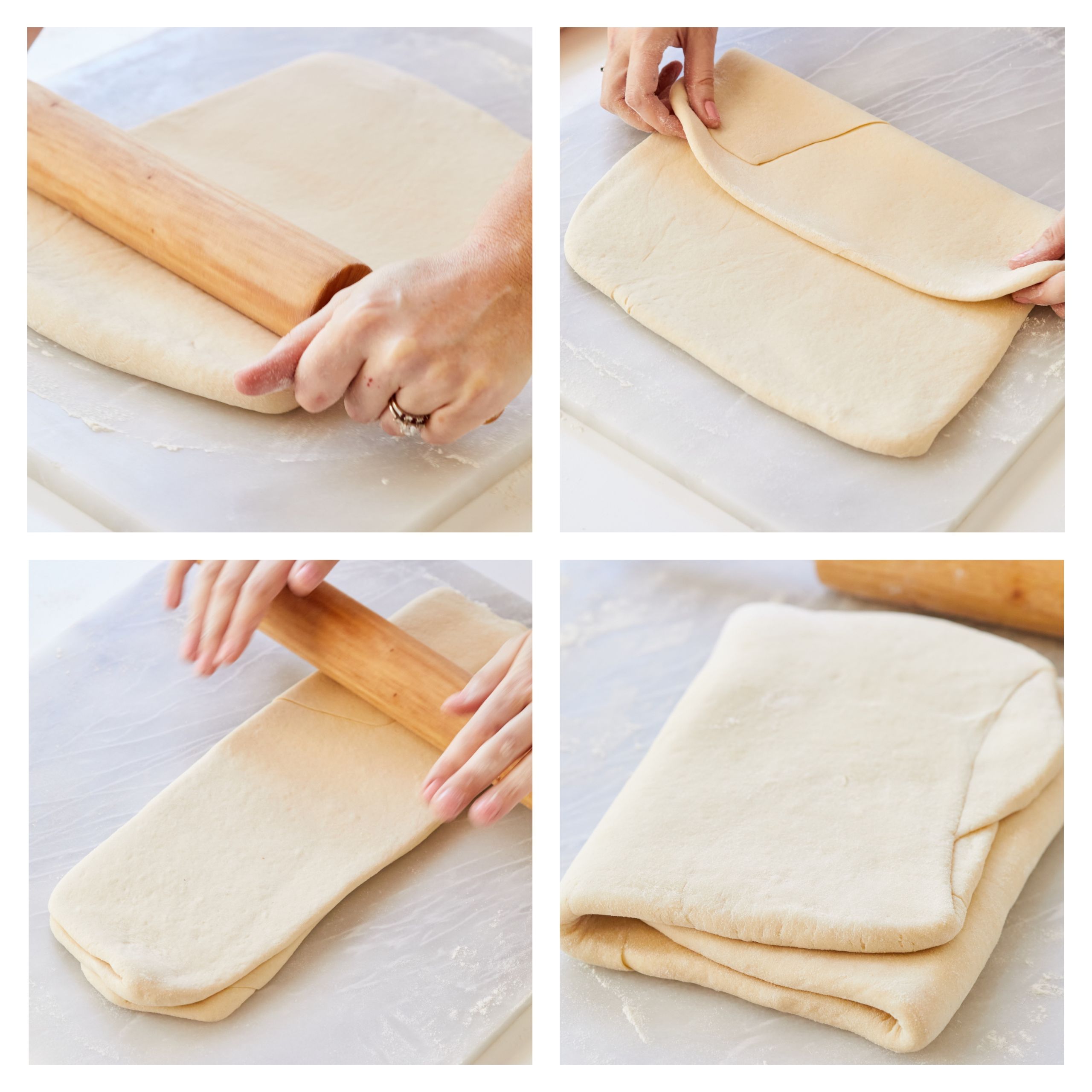
- Flip the dough seam-side down and roll it out into an 11×14-inc (28x36cm) rectangle. Roll it from the center to the edges so that the butter spreads evenly through the dough.
- Fold into thirds, like a letter, wrap in plastic wrap, and refrigerate for 30 minutes.
- Roll out the chilled dough on a floured surface again into an 11×14-inch (28x36cm) rectangle. Fold into thirds, wrap in plastic wrap, and chill for 30 minutes.
- Repeat the rolling, folding, and chilling process two more times (for a total of four times), and then wrap in plastic wrap and chill for at least 30 minutes.
Cut and bake the biscuits
- Line a sheet pan with parchment paper.
- Roll the biscuit dough out to an 8 x 10½-inch (20×26-cm) rectangle. Trim about 1/2 inch all around to give the rectangle neat edges (the final rectangle should be 7½ x 10 inches or 18×25 cm). Cut out twelve 2½ x 2½-inch biscuits.
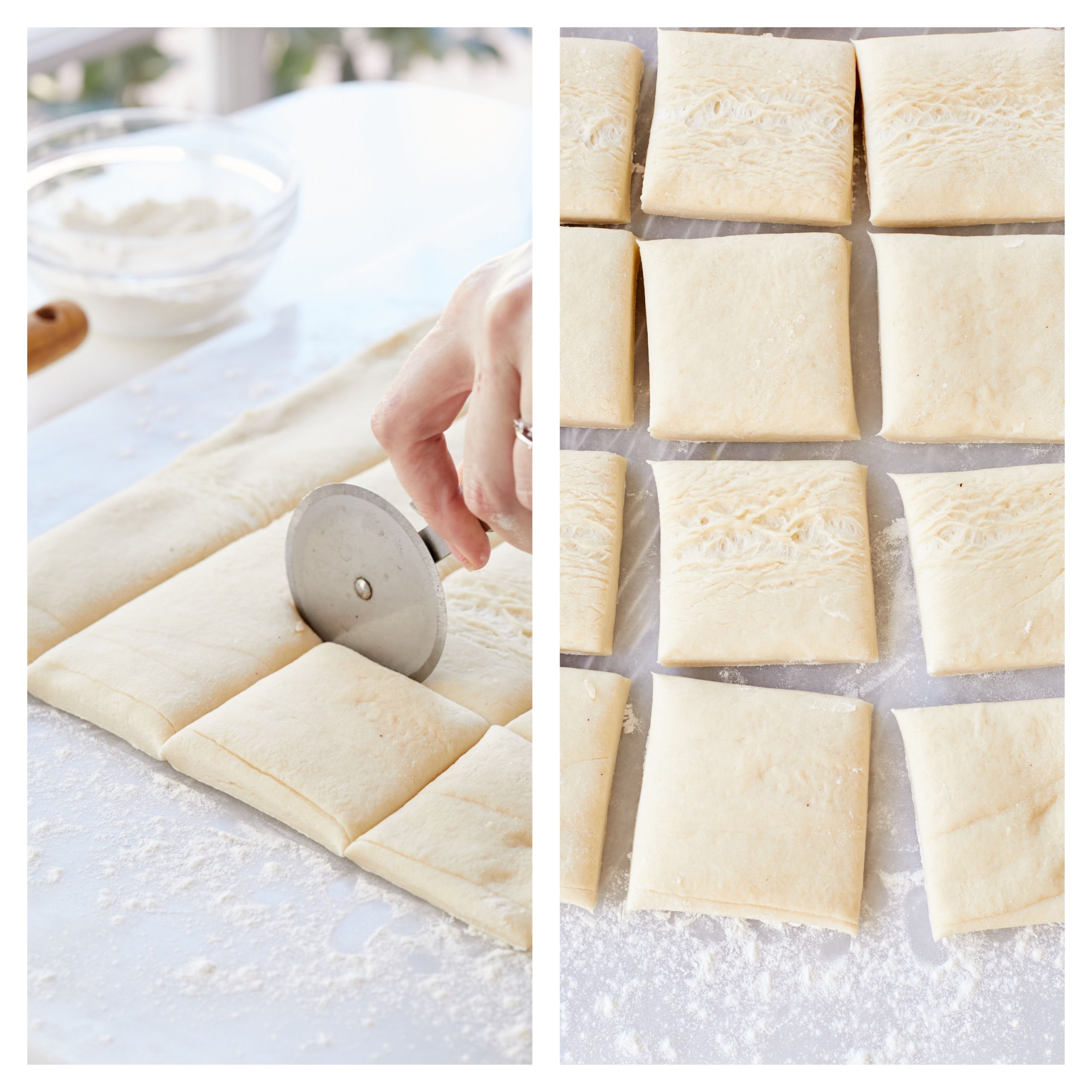
- Final proofing: Place on the parchment-lined baking sheet. Cover with plastic wrap and let rise for 30 to 45 minutes. (Before baking, the biscuits should measure about 1 inch (3cm) high. If your kitchen is cool, this can take up to an hour.)
- Just before baking, preheat the oven to 350°F (180°C). Brush tops of the biscuits with the egg wash.
- Bake for 20 to 25 minutes until puffed and golden. Let cool on a rack for 10 minutes before serving.
Gemma’s Pro Chef Tips
- There is a lot of butter in these biscuits. They’re perfect as-is, but they can be made with less butter if you wish.
- You can reduce the butter by as much as half.
- You will still get laminated layers because of the rolling and folding technique but just know that the biscuits will ultimately be denser in texture, as the butter is what creates a light and flaky pastry
- Add dried herbs or spices to the dough if you’re looking for a flavored biscuit,
- A tablespoon of dried thyme and a teaspoon of black pepper are the perfect combination for a savory biscuit.
- Or go for a sweet biscuit by adding a teaspoon of cinnamon and a ½ tsp of nutmeg. Sprinkle cinnamon sugar on the surface of the dough just before your final fold.
- To make a different shape, roll the dough out to a thin 1/8-thick (3mm) rectangle. Cut dough into long triangles and roll them into croissant shapes.
- Give them the final proof in this shape, and then brush with the egg wash and bake.
Make Ahead and Storage Instructions
Make ahead tips
- Make the dough ahead of time: After you’ve completed the rolling, folding, and chilling process four times, you can refrigerate the dough, wrapped in plastic wrap, for up to two days.
- Make and refrigerate the unbaked biscuits: Make the biscuits, cut them, and place them in an airtight container, separating the layers with parchment paper. Refrigerate the unbaked biscuits for up to two days.
- Before baking, let proof on the counter for one hour before brushing with egg wash and baking.
- Make ahead and freeze: For more extended storage, make the biscuits, cut them, and place them in an airtight container, separating the layers with parchment paper. Freeze the unbaked biscuits for up to two months.
- Before baking, defrost in the fridge overnight, and then proof on the counter for one hour before brushing with egg wash and baking.
How to store leftovers
- Store leftovers in an airtight container at room temperature for up to two days.
- Refresh in a 300°F (150°C) oven for 5 to 10 minutes.
FAQs
Why didn’t my dough rise?
- Your yeast may be expired. An open container of instant yeast can lose its effectiveness after 4 to 6 months in the refrigerator. Try again with freshly purchased yeast.
- Try using the risen dough anyway. The butter will ensure that you’ll still have a flaky biscuit.
Why is my butter crumbling and not rolling smoothly into the dough?
- Let the cold butter sit on the counter for about 10 minutes to let it soften slightly.
What do I do if the butter is oozing out of my pastry as I am rolling and folding?
- Your pastry and butter are getting too warm. Return the pastry to the refrigerator for 15 minutes, and try again where you left off.
Why is the butter leaking out of the pastry and pooling around the biscuits in the oven?
- Your dough was likely under-proofed. Before baking, the biscuits should measure about 1 inch (3cm) high. If your kitchen is cool, this can take up to an hour.
My pastry is getting very brown but the center is underbaked.
- Your oven may run a bit hot. To prevent further browning, lower the temperature to 325°F (165°C) and cover the biscuits with foil.
Help! My biscuits over-rose and collapsed when baking.
- Eat them anyway–they’ll be delicious!
More Biscuit and Scone Recipes
- Best-Ever Buttermilk Biscuits
- Best-Ever Irish Scones
- Sage and Cheddar Biscuits
- Sweet Potato and Rosemary Biscuits
- Chocolate Chip Scones
Try These Recipes!



Flakiest Laminated Biscuits


Ingredients
- 3 ½ cups (17½oz/497g) all-purpose flour
- 2 tablespoons granulated sugar
- 2 teaspoons instant yeast
- 1 teaspoon salt
- 2 tablespoons (1oz/28g) plus 2 ½ sticks (10oz/284g) butter, softened
- 1 cup (8floz/240ml) water, lukewarm
- Egg wash
Instructions
Make the Yeasted Dough
- In the bowl of a stand mixer fitted with a dough hook, mix the flour, sugar, yeast and salt.
- Add 2 tablespoons (1oz/28g) of butter and the water and stir on medium-low speed until the flour mixture is moistened, roughly 2 minutes.
- Increase the speed to medium and knead for about 6-8 minutes, until a smooth and soft dough has formed. (You can also knead this dough by hand for roughly 10 minutes)
- Place the dough in a large, oiled bowl, cover and let rise in a warm place until doubled in size, about 2 hours.
Make the Butter Block
- With a pencil, draw a 7x7-inch (18x18cm) square in the center of a large piece of parchment.
- Flip the paper over and using the drawn square as a guide, spread or pat the butter into this shape to form one block of butter.
- Fold the parchment paper over the butter along the lines of the drawn square and use a rolling pin to flatten the butter evenly into the square shape. Store the wrapped butter in the fridge.
- Note: Before you are ready to use the butter block, allow it to soften very slightly at room temperature for roughly 10 minutes so it’s not rock hard from the fridge. It will incorporate much better into your dough when it’s not really cold.
Rolling and Folding Your Dough
- Once the dough has risen, on a floured surface, roll out into a 14x14-inch (36x36cm) square.
- Place the butter block in the center of the dough square.
- Pull the sides of the dough into the center of the butter block and press the edges of the dough to seal and encase the butter. (see video)
- Flip the dough seam side down and roll out into an 11x14-inch (28x36cm) rectangle. Make sure to roll from the center to the edges so that the butter spreads evenly throughout the dough. Fold into thirds, like a letter, wrap with plastic wrap and refrigerate for 30 minutes.
- After 30 minutes, roll out the dough on a floured surface again to 11x14-inches (28x36cm). Fold in thirds, wrap in plastic wrap and return to the refrigerator for 30 minutes.
- Repeat this rolling, folding and chilling process 2 more times for a total of 4 rolls and folds. After the final fold, chill for at least 30 minutes. (At this point, you can keep the dough in the refrigerator for up to 2 days before you proceed.)
Cutting and Baking the Biscuits
- When ready to bake your biscuits, line a baking sheet with parchment paper.
- Roll out the dough to roughly 8x10 ½-inch (20x26cm) rectangle. Trim away about a ½-inch (1½cm) all around to have nice, neat edges. Your final rectangle should measure 7½x10-inches (18x25cm).
- Cut out twelve (2 ½ x 2 ½-inch) biscuits.(see video). Place the biscuits on your prepared baking sheet and cover with plastic wrap. Let proof for 30-45 minutes. If the dough has been chilling overnight or longer, let it proof for at least 1 hour.
- Just before baking, preheat the oven to 350°F (180°C). Brush the tops of the dough with egg wash. (taking care not to brush the sides).
- Bake for 20-25 minutes, until puffed and golden. Let cool for 10 minutes on a wire rack before serving. Store leftover biscuits in an airtight container at room temperature for up to 2 days. Recrisp in a 300°F (150°C) oven for 5-10 minutes.








I finally made these and they were OUTSTANDING! My entire family raved about them. A lot of work, but well worth it for a special occasion. I have never before tried to “laminate” dough. I do think the European butter made a huge difference. Also- I had a hard time getting the dough soft and smooth. I had to knead it a lot longer than noted. My flour was high in protein (11.5) and I think that was part of the problem. I’m going to use 9-11% flour this next time. I’m going to make them again and try to… Read more »
Hi Gemma,
I’m a bit confused about your flour measurements. The typical weight of 1 cup flour is 120 g. Which flour measurement do you typically use? Thanks for any advice
Im looking forward to making these. Does it matter if the butter is salted or un-salted?
Many of us do not have stand mixer, what would be the directions for making by hand?
I can’t wait to make Laminated Biscuits! I have a question about the butter block. Did I miss seeing the amount of butter to use for this? If so, can you let me know where to find it? Thanks and you are the first, and only, baker I follow. So entertaining and you are so down to earth. Thank you!