This post may contain affiliate links. Please see my full disclosure for details.
Hi Bold Bakers!
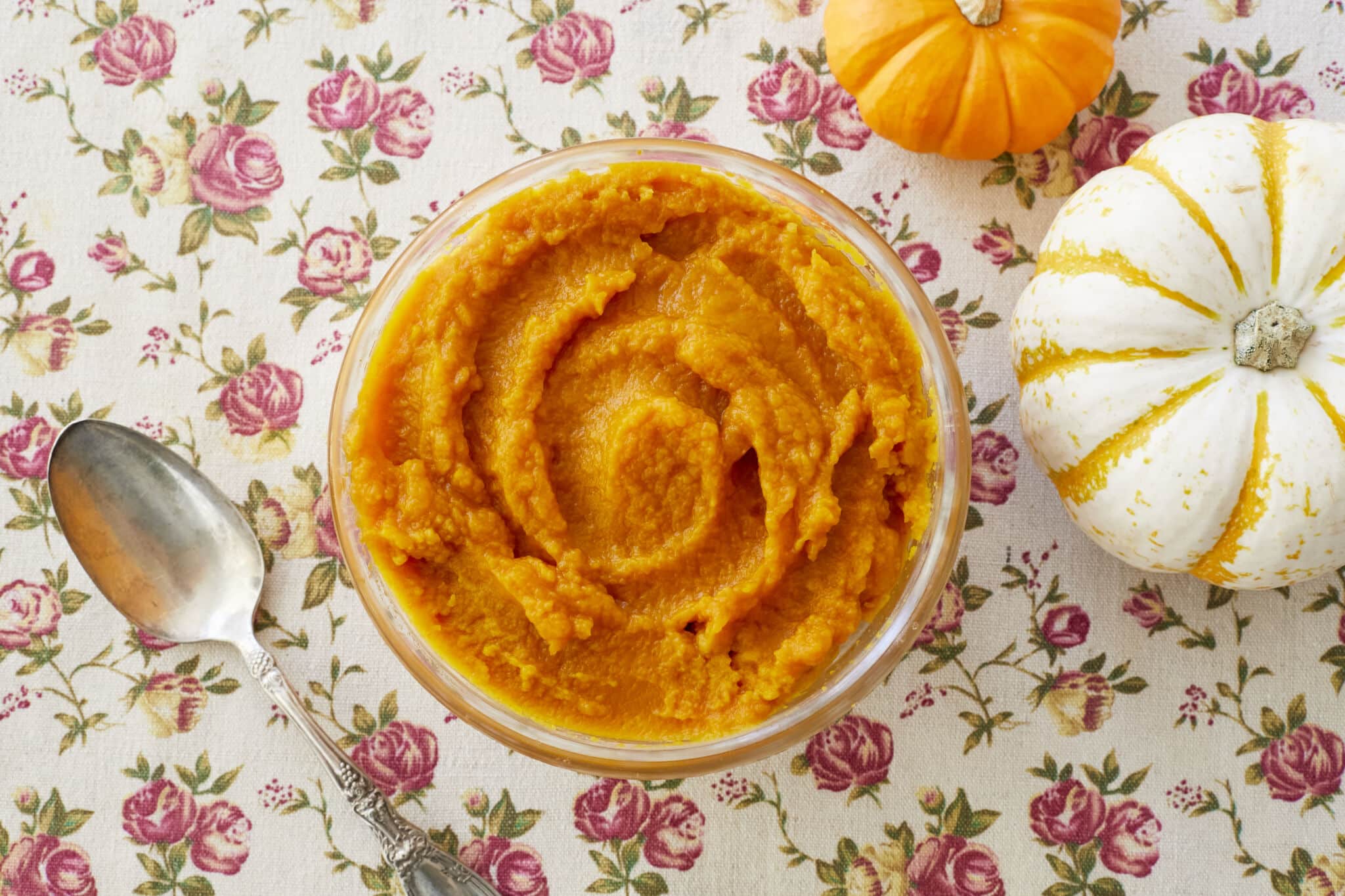
WHY YOU’LL LOVE THIS RECIPE: Homemade Pumpkin Puree is the essence of fall—learn how to make pumpkin puree with fresh sugar pumpkins for a fresher flavor, smoother texture, and brighter color than canned.
- Better Flavor & Perfect Pumpkin: Fresh sugar pumpkins, also called pie pumpkins, give your puree a naturally sweet, earthy taste and have dense, fine-grained flesh ideal for smooth, flavorful results great for sweet and savory dishes.
- Velvety Texture: Homemade puree blends into a smooth, creamy base—perfect for baking and cooking.
- Brighter Color: Expect that gorgeous, deep orange hue that makes every dessert look bakery-perfect.
- Simple & Satisfying: Just one ingredient, minimal effort, and big homemade payoff.
As a professional chef always seeking ways to make ingredients homemade I just adore the ease of this recipe. A tip I have for the home baker to make this even easier and not to have your one on for an hour is actually to pop the pumpkin into the oven after your daily cooking or baking is done. Even with the oven off and as it cools it will still cook the pumpkin in the residual heat. Be sure to check out my latest curated collection of Essential Holiday Pumpkin Recipes You Never Knew You Craved. Bake as your heart desires with these 15 pumpkin recipes full of unique flavor, warmth, and earthiness, indulging in the essence of fall every bite.
IMPORTANT NOTE: This recipe was updated and improved on 10/15/2025, to include new step-by-step photography, make-ahead and storage instructions, answers to the most frequently asked questions, 20 uses for pumpkin puree, and Pro Chef Tips.
Table of Contents
- What is Homemade Pumpkin Puree?
- Tools You Need
- Key Ingredient
- How to Make Homemade Pumpkin Puree
- Gemma’s Pro Chef Tips
- Make Ahead and Storage Instructions
- FAQs
- 20 Uses for Pumpkin Puree
What is Homemade Pumpkin Puree?
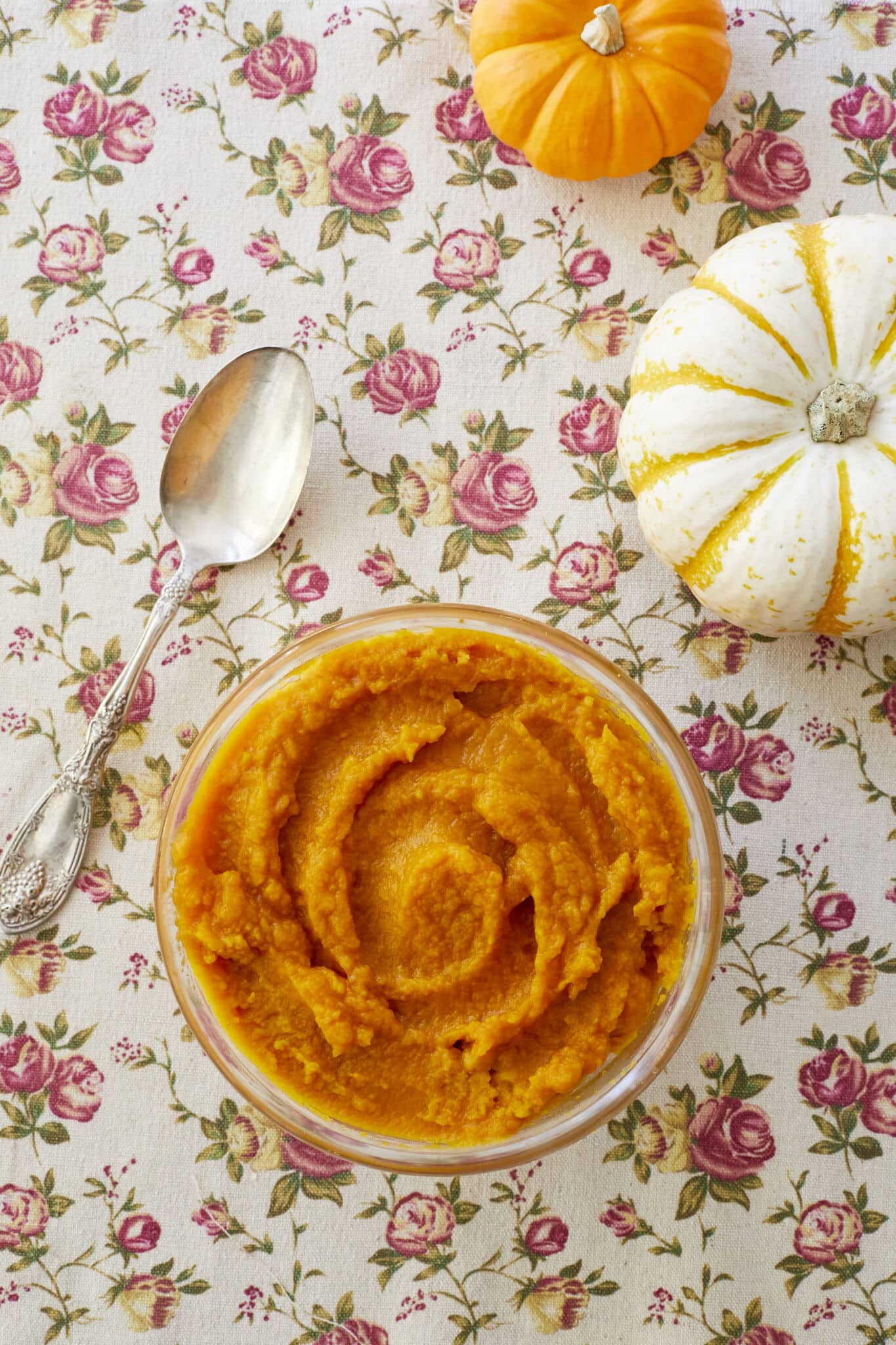
Homemade pumpkin purée is a cooking ingredient made by cooking and blending fresh pumpkin flesh.
- It possesses a rich, orange hue, with a naturally sweet and earthy flavor that captures the essence of the autumn season.
- This versatile ingredient serves as a fundamental component in a wide array of sweet and even savory dishes, contributing a luscious, creamy texture and a subtle, nutty undertone that enhances recipes.
Tools for Homemade Pumpkin Puree
- Baking sheet
- Parchment paper
- Knife
- Large spoon
- Food processor
Key Ingredient
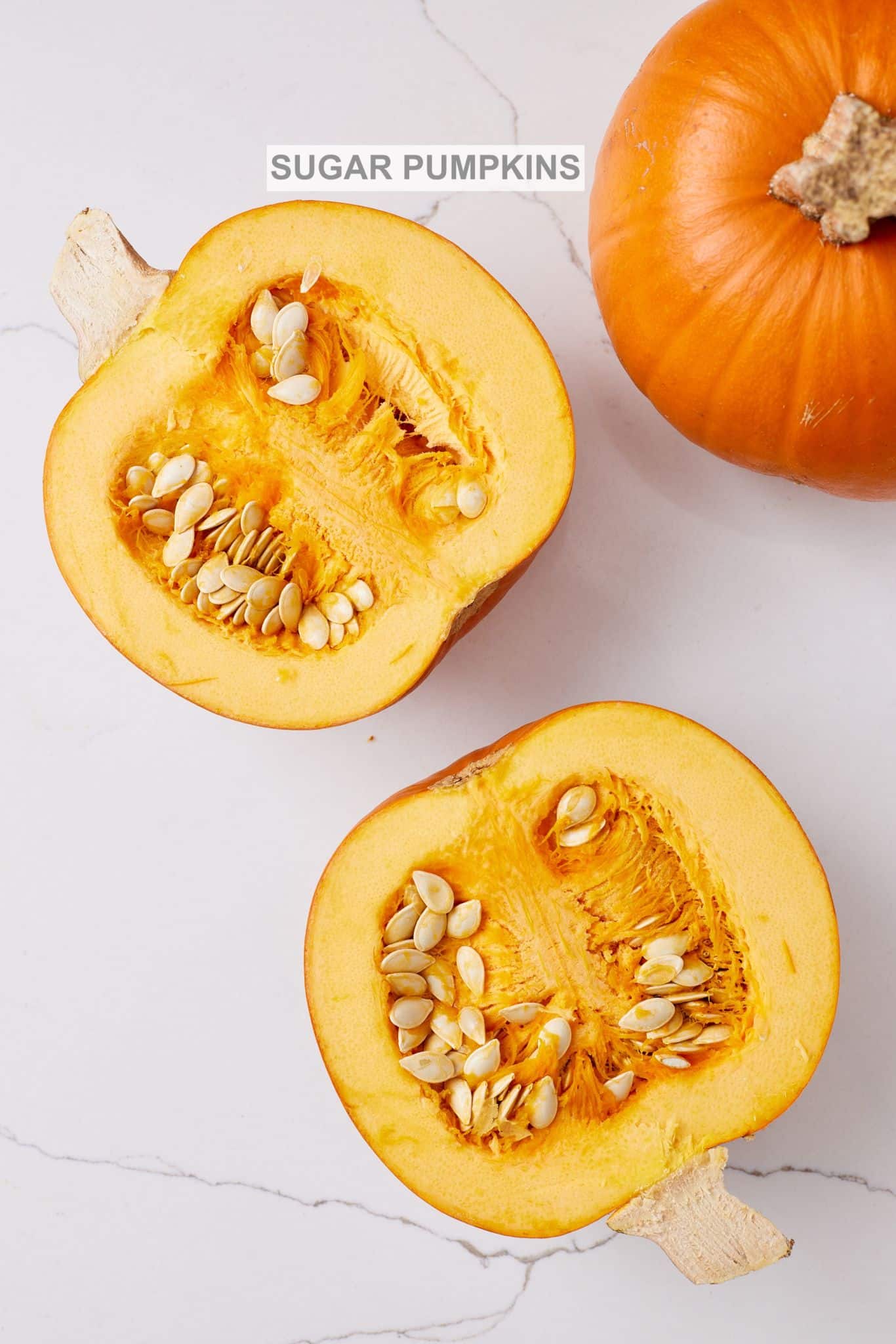
All you need is a Sugar Pumpkin, also known as a Pie Pumpkin.
- It is a specific type of pumpkin variety that is smaller, sweeter, and less watery than the larger pumpkins often used for carving and decoration.
- They are typically round and known for their smooth, fine-grained flesh, making them ideal for pumpkin recipes such as Pumpkin Pies, Pumpkin Muffins,Pumpkin Pancakes, or Pumpkin Pie Egg Rolls.
- Sugar pumpkins are a good source of several essential nutrients, including vitamins (specifically Vitamin A and Vitamin C), fiber, antioxidants, and minerals, also are low in calories.
How do You Make Pumpkin Puree
- Preheat the oven: Preheat the oven to 350℉ (180℃), line a baking tray, and set aside.
- Cut the pumpkins: Carefully cut each pumpkin in half and remove the stems.
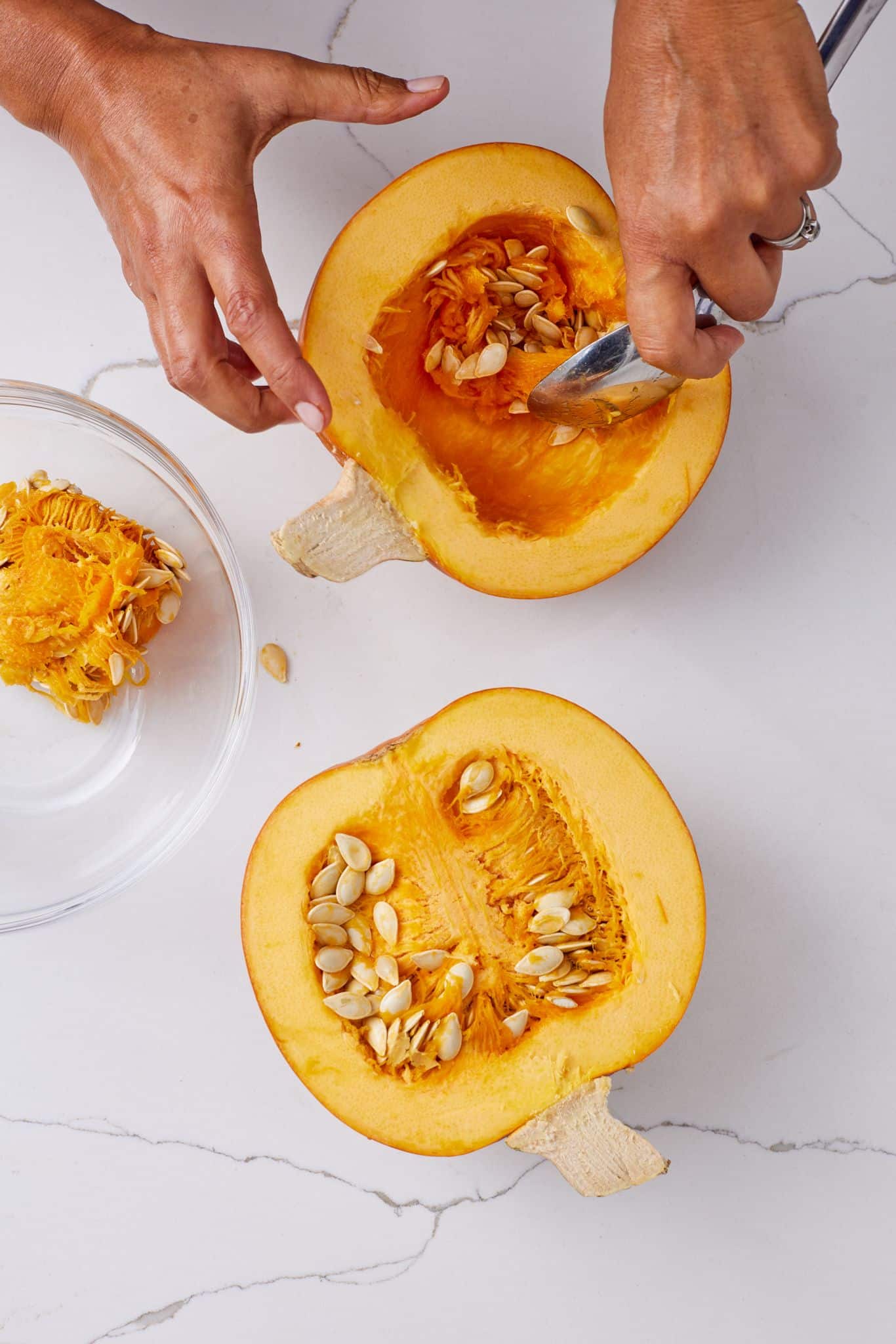
- Scoop out the seeds: Scoop out the seeds with a spoon and either bake to eat or discard them.
- Bake the pumpkin: Place the pumpkin halves cut side down on your lined baking tray and bake for about 1 hour, or until tender enough for a fork to slide through easily.
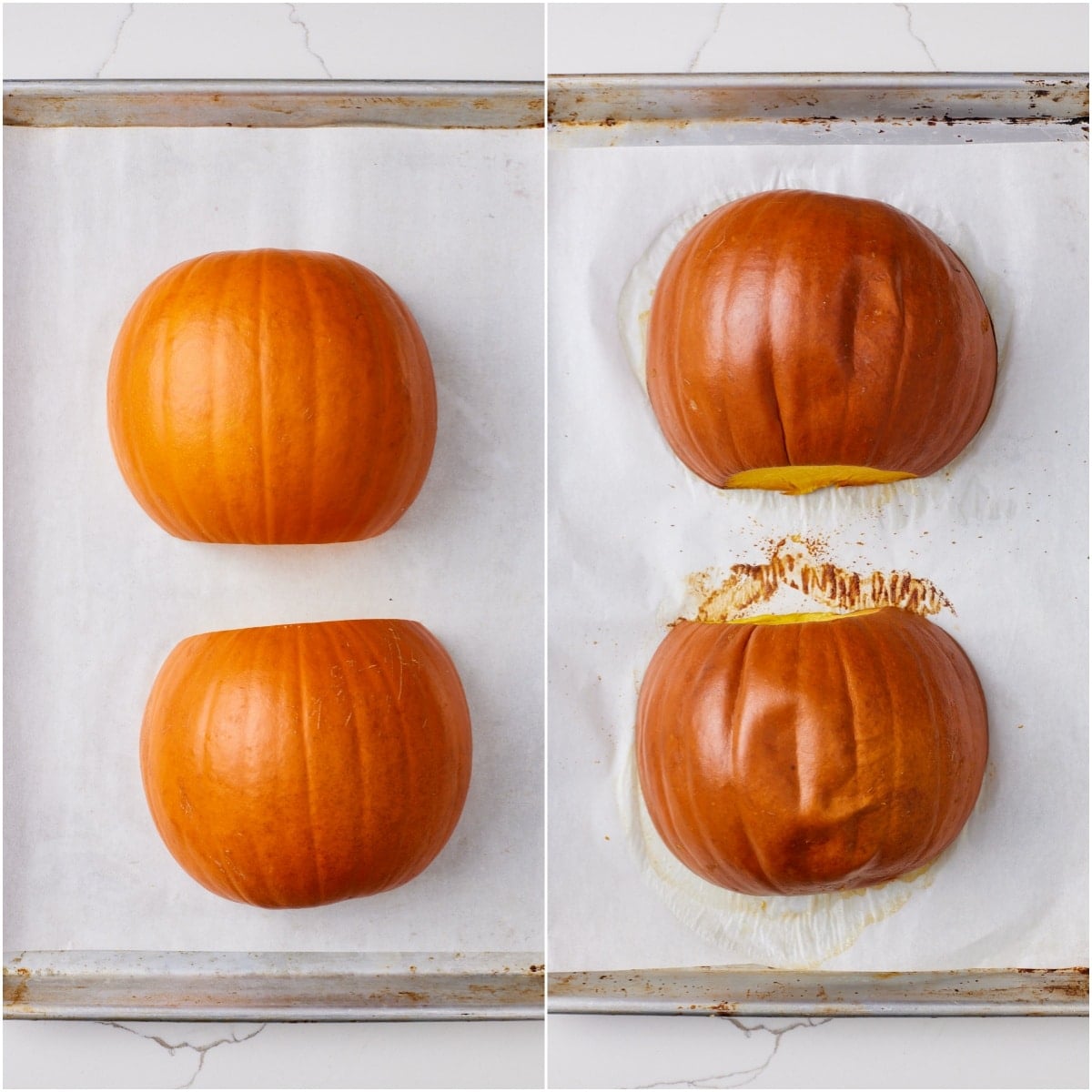
- Cool the pumpkin: Remove from the oven and let them sit at room temperature until fully cooled. When cooled, flip them over and scoop out the pulp with a spoon.
- Puree the pumpkin: Place the pumpkin pulp into a food processor (or blender) and puree on high speed until smooth, about 2 minutes.
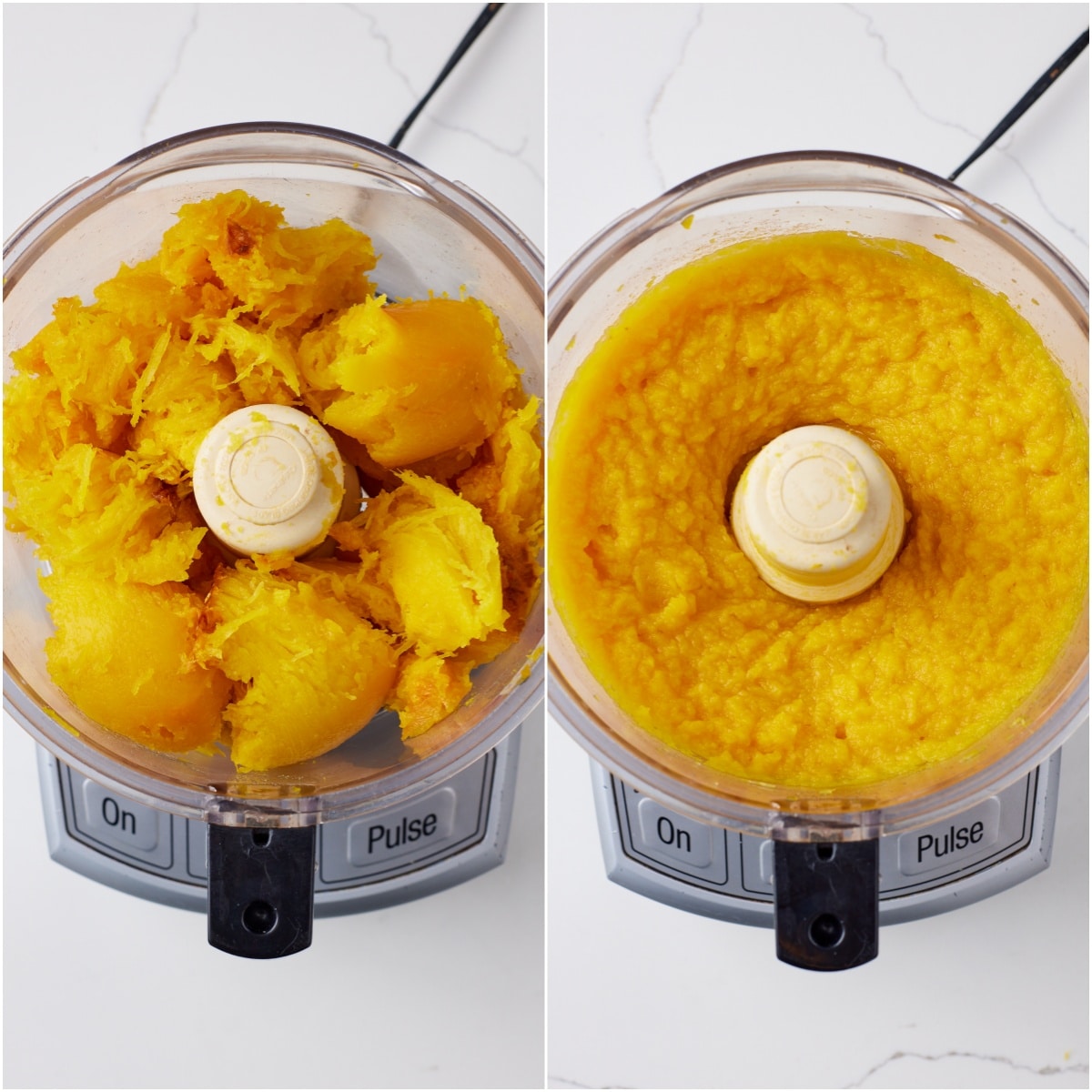
- Store the puree: Refrigerate your puree until ready to use. Keep it refrigerated for up to 1 week. I prefer not to freeze it, as it can defrost watery.
FULL (PRINTABLE) RECIPE BELOW!
Gemma’s Pro Chef Tips
- Know When it’s roasted: The pumpkin is done when a fork or knife slides easily into the flesh. The skin may be slightly wrinkled, and the pumpkin should feel tender when pressed. Roasting caramelizes the natural sugars, enhancing flavor.
- Peeling isn’t necessary: You don’t need to peelsugar pumpkins before roasting. Once roasted and cooled, the skin slips off easily, and only the soft, cooked flesh is pureed.
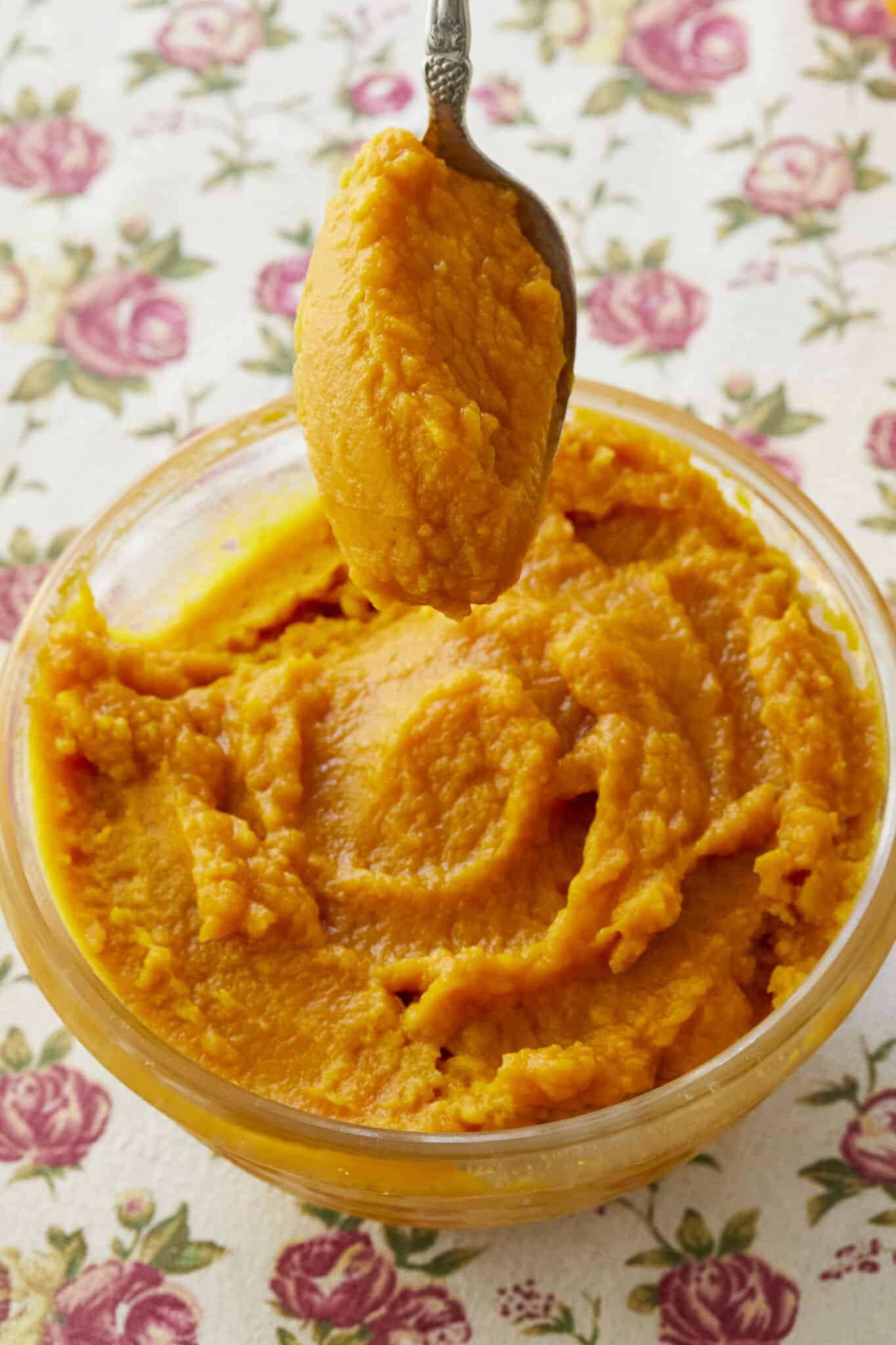
- Texture tips: After blending, the puree should be smooth, creamy, and slightly thick. If it feels watery, drain it through a fine mesh strainer or cheesecloth to remove excess liquid. A blender or food processor works best, but an immersion blender or even a potato masher can work in a pinch.
- Using seeds: Don’t toss the seeds! Rinse, pat dry, and roast them with a little oil and salt for a crunchy, protein-rich snack. You can also season with cinnamon, paprika, or cayenne for a fun twist.
- Flavor boost: Oven-roasting yields richer flavor than boiling. For an extra fall kick, stir in a pinch of homemade pumpkin pie spice after blending.
- Freezing & storage: Portion puree into ½ cup (120 mL) or 1 cup (240 mL) containers (or use an ice cube tray for small amounts) and freeze for up to 6 months. Thaw in the fridge before using; stir well to restore smoothness.
Make Ahead and Storage Instructions
- Refrigerate: Store homemade pumpkin puree in an airtight container in the refrigerator for up to 4 days. Perfect for preparing in advance before baking or cooking.
- Freeze: Portion puree into ½ cup (120 mL) or 1 cup (240 mL) containers, or use an ice cube tray for smaller amounts. Freeze for up to 6 months. This makes it easy to have pumpkin on hand for recipes throughout the season.
- Thawing: To defrost, place frozen puree in the refrigerator for a few hours or overnight. You can also use the defrost setting on your microwave. Stir well to restore a smooth, even texture.
- Prevent Browning: Add a splash of lemon juice before storing to help maintain the vibrant orange color of fresh pumpkin puree. Always use airtight containers to preserve freshness and flavor.
FAQs
Can I use other types of pumpkins besides sugar pumpkins?
- While sugar pumpkins are the preferred choice for making pumpkin puree due to their sweetness and texture, you can use other pumpkin varieties, but the flavor and consistency may vary.
What’s the difference between homemade and canned pumpkin puree?
- Homemade pumpkin puree is made from fresh pumpkins, while canned pumpkin puree is processed and may have additives. Homemade version offers a fresher taste.
Can I freeze homemade pumpkin puree?
- Yes, homemade pumpkin puree can be frozen in portion-sized containers for later use, making it convenient to have on hand.
How do I prevent my homemade pumpkin puree from turning brown?
- To prevent browning, you can add a bit of lemon juice to the puree.
- Also, proper storage in airtight containers may help maintain its color.
What’s the best way to defrost frozen homemade pumpkin puree?
- The best way to thaw frozen pumpkin puree is to place it in the refrigerator for a few hours or use the defrost setting on your microwave. Stir well to even out the texture.
20 Uses for Pumpkin Puree
- Homemade Pumpkin Spice Coffee Creamer
- Gemma’s Best Ever Pumpkin Bread
- Best Pumpkin Pie Recipe
- Healthy Pumpkin Bread Recipe
- Pumpkin Olive Oil Cake Recipe
- Homemade Starbucks Pumpkin Spice Latte
- Pumpkin Pie Egg Rolls
- Pumpkin Cinnamon Rolls
- Soft And Fluffy Pumpkin Dinner Rolls
- Pumpkin Waffles
- Pumpkin Blondies
- Pumpkin Bread Pudding
- Pumpkin Buttermilk Pancakes
- Petite Pumpkin Pies
- Chocolate Swirl Pumpkin Bread
- Salted Pumpkin Caramels
- No Bake Pumpkin Cheesecake
- Pumpkin White Chocolate Lava Cake
- Homemade Dog Biscuits (Pumpkin)
- Pumpkin Pie in a Mug
IMPORTANT NOTE: This recipe was updated and improved on 10/15/2025, to include new photography, make-ahead and storage instructions, answers to the most frequently asked questions, 20 uses for pumpkin puree, and Pro Chef Tips.
Try These Recipes!

Watch The Recipe Video!
How to Make Pumpkin Puree


Ingredients
- 1 medium Sugar Pumpkins (roughly 5 lbs)
Instructions
- Preheat the oven to 350℉ (180℃), line a baking tray and set aside.
- Carefully cut each pumpkin in half and cut the stems off.
- Scoop out the seeds with a spoon and either bake to eat or discard them.
- Place the pumpkin halves cut side down on your lined baking tray and bake for about 1 hour or until they are tender enough for a fork to slide through easily.
- Remove from the oven and let them sit at room temperaure until fully cooled. When they have cooled down, flip them over and scoop out the pulp with a spoon.
- Place the pumpkin pulp into a food processor (or blender) and puree on high speed until smooth, about 2 minutes.
- Refrigerate your puree until ready to use. Keep it refrigerated for up to 1 weeks. I prefer not to freeze it as it defrosts watery.
Recipe Notes
- Know When it’s roasted: The pumpkin is done when a fork or knife slides easily into the flesh. The skin may be slightly wrinkled, and the pumpkin should feel tender when pressed. Roasting caramelizes the natural sugars, enhancing flavor.
- Peeling isn’t necessary: You don’t need to peelsugar pumpkins before roasting. Once roasted and cooled, the skin slips off easily, and only the soft, cooked flesh is pureed.
- Texture tips: After blending, the puree should be smooth, creamy, and slightly thick. If it feels watery, drain it through a fine mesh strainer or cheesecloth to remove excess liquid. A blender or food processor works best, but an immersion blender or even a potato masher can work in a pinch.
- Using seeds: Don’t toss the seeds! Rinse, pat dry, and roast them with a little oil and salt for a crunchy, protein-rich snack. You can also season with cinnamon, paprika, or cayenne for a fun twist.
- Flavor boost: Oven-roasting yields richer flavor than boiling. For an extra fall kick, stir in a pinch of homemade pumpkin pie spice after blending.
- Freezing & storage: Portion puree into ½ cup (120 mL) or 1 cup (240 mL) containers (or use an ice cube tray for small amounts) and freeze for up to 6 months. Thaw in the fridge before using; stir well to restore smoothness.








has anyone used butternut squash instead of pumpkin puree in a recipe?
Thanks Gemma! As you can see in the picture I posted, it said I used a big pumpkin. So now i have 3 tubs of the puree! My sis really liked it for her 13 bithrday. P.S. im her younger sister. Anyways bye!!!!
Hi Gemma, can I use a big pumpkin instead of these small sugar pumpkins
I used our local Hawaiian pumpkin and I bet the taste and texture are the best! Sweet and moist but not liquidy. Thanks!
I bought two little pie pumpkins, the other day. But one is smaller than the other? Will that be a complication?
Hey Gemma!! I’m living in Salisbury UK for 6 months. I’ve been on a search for pumpkin pureé to no avail, so I’ll be making my own for my WORLD FAMOUS pumpkin bread (hehehe). I’ll let you know how it goes and send a picture of the pureé and the bread when it’s done. Thanks for making these videos!!!
Hello,
Can I also make this with frozen pumpkin cubes?
Thanks Gemma this really helps because the stores have been running out of it and did not know how to make my own
thank you so much.
Can I do this with a regular pumpkin? I would have to cut into 1/4s or 1/8ths… Currently I steam then drain.
Is there a way to can this purée instead of freezing it so it’d last longer and be useable year round?